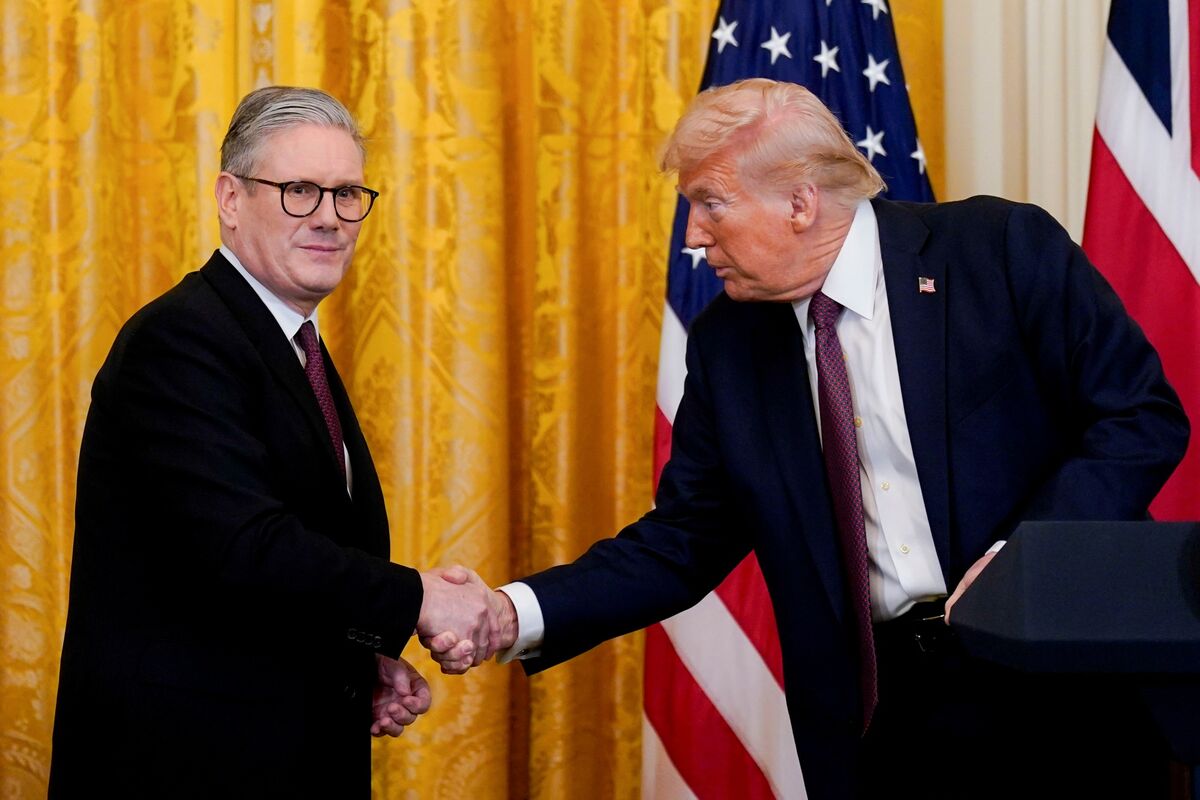
Keir Starmer's defense policy overhaul aims to project strength to both Donald Trump and Vladimir Putin, emphasizing the UK's commitment to European security and NATO. However, the plan faces scrutiny due to a lack of clarity on funding sources for increased defense spending, raising doubts about its feasibility. Starmer also faces internal pressure from Labour lawmakers prioritizing domestic issues, potentially undermining support for the defense strategy.
Keir Starmer's proposed overhaul of UK defense policy, aimed at signaling a robust commitment to European security and NATO to both Donald Trump and Vladimir Putin, faces significant credibility challenges. The primary concern, underscored by a 'moderately negative' sentiment and 'uncertain' tone, is the absence of a clear funding strategy for the requisite 'billions of pounds' in additional expenditure for new weaponry and personnel. This lack of financial articulation casts doubt on the UK's capacity to follow through on these ambitions. Furthermore, the initiative is encountering internal resistance within the Labour party, with lawmakers reportedly prioritizing pressing domestic concerns, such as 'controversial benefit cuts,' which could divert resources and political capital away from the defense agenda. The situation suggests a potential disconnect between strategic signaling and fiscal reality, creating uncertainty around the UK's future defense posture and expenditure levels despite a stated intent to maintain its role as a key power.
AI-powered research, real-time alerts, and portfolio analytics for institutional investors.
Request DemoOverall Sentiment
moderately negative
Sentiment Score
-0.40
