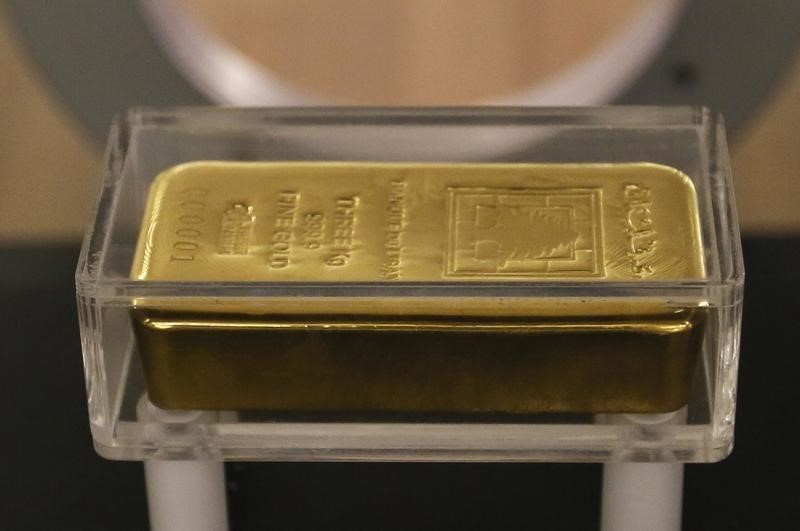
Gold rose 0.7% to $4,755.27/oz and gold futures climbed 1.1% to $4,772.44/oz after the U.S. indefinitely extended a ceasefire with Iran, though future peace talks remain uncertain. Spot silver gained 1.5% to $77.7925/oz and platinum rose 1.7% to $2,074.38/oz. Prices remain in a $4,700-$4,900/oz range, with the dollar and Kevin Warsh's hawkish Fed comments still a headwind.
The setup is less about direction in gold and more about the market repricing the path of real rates and geopolitical risk premium. An indefinite ceasefire extension removes the immediate escalation premium, but the failed follow-on talks keep a floor under tail-risk hedging demand; that tends to compress volatility rather than trend price decisively. In practice, this favors range trading in bullion and options-selling structures over outright directional bets until there is either a formal negotiation schedule or a renewed kinetic shock.
The bigger second-order effect is in precious-metals relative value. If the Fed nominee is interpreted as less dovish and the dollar stays bid, gold should lag silver and platinum on beta, because those metals have more industrial sensitivity and less pure policy hedging demand. That means the market may be over-allocating to gold as the sole geopolitical hedge, while underpricing the rebound potential in the higher-beta complex if the dollar rolls over or real yields ease.
For equities, the direct read-through to SMCI and APP is via factor exposure, not fundamentals: both are high-duration growth names that tend to trade inversely to real yields and the dollar. If the market starts to believe the next Fed chair path is more hawkish/independent, multiple compression can persist even if headline risk in the Middle East cools, which argues for using strength to reduce exposure rather than chase the bounce. The contrarian point is that the current move may be too small relative to the latent policy shock; the market is treating this as a temporary headline cycle when the more durable driver is the Fed reaction function, not the ceasefire itself.
AI-powered research, real-time alerts, and portfolio analytics for institutional investors.
Overall Sentiment
neutral
Sentiment Score
0.05
Ticker Sentiment
