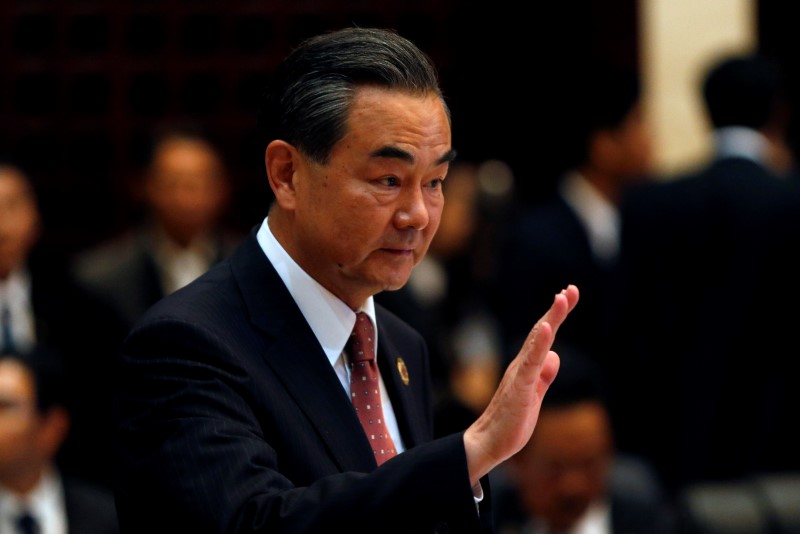
China signaled a more investor-friendly tone, with Foreign Minister Wang Yi telling Investor AB Chairman Jacob Wallenberg that Beijing and Stockholm are working to rebuild trust and expand practical cooperation. Wang reiterated policies to boost domestic demand and “high-level opening-up,” framing them as creating additional opportunities for foreign companies in China. While the remarks aim to reassure investors amid weak consumer demand and geopolitical tensions, the news is more positioning/newsflow than a quantified policy change, implying limited near-term market impact.
The near-term market read-through is mostly about sentiment compression, not earnings. A softer China-Europe tone can help de-rate the geopolitical discount embedded in European exporters and Asia supply-chain names, but the fundamental blocker remains weak Chinese end-demand; that means multiple expansion can outrun revenue improvement for a few weeks, then fade unless order books actually turn.
Second-order winners are the firms sitting closest to discretionary Chinese spending and cross-border capex: European luxury, industrial automation, and selected semiconductor equipment names with China exposure. The broader effect may be even more visible in Korea: KOSPI’s extreme valuation discount suggests investors are already pricing a prolonged risk-premium regime, so any credible easing in China-EU friction could lift Korean exporters and semis faster than China itself. The catch is that these are valuation trades, not demand trades, so the durability is 1-3 months unless Beijing follows with policy that lifts consumption rather than just investment rhetoric.
The contrarian view is that consensus may be overestimating what diplomacy can change ahead of the summit. Trade frictions around EVs, technology export controls, and market access are structural and will not vanish on a headline; if anything, any rally in China beta could be vulnerable to a ‘show-me’ reversal once the meeting passes without concrete concessions. The strongest falsifier for a bullish spillover trade would be a tangible policy package: tariff rollback, regulatory fast-tracking for foreign firms, or visible stabilization in Chinese domestic-demand and factory-order data over the next 1-2 months.
AI-powered research, real-time alerts, and portfolio analytics for institutional investors.
Request DemoOverall Sentiment
mildly positive
Sentiment Score
0.15
Ticker Sentiment
