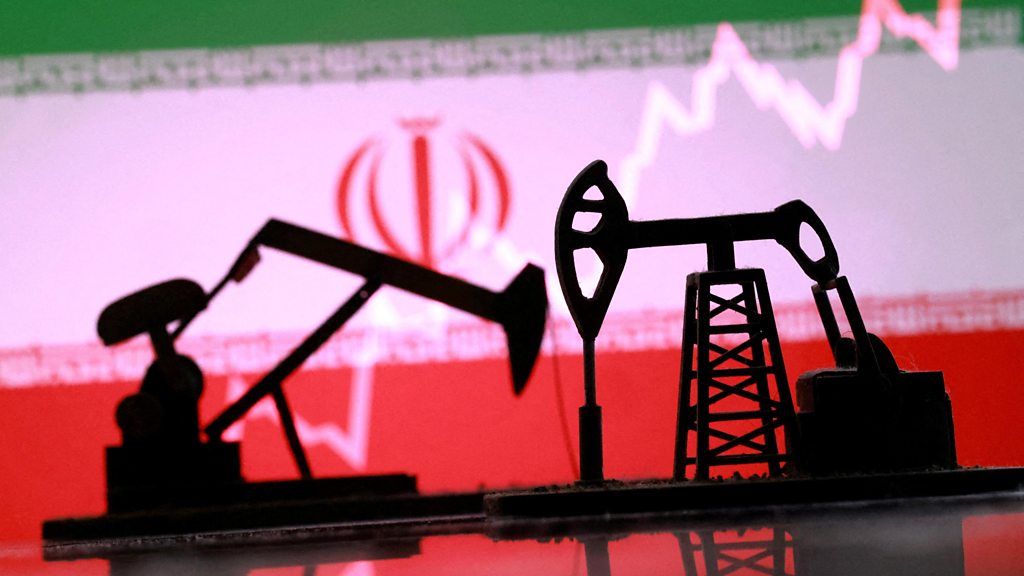
Oil prices surged to a four‑year high on Monday amid escalating Iran war tensions and a near‑complete shutdown of shipping through the Strait of Hormuz. Iran has threatened to block Gulf oil exports ('not allow one litre of oil') if US‑Israeli attacks continue, while President Trump’s conflicting comments on the war’s end have amplified political volatility. The supply‑shock risk elevates global inflation and energy‑cost pressures and poses meaningful downside risk for risk assets and trade flows.
Immediate winners are not simply upstream producers but the logistics and optionality layer: modern LR2/ULCC tanker owners and shore storage operators capture outsized cashflows as crude is rerouted around the Strait, adding roughly 8–15% to voyage times and creating a $1.50–$4.00/bbl incremental freight premium that accrues to asset owners with flexible float and storage. US shale has the fastest marginal supply response but requires several quarters to add material volumes; that timing asymmetry (weeks of price volatility vs quarters for supply response) favors liquid, short-dated derivatives and freight plays over long-dated upstream equity exposure. Refiners with feedstock flexibility to process heavy sour barrels or secure blended supplies (P66, PSX-style assets) will outperform coastal refiners tied to tight light-sweet Gulf crude because crack spreads compress when feedstock arbitrage disappears.
Key catalysts and risk horizons are layered: over days-weeks, tanker rates, insurance premiums and chokepoint security actions drive price swings; over 1–3 months expect policy-level mitigants (targeted SPR releases, emergency shipping corridors) or OPEC+ marginal output moves to define the range; over 3–12 months demand elasticity and recession risk become dominant and can reverse rallies of 20–50%. Tail risks include escalation that shutters alternative export routes (high-consequence, low-probability) and a political deal that rapidly restores exports; watch for asymmetric triggers—Brent >$110 materially increases chance of multi-country coordination to depress prices within 30–90 days.
Market consensus is pricing prolonged physical outages; that view understates Iran’s self-harm incentives and available supply-side fixes (Venezuela/Iraq incremental lifts, coordinated SPRs) and thus overprices the structural-forever narrative. Tactical opportunities exist to own convex upside from freight and short-dated crude while buying put protection on long oil equity exposure; selling outright long-dated vol is dangerous but selling calendar spreads against immediate front-month spikes can monetize elevated premia. Position sizing should reflect the short-dated nature of the operational shock: prefer 4–12 week exposures for directional plays and 3–9 month horizons for equity reallocation with explicit stop-loss and cap on portfolio weight (2–4%).
AI-powered research, real-time alerts, and portfolio analytics for institutional investors.
Request DemoOverall Sentiment
mildly negative
Sentiment Score
-0.35
