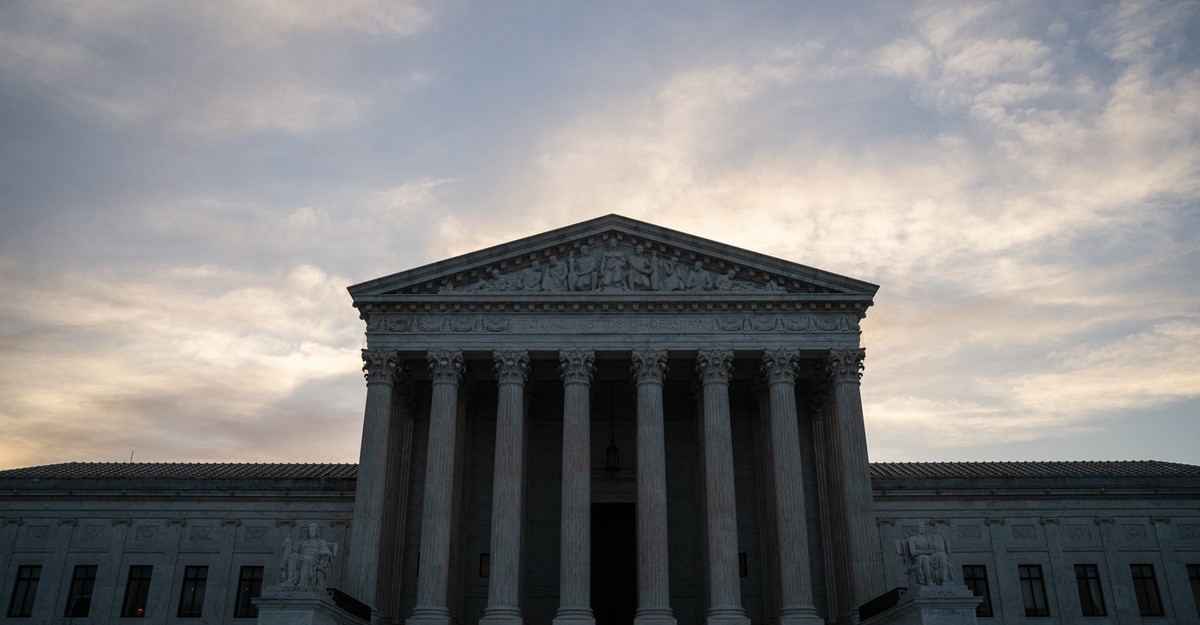
The Supreme Court’s Louisiana v. Callais decision effectively weakens Section 2 of the Voting Rights Act by allowing race-neutral partisan justifications for maps that dilute Black voting power. The ruling could enable Republican-controlled states to enact more discriminatory districting plans, likely reducing minority representation in Congress and increasing political risk around voting-rights litigation. The article argues this rewrites Congress’s 1982 VRA protections and opens a major loophole for racial gerrymandering.
The investable signal is not an immediate market shock but a medium-horizon governance regime shift: this increases the odds that state-level election maps will be litigated to a stalemate while de facto partisan capture proceeds. The second-order effect is a higher probability of “structural incumbency” in the House for whichever party controls a tranche of swing-state legislatures, which modestly lowers policy volatility in the near term but raises the tail risk of a post-2026 legitimacy crisis if outcomes diverge from national vote share.
The clearest market implication is for sectors that price off federal policy persistence. If one party can entrench a durable House edge, the probability distribution for taxes, antitrust, industrial policy, and appropriations narrows; that is generally supportive for large-cap domestic cyclicals with lobbying leverage and for firms whose valuation is discounted by election uncertainty. Conversely, firms dependent on voting-rights enforcement, DEI-sensitive government contracting, or state-level public funding in the South face a longer-duration headwind as local political systems become less responsive to minority turnout.
The contrarian view is that the first-order reaction may overstate immediate legislative change. Courts have created room for aggressive maps before, but implementation lags and state-specific constraints mean the real earnings impact is more likely to show up over 2026-2028, not this quarter. The bigger near-term trade is volatility: every new redistricting challenge becomes a catalyst for headline risk in the election-operations ecosystem, while any congressional response would take longer and likely be watered down.
Risk/tail scenario: if a backlash drives federal reform momentum or an adverse court clarification arrives within 6-12 months, the current interpretation gets partially reversed and the incumbency premium fades. If not, the cumulative effect is a slow but meaningful reduction in minority political power, which can keep policy outcomes skewed even without changes in national vote share.
AI-powered research, real-time alerts, and portfolio analytics for institutional investors.
Request DemoOverall Sentiment
strongly negative
Sentiment Score
-0.65
