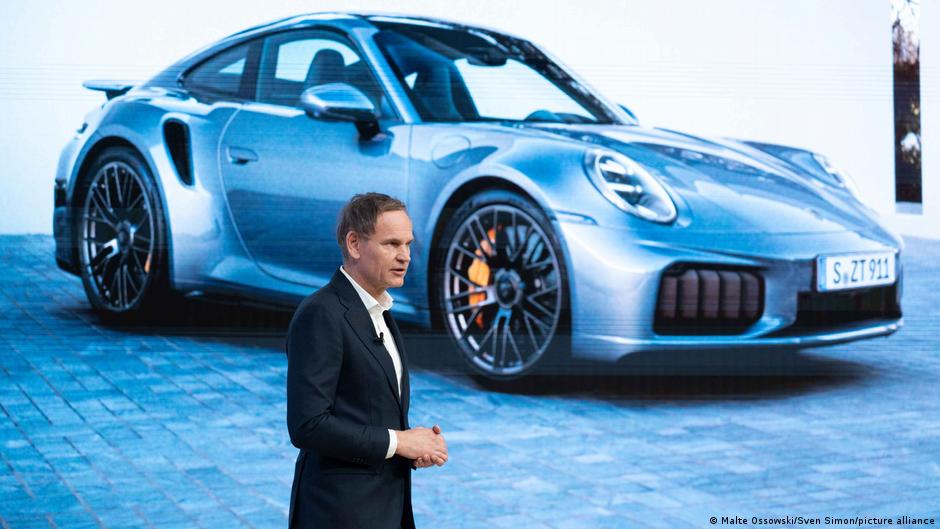
VW Group net profit fell 44% to €6.9bn in 2025 (from €12.4bn), driven largely by Porsche where net profit collapsed to €90m from €5.3bn; Porsche cited a ~€5bn one-off hit from extended ICE production and ~€3bn lost revenue from US tariffs. Group-wide deliveries were 8.98m (-0.5%), revenue €322bn (-0.8%), and operating profit margin dropped 310bps to 2.8%; VW operating profit ticked up to €2.61bn while Audi fell to €3.4bn. Management plans ~50,000 job reductions by 2030 (≈35,000 at parent VW; Audi up to 7,500; Porsche ~3,900), and CEO Blume’s total pay fell to €7.4m as the group navigates Chinese competition, tariffs and slower EV uptake.
Market structure is shifting from incumbency-based pricing power to platform-and-software-led differentiation; that accelerates when entrants undercut on total-cost-of-ownership rather than headline vehicle price, compressing margins across the luxury stack and forcing incumbent capex reallocation. Expect dealer and financing margins to be the first to erode as residual value risk flows downstream and captive finance arms tighten underwriting to protect ROE.
In the supply chain, component demand bifurcates: commoditized ICE parts face secular volume decline and inventory destocking, while modular EV components, power electronics and ADAS sensors see order concentration and scale benefits. This will create M&A windows for nimble suppliers with clean balance sheets to buy scale at single-digit EBIT multiples within 12–24 months, while leveraged tier-1s risk covenant stress and asset sales.
Key catalysts are discrete and trackable: trade policy moves (weeks–months), next-generation China product launches (6–18 months) and cost-out delivery versus announced targets (quarterly cadence). Tail risks include tariff escalation or a macro China demand shock that can cascade into dealer insolvencies and rapid markdowns; conversely, decisive cost-out + a successful China-focused product could re-rate an incumbent within 9–15 months.
Positioning should be asymmetric: buy optional convexity into winners (battery/semiconductor/successful China OEMs) and use pairs/credit to hedge legacy luxury exposure. The likely P&L range is wide — think 20–40% downside for exposed luxury OEMs if structural share loss continues, versus 15–30% upside for scalable EV platforms and critical component suppliers that gain share and pricing power.
AI-powered research, real-time alerts, and portfolio analytics for institutional investors.
Request DemoOverall Sentiment
strongly negative
Sentiment Score
-0.60
