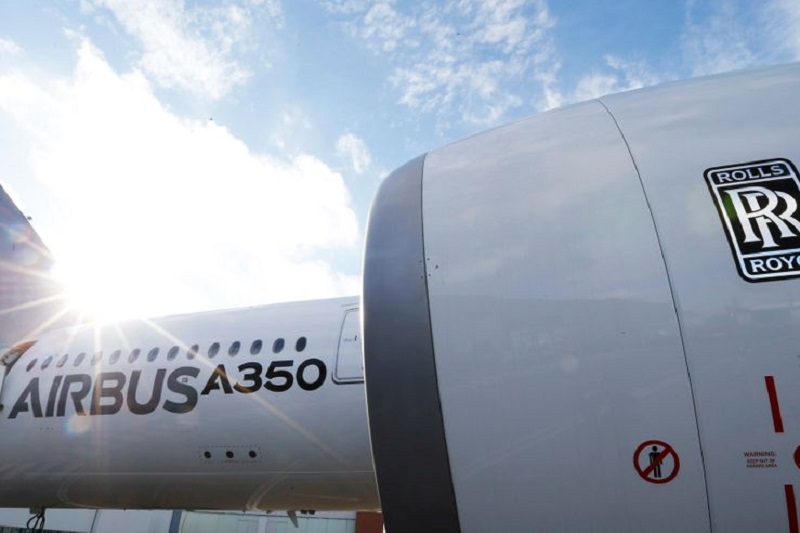
Berenberg upgraded Rolls-Royce to buy from hold and raised its price target to 1,430p from 1,270p, citing the youngest engine fleet among European peers and the strongest year-to-date flight-hour growth. Rolls-Royce shares rose 4.55%, while Safran gained 4.91% and MTU Aero Engines added 3.71% as the broker highlighted better widebody exposure and resilience to a jet fuel shock tied to the U.S.-Iran conflict. Berenberg also lifted its 2026 free cash flow estimate for Rolls-Royce 3% to £3.77 billion and EBIT 2% to £4.05 billion.
The market is starting to price a second-order beneficiary set from a higher fuel regime: not the airlines themselves, but the engine/OEM franchise with the most balance-sheet optionality and the least near-term exposure to narrowbody utilization cuts. The key edge is not just fleet age; it is replacement intensity and post-pandemic flying-hour recovery, which should translate into higher spare-parts, MRO, and service revenue mix over the next 12-24 months. That mix matters because it is much less cyclical than new engine deliveries and should cushion margins if airlines start deferring capex.
The more interesting implication is relative. Companies with heavier narrowbody or Middle East concentration likely face a double hit: capacity discipline and weaker regional demand, while widebody-heavy franchises gain resilience even if global ASKs slow. This is a good setup for dispersion trades in aerospace: long the names with older installed bases and better service leverage, short or underweight the names most exposed to near-term flying-hour downgrades and airline balance-sheet stress. Supply-chain beneficiaries may emerge too, but only with a lag as OEMs protect service availability before new-build schedules.
Consensus may be underestimating how durable the equity re-rating can be if fuel stays elevated for multiple quarters. The near-term move is likely driven by estimate revisions, but the bigger catalyst is whether management teams re-anchor 2026-27 guidance around higher utilization and aftermarket attach rates. The main reversal risk is not oil normalization alone; it is airline capacity cuts broadening into widebody networks or a sharp slowdown in premium long-haul demand, which would unwind the assumed insulation thesis faster than the current estimates imply.
AI-powered research, real-time alerts, and portfolio analytics for institutional investors.
Request DemoOverall Sentiment
mildly positive
Sentiment Score
0.45
