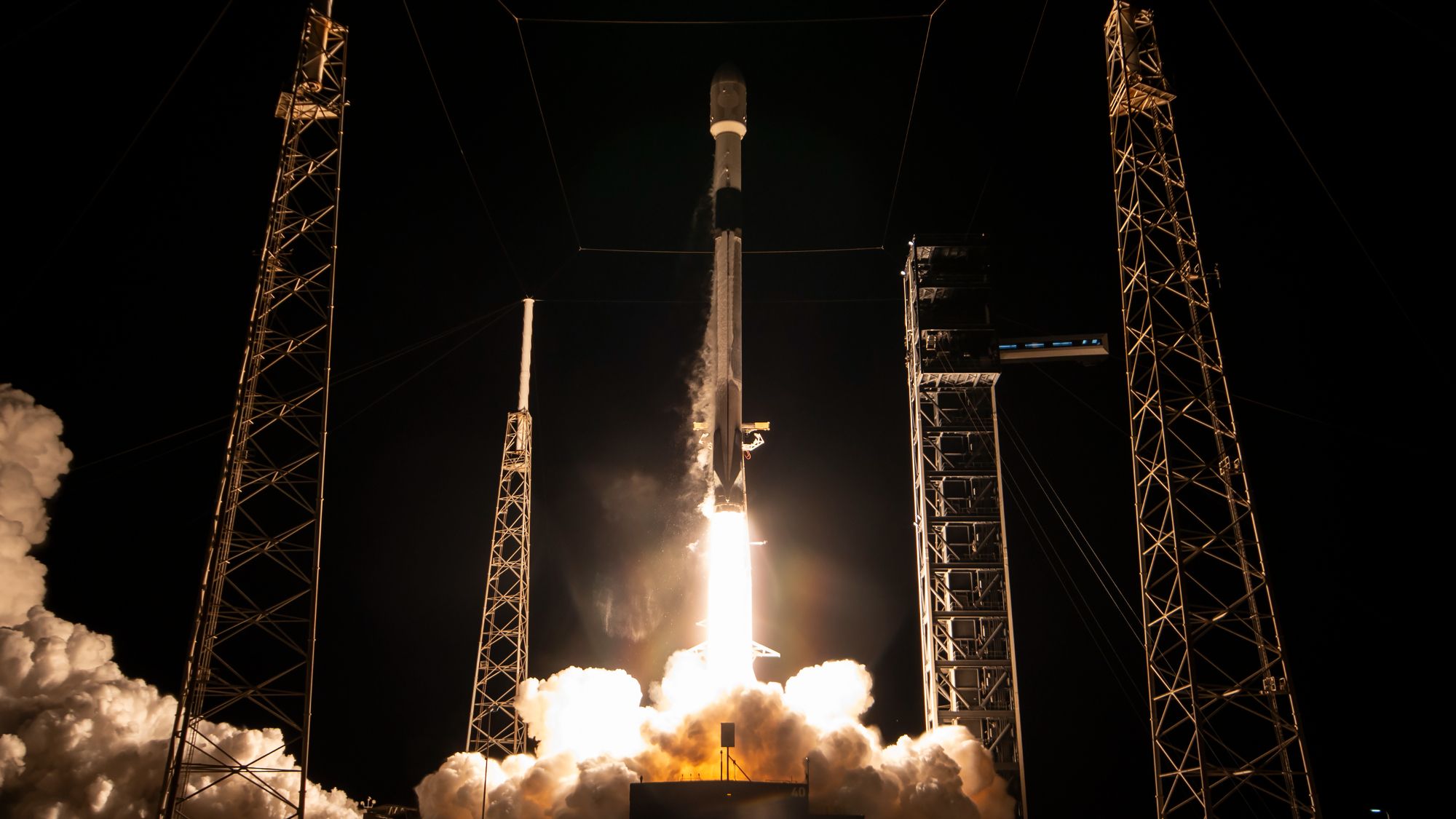
SpaceX is scheduled to launch the GPS III SV10 satellite for the U.S. Space Force on April 20 in a 15-minute window opening at 2:57 a.m. EDT, with deployment to medium-Earth orbit about 90 minutes after liftoff. The mission marks the 10th and final satellite in the GPS III line, featuring three-fold better positional accuracy and eight-fold stronger jam resistance versus prior versions. The satellite was shifted from Vulcan Centaur to Falcon 9 after issues with Vulcan's solid rocket boosters, a modestly notable defense and launch-industry update.
This is less about the launch itself and more about what it says on reliability economics in launch procurement. The switch from an alternative provider to Falcon 9 reinforces SpaceX’s position as the default “schedule certainty” vendor for time-sensitive national-security payloads, which should widen the moat against any competitor still carrying hardware-development risk. The second-order effect is that every schedule slip elsewhere in the government launch stack increases the value of reusable, already-qualified capacity — a dynamic that can persist for multiple budget cycles, not just this mission.
The deeper signal is that Space Force is prioritizing orbit insertion over provider diversification when the payload is strategically important. That should help SpaceX’s manifest visibility and pricing power at the margin, but it also compresses the addressable opportunity for rivals in the highest-value segment: if a competitor cannot absorb a one-off swap with zero political friction, it is not truly an alternative for premium national-security work. For supply chain investors, the implication is that the value accrues less to launch hardware manufacturing and more to systems that are already flight-proven, integrated, and cadence-optimized.
The contrarian read is that this is not automatically bullish for the whole space stack. A successful mission can paradoxically reduce urgency around backup architectures, because policymakers will extrapolate from one clean execution and underweight concentration risk. The real catalyst is not liftoff, but any subsequent cadence decision: if more missions migrate to Falcon 9 over the next 6-12 months, it validates a structural share gain; if Vulcan resolves quickly and re-enters qualification, the competitive read-through fades.
From a risk perspective, the main tail is reputational, not technical: a launch anomaly would have outsized impact because it would occur in a high-visibility national-security context and likely delay follow-on awards. That risk window is days to weeks, while the reward window is quarters to years via procurement preference and manifest density.
AI-powered research, real-time alerts, and portfolio analytics for institutional investors.
Request DemoOverall Sentiment
neutral
Sentiment Score
0.15
