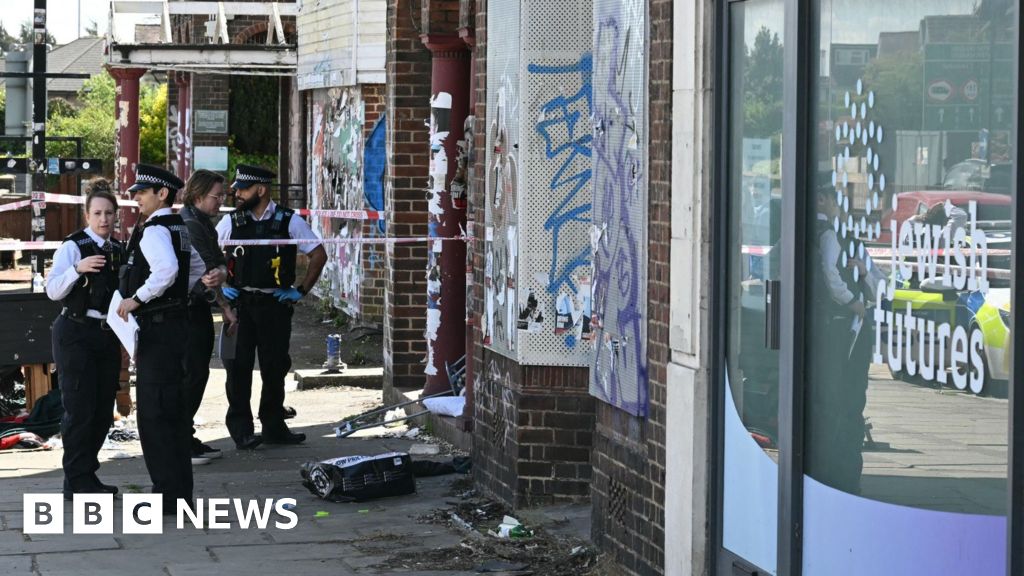
Counter-terror police are investigating an arson attack on a business in Hendon, with a man seen lighting a bag containing three bottles of fluid; only minor shopfront damage and no injuries were reported. The case is being treated as a counter-terrorism-led inquiry due to similarities with other recent attacks on Jewish-related sites and vehicles in north-west London, but police said it is not currently classified as a terrorist incident. While the immediate market impact is limited, the incident reinforces elevated security risk and community tensions in the area.
This is primarily a volatility event, not an earnings event, but the marketable consequence is a repricing of localized security spend across UK public-facing assets. The second-order winner is the private security stack: guarding, CCTV, access control, perimeter hardening, and rapid-response services should see incremental demand from schools, charities, faith institutions, transport nodes, and small commercial landlords in high-footfall districts. The spend is likely to be sticky because it is budgeted out of operating expense rather than discretionary capex, so even a few headline incidents can translate into multi-quarter contract wins.
The main loser is not any single listed operator but the broader “open access” retail/charity property model in the affected geography. If insurers react with higher premiums or exclusions, small landlords and nonprofit occupiers will face a margin squeeze that can force quicker vacancy, lower rent growth, and more pre-emptive security upgrades. That creates a feedback loop: visible hardening deters opportunistic attacks, but also signals elevated threat, which can keep premium inflation elevated for 6-12 months.
Contrarian takeaway: the immediate damage is minor, so the wrong read is to dismiss this as noise. The market should instead focus on the policy response path — visible armed patrols, enhanced monitoring, and coordination with community security groups tend to persist longer than the headlines, and that supports a durable increase in security-related procurement. The risk to the thesis is rapid de-escalation if arrests are made quickly and incidents stop, but absent that, the setup favors a slow-burn uplift in defense-oriented service spending rather than a one-day sentiment spike.
AI-powered research, real-time alerts, and portfolio analytics for institutional investors.
Request TrialOverall Sentiment
moderately negative
Sentiment Score
-0.35
