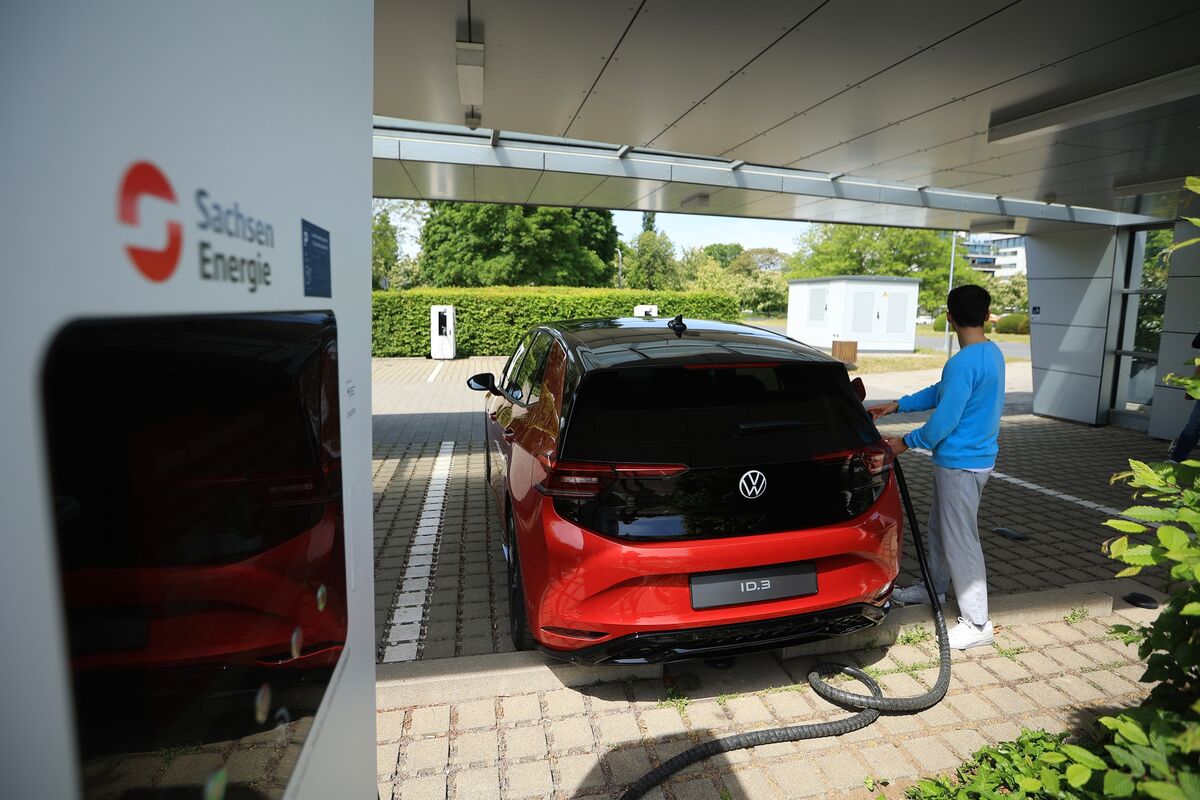
Germany's ruling coalition, led by Chancellor Friedrich Merz, has approved €3 billion ($3.5 billion) in new purchase incentives for zero-emission vehicles, targeting low- and middle-income households through 2029. This initiative aims to bolster the nation's struggling automotive industry, a critical sector facing intense competition from China and uncertainty regarding U.S. trade tariffs, signaling significant government intervention to support its transition and competitiveness.
German Coalition Agrees on EV Incentives Worth €3 Billion Takeaways by Bloomberg AI German Chancellor Friedrich Merz’s ruling alliance agreed on new purchase incentives for zero-emission vehicles worth €3 billion ($3.5 billion) through 2029, part of his government’s broader effort to support the nation’s ailing carmakers. Merz announced the measures — targeted at low- and middle-income households — after talks with his Social Democrat partners in Berlin. The conservative leader is hosting top auto executives and labor officials later on Thursday to discuss the future of the industry, a key sector of Europe’s biggest economy that is struggling with increasing competition from China and uncertainty around US trade tariffs. Germany's ruling coalition has approved a substantial €3 billion ($3.5 billion) in new purchase incentives for zero-emission vehicles, extending through 2029. This fiscal injection specifically targets low- and middle-income households, aiming to directly stimulate consumer demand within the EV market. The move underscores a concerted effort to support the nation's pivotal, albeit currently "ailing," automotive industry. The initiative is a direct response to significant challenges facing German carmakers, including escalating competition from Chinese manufacturers and unresolved uncertainties surrounding U.S. trade tariffs. Chancellor Merz's subsequent engagement with top auto executives highlights the government's recognition of the sector's strategic importance and its proactive stance in addressing these structural pressures. The broadly neutral tone and mildly positive sentiment (0.4) suggest this is a necessary, albeit not revolutionary, step for the industry.
AI-powered research, real-time alerts, and portfolio analytics for institutional investors.
Request DemoOverall Sentiment
mildly positive
Sentiment Score
0.40
