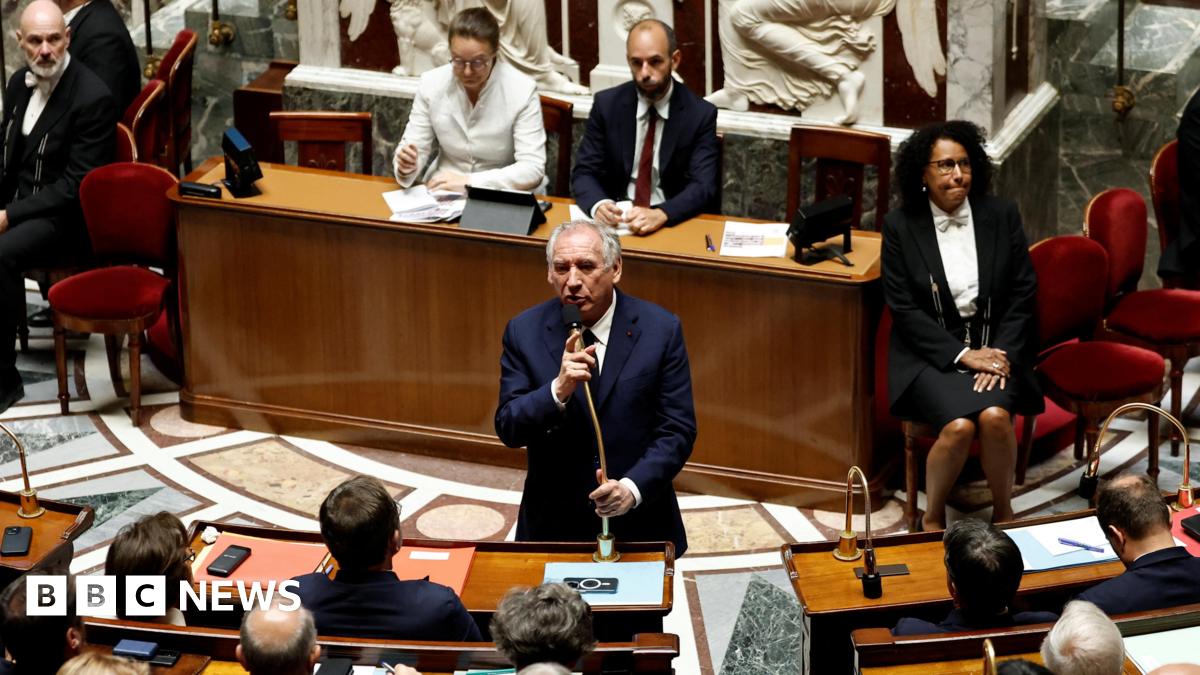
French Prime Minister Francois Bayrou lost a confidence vote (364-194) in the National Assembly, leading to his imminent resignation and marking France's fifth premier in under two years. This political upheaval, triggered by Bayrou's push to address France's €3.4 trillion debt, underscores President Macron's ongoing struggle to secure a stable governing majority and implement critical economic reforms. The situation highlights persistent political fragmentation, complicating the nation's ability to tackle its significant liabilities and potentially impacting investor confidence in French policy stability.
France is experiencing significant political instability following the ousting of Prime Minister Francois Bayrou in a no-confidence vote by a margin of 364 to 194. This event marks the country's fifth prime minister in less than two years, underscoring the persistent legislative gridlock and disenchantment characterizing President Macron's second term. The crisis was directly triggered by Bayrou's attempt to address what he termed the "existential" threat of France's €3.4 trillion national debt, a move that united opposition parties from the left and hard-right against his government. This outcome demonstrates the profound difficulty President Macron faces in building a stable coalition to enact meaningful fiscal reform. The failure to rally support for debt consolidation highlights a critical political paralysis that directly impedes France's ability to manage its substantial liabilities. While a successor is expected from within Macron's own camp, the underlying lack of a parliamentary majority remains, suggesting that policy uncertainty and governmental instability will persist.
AI-powered research, real-time alerts, and portfolio analytics for institutional investors.
Request DemoOverall Sentiment
strongly negative
Sentiment Score
-0.65
