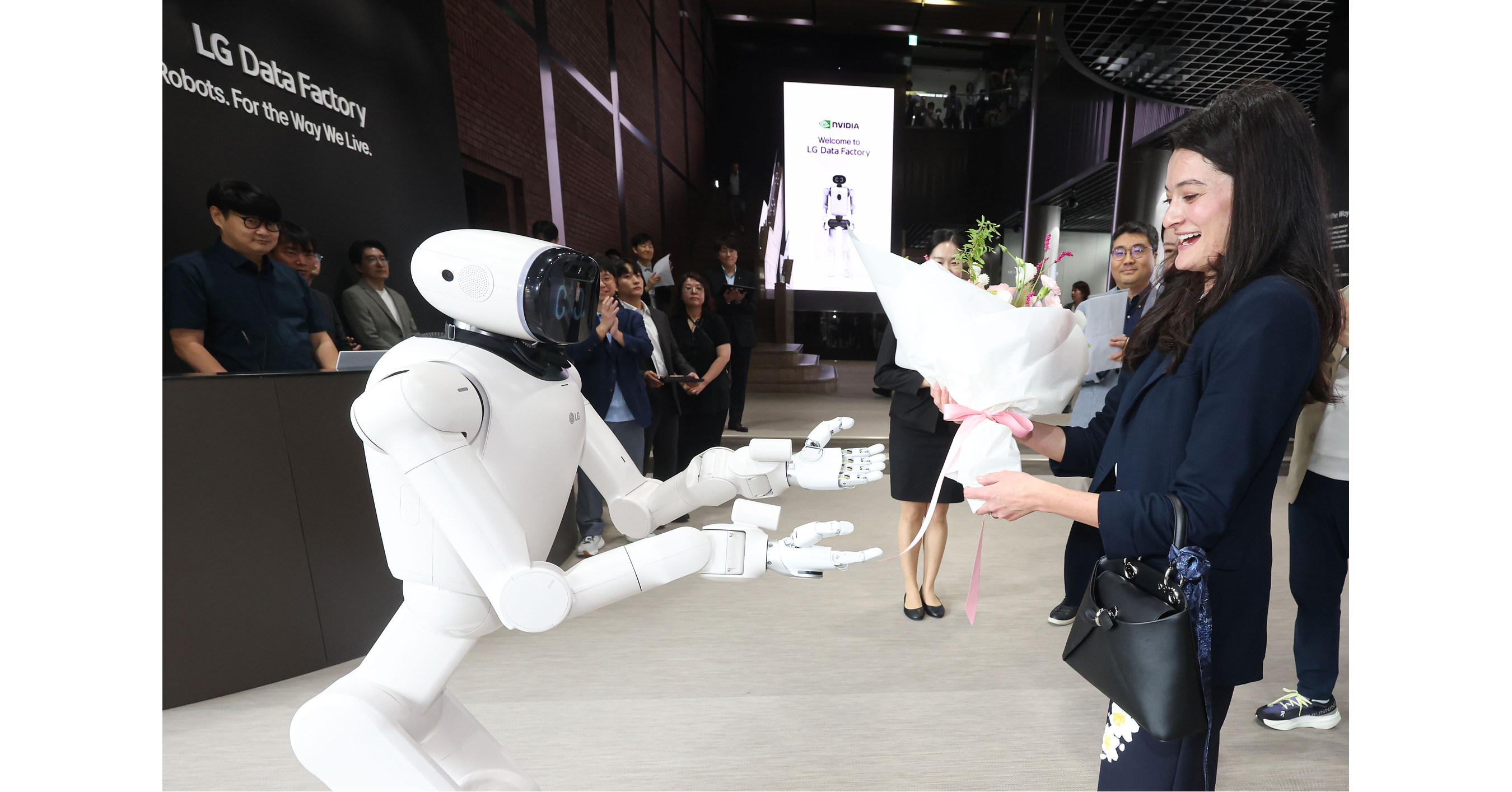
LG Electronics is accelerating its robotics collaboration with NVIDIA, with its Seoul Data Factory expected to be fully operational by year-end. The facility will scale several hundred robots and target 100,000 total training hours by the end of the year (including data augmented via NVIDIA Cosmos), supporting LG’s Robot Foundation Model for humanoids. LG is also launching a Robotics Business Center this year to expand beyond industrial/commercial robotics into home robotics, signaling faster execution toward commercialization.
This is a validation event for NVIDIA more than a near-term earnings catalyst. The market should read it as evidence that NVIDIA’s robotics stack is becoming the default plumbing for OEMs trying to turn proprietary operational data into a moat, which matters because that raises switching costs and broadens the platform narrative beyond data centers. That said, the monetization here is still distant; the first-order P&L impact to NVDA is likely immaterial over the next 1-2 quarters, so any move should be treated as multiple support, not a revenue revision.
The bigger second-order effect is competitive pressure on appliance and industrial peers that lack decades of closed-loop manufacturing data. If LG can credibly industrialize a data flywheel, rivals in Korea, Japan, and U.S. home-appliance/industrial automation will need to spend more on simulation, labeling, and robotics integration just to avoid falling behind, which is margin-dilutive before it is revenue-accretive. That dynamic is structurally positive for NVDA’s ecosystem, but it also means the economic winner may be the platform and not the OEM taking the headline risk.
The contrarian view is that the market may be overpaying for the headline partnership and underappreciating how slow robotics adoption is in practice: integration, safety, and unit economics can defer meaningful revenue for years. The main catalyst path is 1-3 months of follow-on announcements from other OEMs or quantified disclosures from LG on robotics revenue/order flow; absent that, this can fade into generic AI optimism. What would falsify the thesis is a lack of tangible attach rates, weak commentary on robotics ROI, or any signal that the data-factory approach is not producing deployable improvements in model performance over the next 6-12 months.
AI-powered research, real-time alerts, and portfolio analytics for institutional investors.
Request DemoOverall Sentiment
moderately positive
Sentiment Score
0.35
Ticker Sentiment
