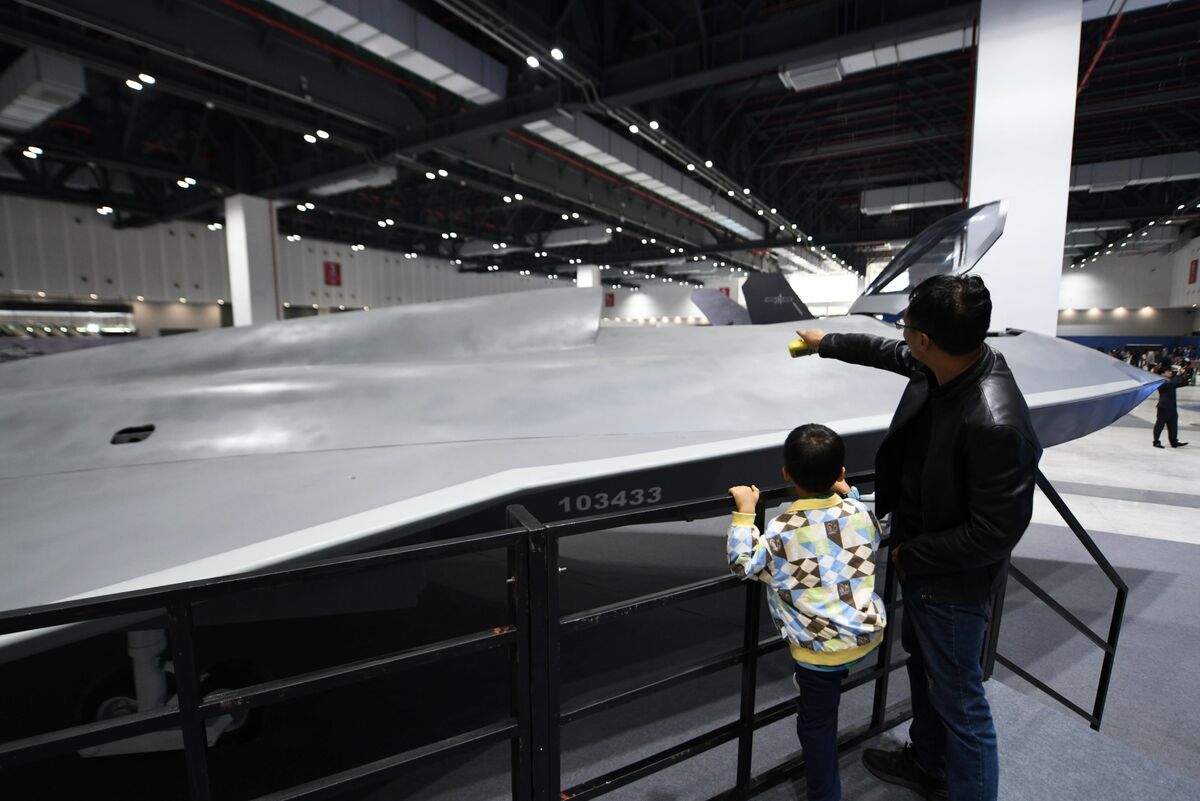
China’s military appears to have teased a possible sixth-generation fighter prototype, widely believed to be the J-36, in a PLA video released Sunday. The brief visual cameo suggests continued progress in advanced stealth aviation and signals potential long-term implications for the balance of airpower versus U.S. programs. The article is largely confirmatory and speculative, with limited immediate market-moving detail.
This is less about a single airframe reveal than about signaling a maturing industrial base that is increasingly comfortable testing the market’s assumptions on aerospace parity. The second-order read is that China is trying to compress the timeline between prototype credibility and ecosystem readiness: propulsion, sensors, composites, and mission software all have to advance together, which tends to favor domestic primes, suppliers, and state-directed capex rather than create an immediate read-through to one aircraft program.
For defense equities, the near-term winners are not necessarily the obvious prime contractors but the broader sensing, electronics, EW, and engine-adjacent supply chains that benefit from a sustained threat premium. In the US, this type of headline usually supports budget durability and higher probability of accelerated procurement for stealth, ISR, tanker, and munitions programs over the next 6-18 months. The losers are legacy air-defense assumptions and any complacency that the next conflict will be dominated by platforms rather than networks, where the real response may be more investment in counter-stealth radars and electronic attack than in manned fighters alone.
The market may underappreciate the political signaling dimension: showcasing ambiguity is often more useful than showing the finished product. If the aircraft is truly early-stage, the gap between appearance and operational utility can still be multi-year, which argues against chasing any single-name industrial move on the headline alone. The more durable trade is on rising geopolitical risk premia and incremental spending cycles, while the main reversal would be evidence of a technical dead end, budget diversion, or a détente that reduces urgency over the next few quarters.
AI-powered research, real-time alerts, and portfolio analytics for institutional investors.
Request DemoOverall Sentiment
neutral
Sentiment Score
0.05
