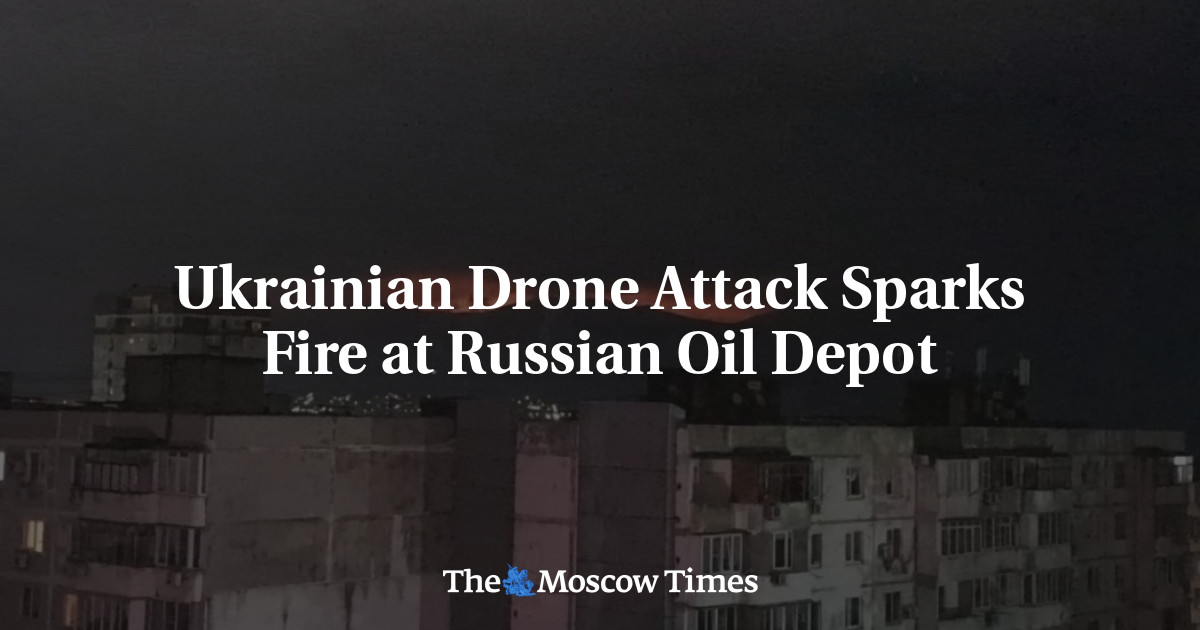
A Ukrainian drone attack sparked a fire at an oil depot in Novorossiysk, Russia’s largest Black Sea export hub, which handles around one-fifth of the country’s crude shipments. Two people were wounded, and the incident adds fresh disruption risk to Russian energy export infrastructure amid ongoing cross-border strikes. The event is negative for near-term energy logistics and could raise concerns about crude shipment reliability.
The market should treat this less as a one-off supply scare and more as a test of Russia’s export-logistics fragility. Novorossiysk is a chokepoint where even short outages can force barrels to reroute onto already constrained rail/alternate terminal capacity, creating a higher-than-linear impact on prompt physical differentials. The immediate beneficiary is any crude benchmark with a heavy seaborne Black Sea exposure; the larger second-order winner is Middle East and Atlantic Basin exporters that can capture incremental replacement demand if Russian loading reliability degrades over several days.
The key risk is not the fire itself but follow-on operational latency: inspections, insurance repricing, berth congestion, and precautionary throttling can persist for 1-3 weeks even if the physical damage is modest. That matters because Russia’s export system is already operating under elevated attrition from repeated drone pressure; repeated disruptions can translate into a persistent widening of Urals discounts versus Brent, which hurts Russian fiscal receipts more than headline global supply. If that discount widens enough, Moscow may be forced to protect domestic flows at the expense of exports, which is a slower-burn bullish setup for seaborne crude ex-Russia.
The consensus likely underestimates how quickly tanker scheduling and freight rates can tighten when a major export hub becomes operationally uncertain. Cleaner beneficiaries are not necessarily pure upstream names, but shipping, storage, and non-Russian crude exposure plays that gain from dislocation and volatility. The trade is more attractive on dips than on the first headline spike because the option value comes from repeated attack risk over weeks, not just one overnight interruption.
Contrarian view: if damage is superficial and throughput normalizes within 24-48 hours, the move will fade fast and the only durable effect will be a slightly higher geopolitical risk premium. That would leave outright long crude exposed to mean reversion, while relative-value expressions remain intact. The asymmetry therefore favors event-driven optionality and spread trades over naked directional longs.
AI-powered research, real-time alerts, and portfolio analytics for institutional investors.
Request DemoOverall Sentiment
moderately negative
Sentiment Score
-0.45
