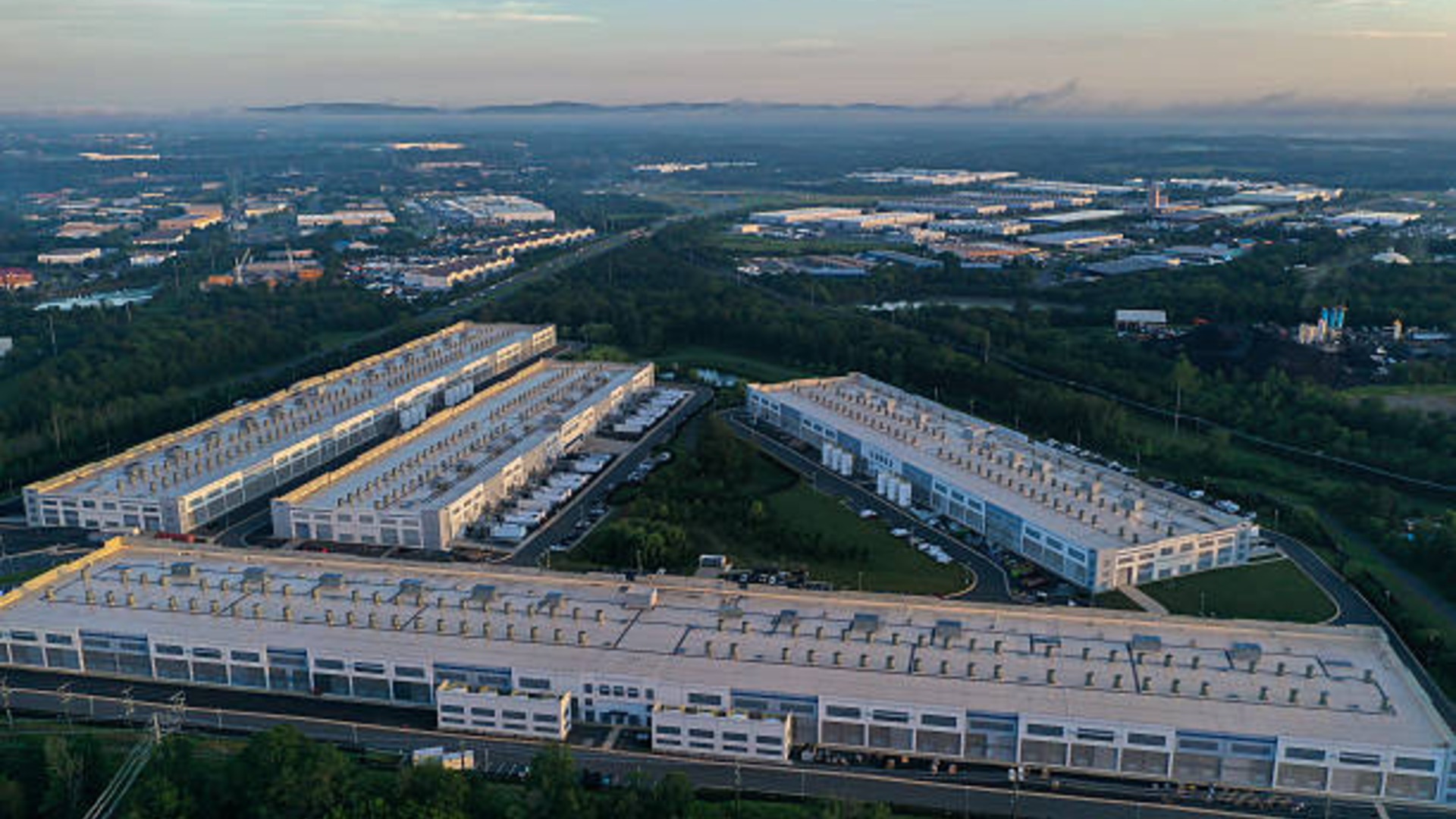
Amazon operates roughly 900 data centers worldwide as it scales infrastructure to meet surging AI and generative-AI workload demand, expanding AWS capacity for model training and enterprise services. The buildout highlights sustained cloud-compute demand and competitive positioning versus Microsoft and Google, implying revenue upside for AWS while sustaining significant capital expenditure requirements.
Winners: hyperscalers (AMZN, NVDA, EQIX/DLR) capture incremental revenue and take-or-pay commitments from enterprises buying model-training capacity; losers include on‑prem vendors and small cloud players whose unit economics can't match hyperscale scale. Capacity buildout suggests mild near-term pricing pressure for commoditized IaaS but sustained premium pricing for GPU-backed model‑training — expect 10–20% higher ASPs for GPU instances versus CPU instances over next 12 months.
Key risks: regulatory (antitrust actions, EU/US procurement limits) and export controls on high-end accelerators can be binary and material within 6–18 months; operational risks include power/real‑estate constraints and concentrated GPU supply that could swing margins ±200–400bps. Near-term (days–weeks) market moves will track earnings/capex guidance; medium (3–12 months) will be driven by chip allocations and contract wins; long run (1–3 years) will see revenue compounding if utilization >70%.
Trades: favor AMZN exposure and GPU supply chain beneficiaries while hedging regulatory/competitive risk via selective shorts in MSFT or GOOGL; use options to time GPU catalyst windows (NVIDIA supply cadence). Rotate 3–6% from traditional software names into infrastructure REITs (EQIX, DLR) and select chipmakers (NVDA, AMD) on pullbacks of 8–12%. Entry on earnings-anchored drawdowns or confirmed GPU allocation increases.
Contrarian: consensus ignores the near-term FCF hit from aggressive capex — the market may underprice a 6–12 month margin trough of 150–300bps. Historical parallel: 2016–18 hyperscaler buildouts depressed near-term margins but drove multi‑year revenue share gains; unintended consequence is political/regulatory backlash that can force slower expansion in EU/UK, creating regional asymmetries in growth.
AI-powered research, real-time alerts, and portfolio analytics for institutional investors.
Request DemoOverall Sentiment
mildly positive
Sentiment Score
0.30
