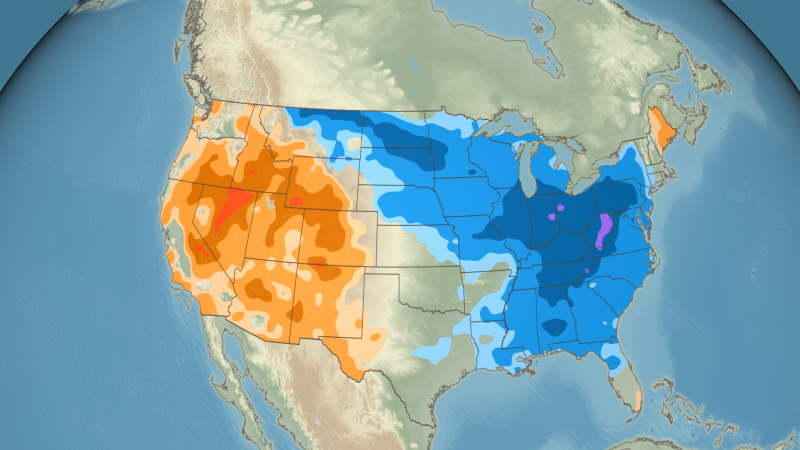
An Arctic cold plunge will sweep south and east ahead of Thanksgiving, with winter storm warnings affecting more than 5 million people including Minneapolis–St. Paul where up to 6 inches of snow and gusts to 45 mph could produce localized blizzard conditions and hazardous travel during the holiday rush. Temperatures will run as much as 20°F below average across the central and eastern U.S., with lake-effect snow risks around the Great Lakes and a stronger Arctic push likely into the weekend that could drive subzero lows in parts of Montana and North Dakota; impacts include travel disruption, heightened short-term heating demand and localized logistics stress.
Winners will be short-dated energy suppliers, gas storage/pipeline players and winter-goods retailers as spot heating demand spikes; losers are airlines, ground carriers and immediate last-mile logistics providers facing schedule cancellations and idling fleets. Pricing power shifts toward spot gas and localized propane markets for 1–21 days while regulated utilities and pipeline operators can capture margin through higher commodity pass-throughs; travel-related firms face near-term revenue erosion and potential market-share shifts if cancellations persist.
Tail risks include a prolonged outage (2–10+ days) at key refineries or pipelines causing outsized heating-fuel dislocations, and grid emergencies that trigger regulated interventions or caps; a regulatory emergency declaration within 7–14 days could compress margins for unhedged generators. Immediate effects (0–7 days) will be demand spikes and logistics rerouting, short-term effects (weeks–months) include altered inventory flow into holiday season, and long-term (quarters) may see consumer substitution and higher working capital for retailers.
Trade implications: expect elevated NatGas implied vol for 1–3 weeks—use short-dated call spreads or calendar spreads to exploit convexity; allocate to defensive regulated utilities for stable cash flows but trim discretionary travel/airline exposure ahead of holiday data. Watch indicators that will accelerate or reverse trades: 7-day HDDs above normal by >20% (accelerate longs) or rapid warm front reducing gas draws by >10% week-over-week (trim exposure).
Contrarian view: markets may overprice duration—if storage and imports remain available, prices could mean-revert inside 10–14 days; conversely, localized propane/road-heating shortages could produce outsized regional price moves that general ETFs miss. Past Arctic pushes show sharp spikes then reversals; prefer targeted, time-boxed positions rather than long-duration directional bets.
AI-powered research, real-time alerts, and portfolio analytics for institutional investors.
Request DemoOverall Sentiment
mildly negative
Sentiment Score
-0.25
