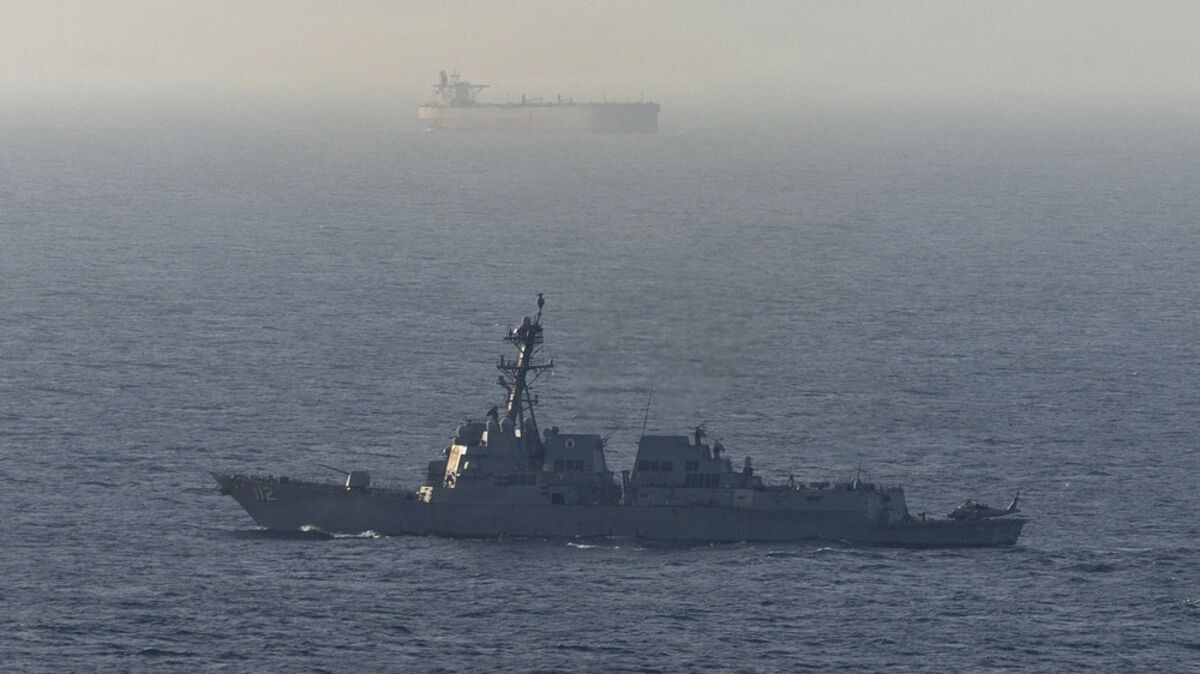
The US said its naval support operation in the Strait of Hormuz is defensive, with Secretary of State Marco Rubio stating American forces will only fire if fired upon. The move underscores heightened geopolitical risk around a critical oil shipping chokepoint near Iran, which can affect tanker traffic, energy flows, and freight costs. The article adds no new escalation but signals persistent tension in a strategically important route.
The immediate market read is not about direct conflict escalation, but about a higher floor for embedded risk premia in anything exposed to chokepoints, insurance, and schedule reliability. Even a purely defensive posture can still force commercial shippers to price in more convoy dependence, longer transit windows, and higher war-risk premiums, which is bullish for firms with pricing power in maritime logistics and toll-like infrastructure, and bearish for low-margin carriers that cannot pass through volatility quickly.
The second-order effect is that the market may be underestimating how quickly “contained” tension metastasizes into working-capital pressure. If insurers, freight forwarders, and charterers require longer validity on quotes, the pain shows up first in spot volumes and then in inventory behavior, as importers pre-buy and wholesalers widen buffers. That can lift near-dated energy prices even without a physical supply hit, while squeezing industrials and transport names through fuel and working-capital channels.
The key catalyst is not a headline strike, but the duration of the protection mission and whether incidents remain isolated. Over days, the trade is mostly an options and relative-value story; over months, the larger risk is normalization of a permanently more expensive Gulf shipping regime. A meaningful de-escalation signal would be lower escort intensity or a reduction in incident frequency, which would compress the risk premium faster than fundamentals would justify.
Consensus may be too focused on the binary of “attack or no attack” and too light on persistence risk. The underappreciated scenario is a low-grade, recurring friction environment that never becomes a crisis but still imposes a steady tax on logistics, energy, and non-defensive industrial margins. That kind of slow burn is usually more tradable than a one-day shock because it creates repeated entry points and makes crowded shorts in energy more vulnerable to squeeze.
AI-powered research, real-time alerts, and portfolio analytics for institutional investors.
Request DemoOverall Sentiment
neutral
Sentiment Score
-0.10
