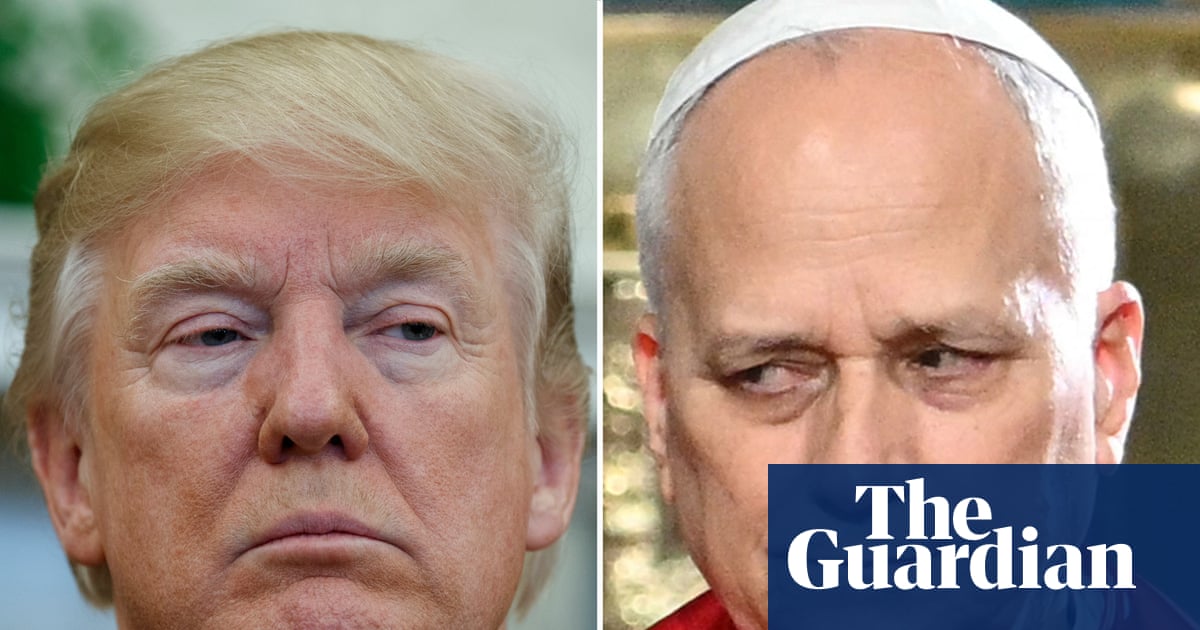
The article centers on growing tension between Pope Leo XIV and Donald Trump over the Iran war and broader U.S. immigration policy, with Trump’s approval among Catholic voters slipping to 48% and disapproval at 52% in a March poll. It highlights criticism from church leaders and Catholic commentators of the administration’s framing of the conflict as morally justified. The piece is politically relevant but has limited direct market impact.
This is less about theology than coalition maintenance: the relevant market signal is that Trump is risking incremental erosion among a voter bloc that has been unusually sticky in close elections. That matters because Catholic voters are disproportionately concentrated in a handful of swing-state suburbs and exurbs, where even a low-single-digit persuasion shift can move down-ballot margins without changing national topline polling much. The second-order effect is not a wholesale partisan realignment, but a modest increase in defections among college-educated white Catholics and institutional Catholics who were already uneasy on immigration and war.
The bigger near-term catalyst is not the pope’s criticism itself but the administration’s decision to amplify the conflict with performative religious signaling. That creates a feedback loop: the more the White House frames foreign policy in quasi-sacred terms, the easier it is for clergy and Catholic media to cast opposition as fidelity rather than partisanship. If that narrative hardens over the next 2-6 weeks, it could bleed into enthusiasm gaps, fundraising, and volunteer intensity rather than headline vote share.
From a market perspective, this is mildly negative for the odds of sustained political support for the Iran campaign and therefore for the risk premium around energy. But the larger contrarian read is that the move may be overinterpreted: Trump’s Catholic support has historically been resilient to moral offense when voters prioritize order, judges, and immigration over doctrine. Unless oil prices keep rising or battlefield costs escalate, the median Catholic voter may grumble without changing behavior, limiting the tradeable impact to sentiment rather than fundamentals.
The governance angle is more actionable: Vance and Johnson publicly challenging the pope increases the chance of prolonged intra-party discipline problems on immigration and war messaging. That could complicate agenda execution into the summer, especially if Catholic institutional voices keep pressing the moral case against the administration. In that sense, the risk is not a clean electoral break, but a slow degradation in credibility with faith-based swing constituencies.
AI-powered research, real-time alerts, and portfolio analytics for institutional investors.
Request TrialOverall Sentiment
mildly negative
Sentiment Score
-0.15
