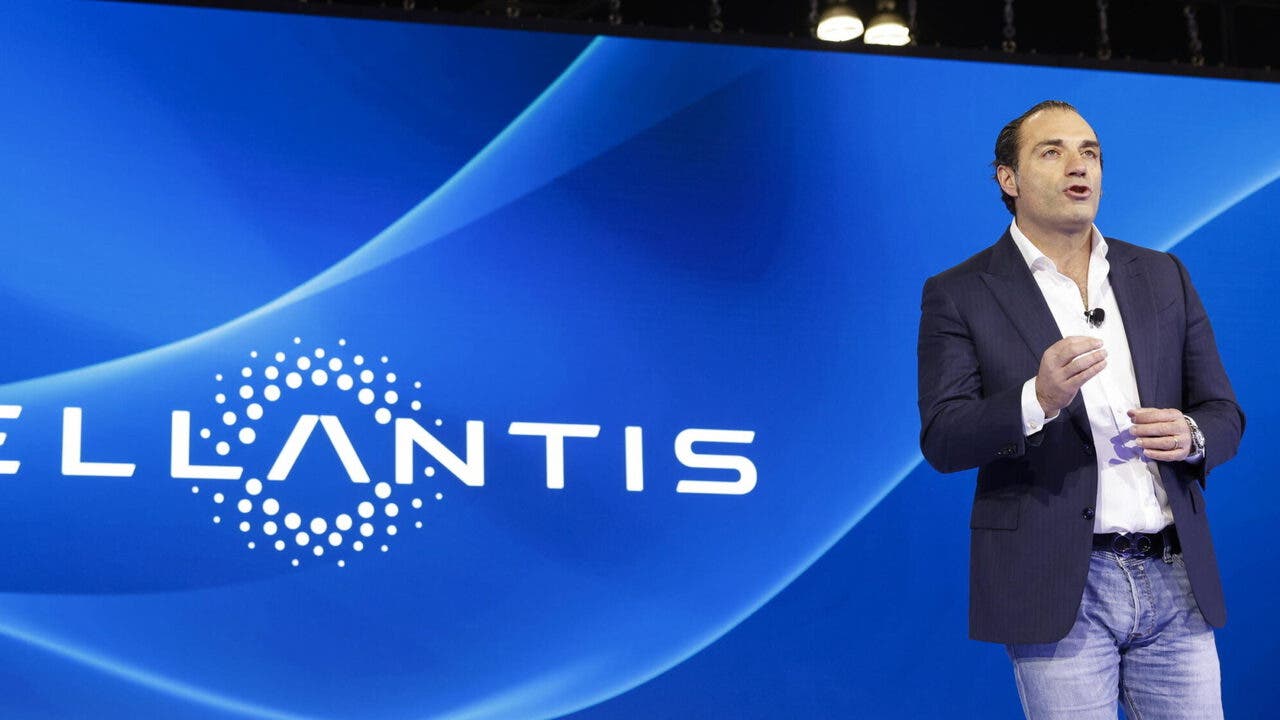
Stellantis is increasingly using Chinese partnerships with Leapmotor and Dongfeng to relaunch its European operations by filling underused plants, lowering fixed costs and speeding affordable EV development. Leapmotor is central to the plan, with production in Europe starting in Spain and potential assembly in France to improve utilization and reduce tariff impact. The strategy could support volumes and margins, but it carries brand overlap and competitive risks for Fiat, Citroën and Peugeot.
The market is likely underestimating how much this turns Stellantis from a pure OEM into a European contract manufacturing/industrial arbitrage story. If management can source Chinese architectures for lower-end EVs and hybrids, the immediate P&L lever is not just unit growth but a step-change in absorption of fixed manufacturing costs, which matters more than margin mix in the next 4-8 quarters. That makes underutilized European capacity an asset rather than a drag, and could support earnings even if core Western brands remain weak.
The second-order beneficiary is Stellantis’ supply chain: local logistics, component sourcing, and battery-adjacent suppliers tied to EU assembly should see incremental volumes without waiting for a full consumer demand rebound. The risk is brand cannibalization: if Chinese-badged products are materially cheaper with similar spec, Fiat/Citroën/Peugeot lose pricing power at the very segment where the group needs discipline most. That creates a subtle margin trade-off: volume recovery can coexist with gross margin compression if management over-rotates toward value-led models.
Catalysts should unfold in phases. In the next few weeks, sentiment may improve on operational optionality and tariff mitigation; over the next 6-12 months, the real proof point will be whether localized production starts translating into higher plant utilization and positive mix contribution. The tail risk is political: if EU regulators or unions frame these partnerships as industrial hollowing-out, implementation can slow materially, and any sign that Leapmotor/Dongfeng encroach on core-brand territory would quickly reverse the rerating.
The contrarian view is that this may be less a growth breakthrough than a defensive reset with better optics. Chinese partners are useful only if they remain complementary, but the cheapest vehicles in the lineup are often the ones that win share, so the boundary between partnership and internal competition is fragile. If execution is strong, the stock can re-rate on lower perceived downside; if not, the market will eventually treat this as a low-quality volume fill rather than a strategic advantage.
AI-powered research, real-time alerts, and portfolio analytics for institutional investors.
Request DemoOverall Sentiment
mildly positive
Sentiment Score
0.25
Ticker Sentiment
