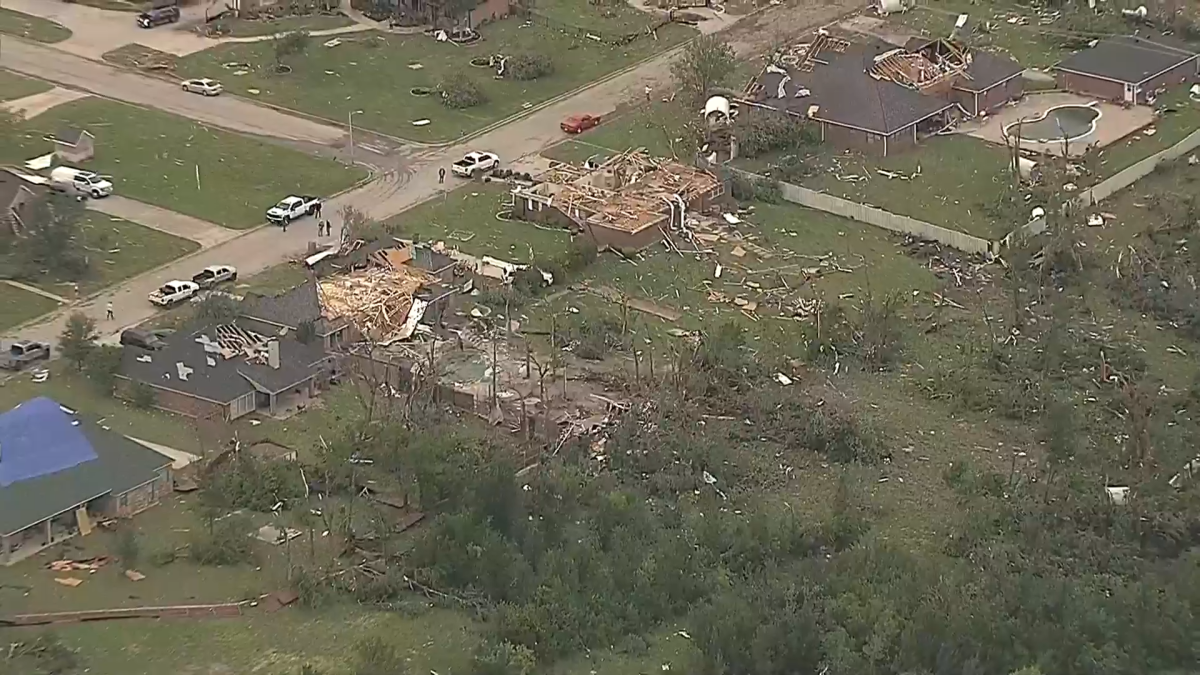
At least two people were hospitalized and several others treated for minor injuries after severe thunderstorms brought very large hail and tornado warnings to North Texas. Buildings were damaged or destroyed near Mineral Wells, prompting disaster declarations in Palo Pinto and Parker counties and a nighttime curfew. The Red Cross has opened a shelter at Mineral Wells High School as residents assess damage and report losses.
This is an insurer-loss event first, but the marketable impact is likely to show up through reinsurance, not local property carriers. The key second-order effect is that a concentrated hail/tornado corridor in Texas can drive outsized claims severity because roof replacement, siding, auto, and interruption losses tend to stack quickly even when headline casualty counts are small. That usually favors short-duration expressions in reinsurers and cat-exposed names before any meaningful estimate revision, while local contractors, debris removal, temporary housing, and materials suppliers see a short-lived demand pulse.
The more interesting catalyst is not the storm itself but the assessment cadence over the next 3-10 days. If damage proves more widespread than initially visible, expect a jump in reserve uncertainty and a wider range of outcomes for carriers with Texas-heavy homeowners books or high catastrophe loss ratios. A fast FEMA/insurance response can cap follow-on litigation and lower tail severity, but delays in inspection or curfew-related access issues can extend claim settlement timelines into weeks, which is when loss ratios tend to reprice.
The broader infrastructure angle is that repeated severe-weather clusters in North Texas reinforce capex demand for hardened roofing, utility resilience, and municipal rebuild spending. That supports companies exposed to storm repair and grid hardening, but the trade is tactical rather than secular unless this becomes part of a multi-event season. The contrarian take: the immediate market may underprice casualty-only headlines because property damage inflation, not injury counts, drives economic impact; however, unless there is evidence of commercial/industrial damage, this is unlikely to move broader macro or industrial earnings estimates materially.
AI-powered research, real-time alerts, and portfolio analytics for institutional investors.
Request DemoOverall Sentiment
moderately negative
Sentiment Score
-0.35
