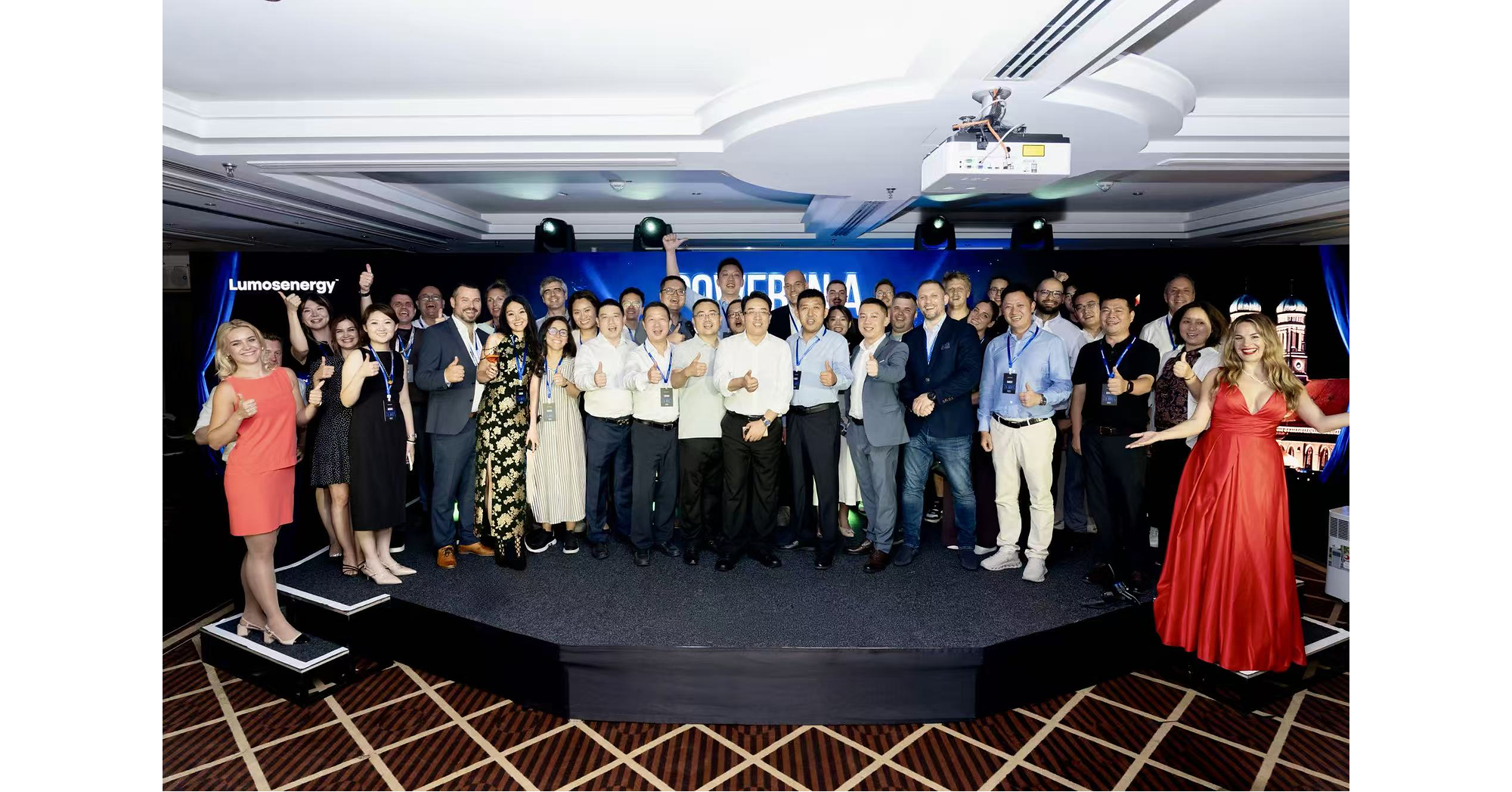
Lumosenergy launched its international brand rollout in Munich and officially shifted from Gresgying to Lumosenergy during Power2Drive Europe 2026. The company reported 2025 deliveries of 170,000+ DC chargers, rollout projects in 50+ countries, and annual revenue of $250M+ alongside a ~$1B market cap. It also unveiled a 220,000 sqm CO₂-neutral Xi'an Mega Factory targeting annual capacity of 200,000 DC, 500,000 AC chargers and 2.4 GWh battery energy storage, supported by CE-certified products and a Europe-focused partner strategy.
This reads less like a demand inflection and more like a supply-side commercialization push: a Chinese charger vendor is trying to reprice itself as a European industrial supplier. If it executes, the first-order winners are fleet operators and CPOs that can buy lower-cost hardware and optional integrated storage, but the bigger second-order effect is margin pressure on smaller pure-play charger OEMs that rely on service breadth and local certification to defend pricing.
The key market mechanism is not unit growth; it is ASP compression and channel displacement. European hardware names with thinner balance sheets and weaker installed-base service networks are most exposed because a credible, CE-compliant entrant with local spare parts can win tenders even without best-in-class brand equity. That said, the moat in this market is still uptime, grid integration, and financing, so the move is more threatening to commoditized AC/DC box vendors than to diversified electrification names.
Time horizon matters: the near-term reaction should be limited because this is a PR event, not an audited backlog or order announcement. Over 1-3 months, watch for tender wins, distributor signings, and any evidence of pricing concessions; over 6-18 months, the real thesis is whether European charger OEM margins structurally reset lower as Chinese capacity gets localized. The main falsifier is regulatory friction—procurement restrictions, tariff escalation, or evidence that after-sales/service requirements block share gains despite the brand repositioning.
AI-powered research, real-time alerts, and portfolio analytics for institutional investors.
Overall Sentiment
mildly positive
Sentiment Score
0.25
