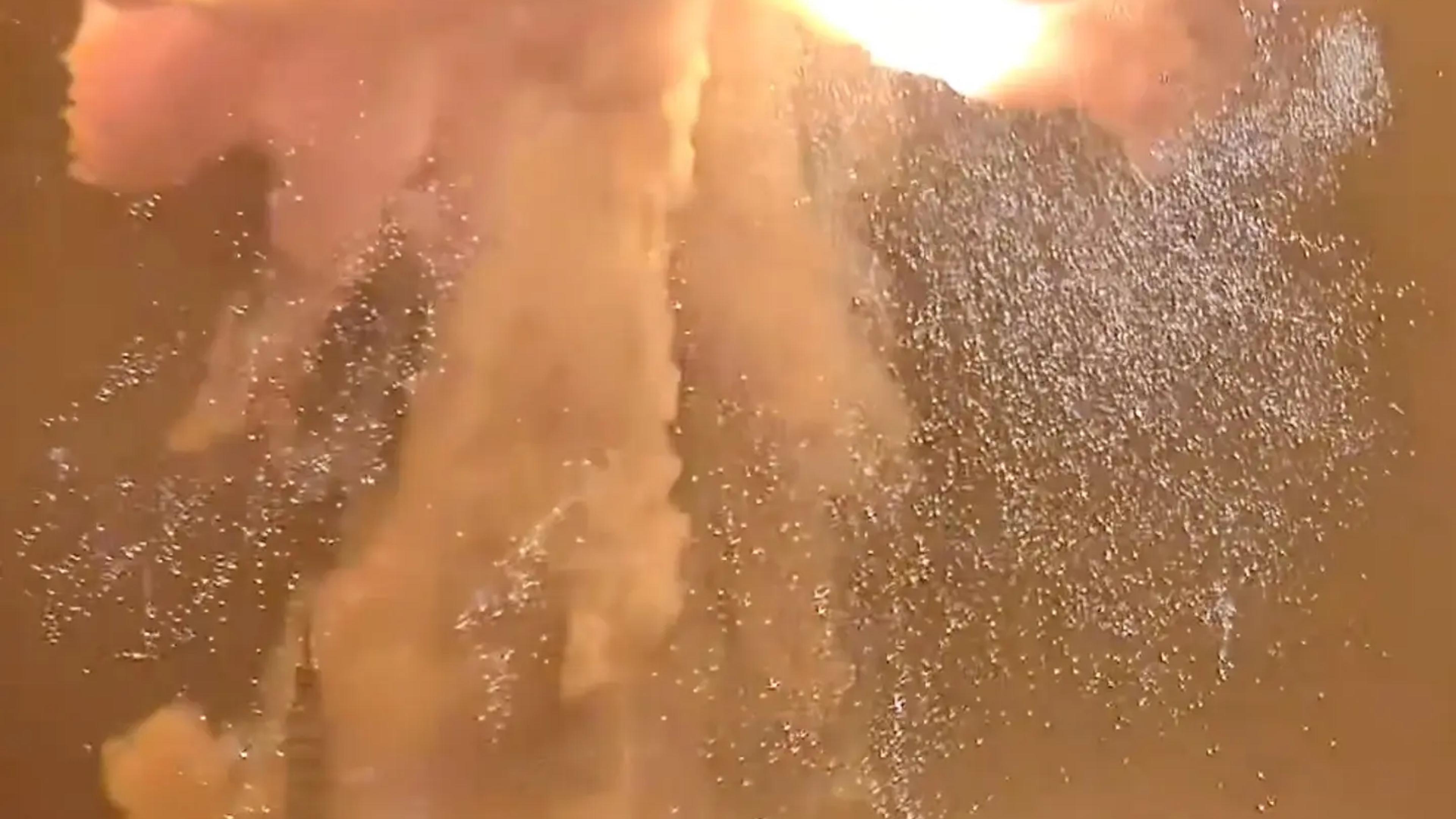
Blue Origin’s New Glenn exploded during a seven-engine test at Cape Canaveral, destroying the 322-ft rocket and damaging Launch Complex 36, including the mobile tower and one lightning-rod tower. The accident is a material setback for NASA’s Artemis and Moon Base plans because New Glenn is needed for Blue Origin’s Blue Moon Mark II lander and related lunar cargo missions. Recovery timing is uncertain, but if the pad is out for months, Artemis III and other lunar milestones could slip materially.
This is less a one-off engineering mishap than a sequencing reset for the entire lunar supply chain. The near-term winner is the incumbent with the deepest pad redundancy and fastest launch cadence: any customer urgency that survives this event will migrate toward providers that can de-risk schedule slip, which is structurally favorable to SpaceX’s broader launch franchise even if its own lunar architecture remains immature. The loser is not just Blue Origin’s program; it is every NASA timeline that assumed two independent heavy-lift paths would mature in parallel, because the failure removes optionality precisely where the program needs it most.
The second-order issue is capex inefficiency: one-pad dependence turns every pad repair month into a full operating halt, so even a technically fixable root cause can create a multi-quarter revenue and reputation overhang. That matters because launch providers are valued on backlog credibility, not just booked work; a pad-loss event tends to compress future contract awards, delay milestone payments, and raise insurance and customer escrow costs across the sector. Expect a drag on adjacent industrials tied to launch infrastructure rebuilds and a possible reallocation of subcontract work toward firms with pad construction, fluid systems, and range-safety capabilities.
The market may underappreciate the asymmetry between vehicle recovery and pad recovery. A rocket can be redesigned in months; a custom launch complex can take far longer if there is hidden damage to the deluge, electrical, or structural systems. If the pad is out for 6-12 months, the Artemis diversification thesis breaks, and NASA is forced into a single-vendor dependence that increases political and execution risk rather than reducing it.
Contrarianly, this could be buyable for companies whose valuation already discounts schedule slippage and whose demand is driven by broader launch market growth rather than this specific lunar path. The biggest overreaction risk is if the failure is traced to a contained ground-test issue with limited pad reconstruction, in which case sentiment will recover faster than fundamentals. But until the damage assessment is known, the probability-weighted outcome is delayed lunar milestones, lower confidence in Blue Origin’s commercialization path, and a stronger relative position for the best-capitalized launch incumbent.
AI-powered research, real-time alerts, and portfolio analytics for institutional investors.
Request DemoOverall Sentiment
strongly negative
Sentiment Score
-0.78
Ticker Sentiment
