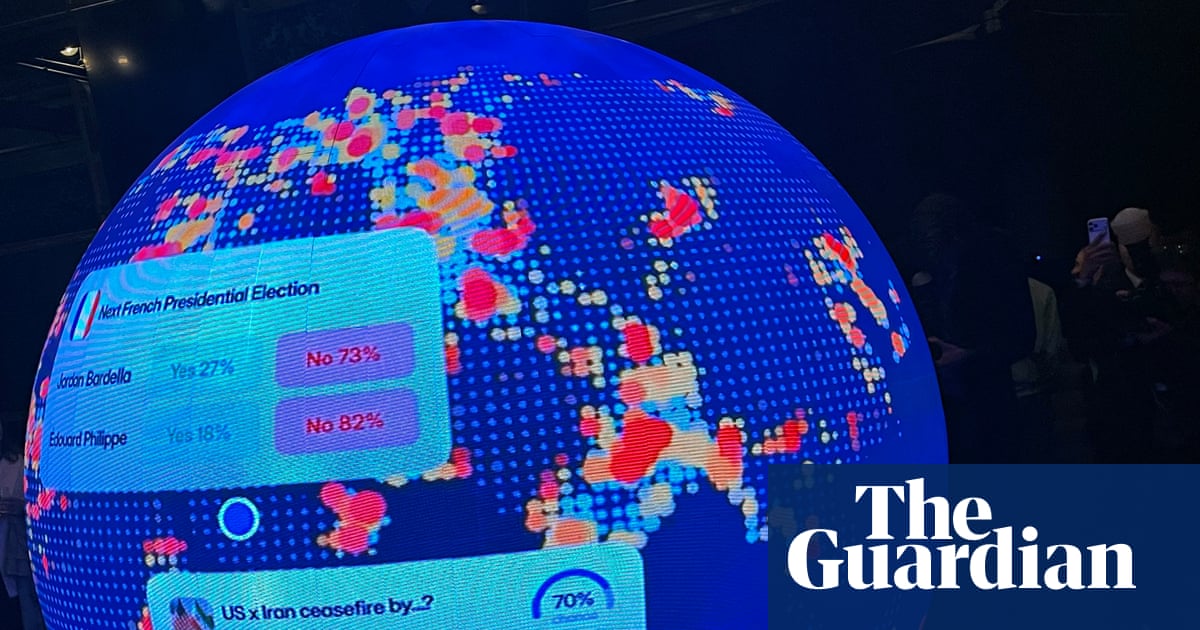
Polymarket and similar prediction markets now have hundreds of millions of dollars at stake on geopolitical outcomes, including more than $500,000 on whether Russia captures Kostyantynivka and $280m on the US-Iran ceasefire. The article highlights concerns that small groups of traders, insiders, and UMA token holders can influence pricing and resolution, raising regulatory and market-integrity risks. Intercontinental Exchange has said it will invest up to $2bn into Polymarket, underscoring growing mainstream financial interest despite the controversy.
ICE is the clearest structural winner if prediction markets migrate from niche crypto rails to regulated distribution: it monetizes data, liquidity, and listings without needing to be the venue where every contract is settled. The second-order edge is that institutional endorsement makes the product more legible to allocators and creates a path for copycat binary-event products to be embedded inside existing market infrastructure, which should expand take rates across exchanges and data feeds rather than just on the original platform.
NDAQ has a plausible but more optionality-driven benefit. If binary-event contracts get approved as a listed product, Nasdaq can participate in a new derivatives vertical with minimal balance-sheet risk, but the bigger upside is flow capture from adjacent hedging and retail speculation rather than direct contract economics. The market is probably underestimating how quickly these products can be packaged into indices, macro event hedges, and broker distribution, but overestimating near-term revenue impact given regulatory friction and settlement ambiguity.
GS is the least direct beneficiary in the base case, but there is an important trading angle: volatility and event-driven flow creation. If prediction markets become a mainstream sentiment input, banks with strong macro, derivatives, and structured product franchises can warehouse demand around elections, war risk, rates, and commodities. The flip side is reputational and regulatory noise; any high-profile dispute over manipulation or settlement could delay adoption by months, not years, and force institutions to distance themselves from the space even if usage keeps growing.
The key contrarian point is that the headline risk is not the gambling angle itself; it is the credibility of the oracle layer. If market participants begin doubting settlement integrity, volume can persist at the retail edge while institutional adoption stalls, which would cap the monetization runway for all three names. That makes this a flow-and-regulation trade with asymmetric timing: near-term sentiment can swing quickly, but the real earnings impact likely lands over a 6-18 month horizon if exchange integration survives legal scrutiny.
AI-powered research, real-time alerts, and portfolio analytics for institutional investors.
Request DemoOverall Sentiment
mildly negative
Sentiment Score
-0.15
Ticker Sentiment
