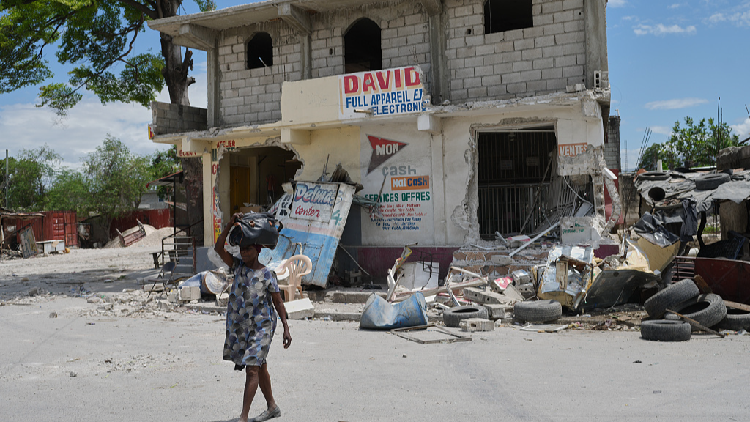
More than 5,300 people have fled violence in Cite Soleil, Haiti, since Sunday, with over half sheltered in 12 sites and many others hosted by already overstretched communities. Doctors Without Borders evacuated and suspended operations at Cite Soleil Hospital after treating more than 40 gunshot patients in under 12 hours and sheltering over 800 people. The same areas had already seen nearly 8,000 displacements in March and April, underscoring a deteriorating security and humanitarian situation in Port-au-Prince.
This is not a pure humanitarian headline; it is a localized disruption with a high probability of becoming a persistent operating drag on already-fragile import-dependent cash flows. The first-order losers are NGOs and public-service providers, but the second-order effect is a widening gap between “paper access” and actual deliverability: even if aid is funded, insecurity raises last-mile costs, delays distribution, and increases leakage, which historically turns a temporary displacement shock into a multi-month inventory and logistics problem.
The more relevant market read is on sovereign risk and EM funding optics. Haiti is too small for direct index impact, but repeated violence in the capital reinforces the broader frontier-market discount: higher political-risk premia, less appetite for local-currency exposure, and tighter terms for any infrastructure or reconstruction capital. That matters because every escalation lowers the probability of orderly project execution, so contractors, insurers, and any vendor relying on milestone-based payment face a growing receivables and force-majeure risk.
For healthcare, the issue is not demand destruction but demand misallocation: trauma and emergency care spikes while elective and chronic-care delivery collapses, which increases mortality and future treatment burden. Organizations with mobile clinics, telehealth-enabled triage, cold-chain logistics, and security-heavy operating models should outcompete static facilities, but only if they can maintain field access; the vulnerable cohort is anyone with fixed assets in high-risk zones.
Consensus likely underestimates duration. These episodes usually fade from headlines faster than they fade from balance sheets, and the relevant time horizon is months, not days, because displacement, sanitation breakdown, and interrupted care create secondary outbreaks and non-revenue recovery costs. A meaningful reversal would require either credible local security stabilization or a change in aid corridor access; absent that, volatility is the base case rather than the tail event.
AI-powered research, real-time alerts, and portfolio analytics for institutional investors.
Request DemoOverall Sentiment
strongly negative
Sentiment Score
-0.70
