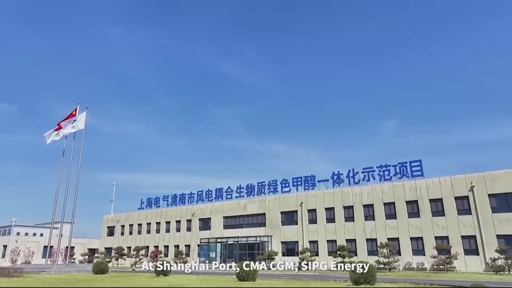
Shanghai Electric announced an 8,000 metric-ton biomethanol bunkering operation at Shanghai Yangshan Port (Aug. 17), described as the largest single biomethanol bunkering on record, supported by its Taonan green methanol project. The company highlighted that the Taonan project is delivering stable large-scale supply via a north-to-south methanol corridor (Jilin production, Dalian transit/storage, Shanghai bunkering). Management framed this as progress toward China’s dual-carbon goals and plans to expand integrated green-fuel capacity for maritime and aviation, including hydrogen-coupled biomass gasification and SAF developments.
This is more important as a proof-of-corridor event than as an earnings catalyst. The economic value is shifting from the fuel molecule itself to the logistics stack around it: storage, certification, terminal access, and contracted offtake. That tends to reward whoever controls the route and compliance documentation, while commoditizing the underlying fuel over time.
For competitive dynamics, the near-term losers are conventional bunker suppliers and, second order, any alternative fuel that depends on a single infrastructure bottleneck. If methanol bunkering becomes repeatable on a Shanghai-to-north China corridor, the market will start pricing a broader operating network rather than a one-off pilot, which is a better setup for port operators and integrated fuel logistics than for pure-play fuel producers. The real upside likely accrues only if the Phase-II buildout converts this into recurring volumes, because that is what would justify better financing terms and lower project-risk premiums.
The contrarian view is that the market may be over-anchoring on the "record" framing. Shipping adoption usually lags headlines by quarters, not weeks, and remains highly route-specific until engine availability, fuel pricing, and compliance credits all line up. Falsifiers are straightforward: no follow-on bunkerings within 1-2 quarters, delayed Phase-II capex, or evidence that green methanol stays structurally uneconomic versus conventional fuel once subsidies and carbon credits are stripped out.
AI-powered research, real-time alerts, and portfolio analytics for institutional investors.
Overall Sentiment
mildly positive
Sentiment Score
0.25
Ticker Sentiment
