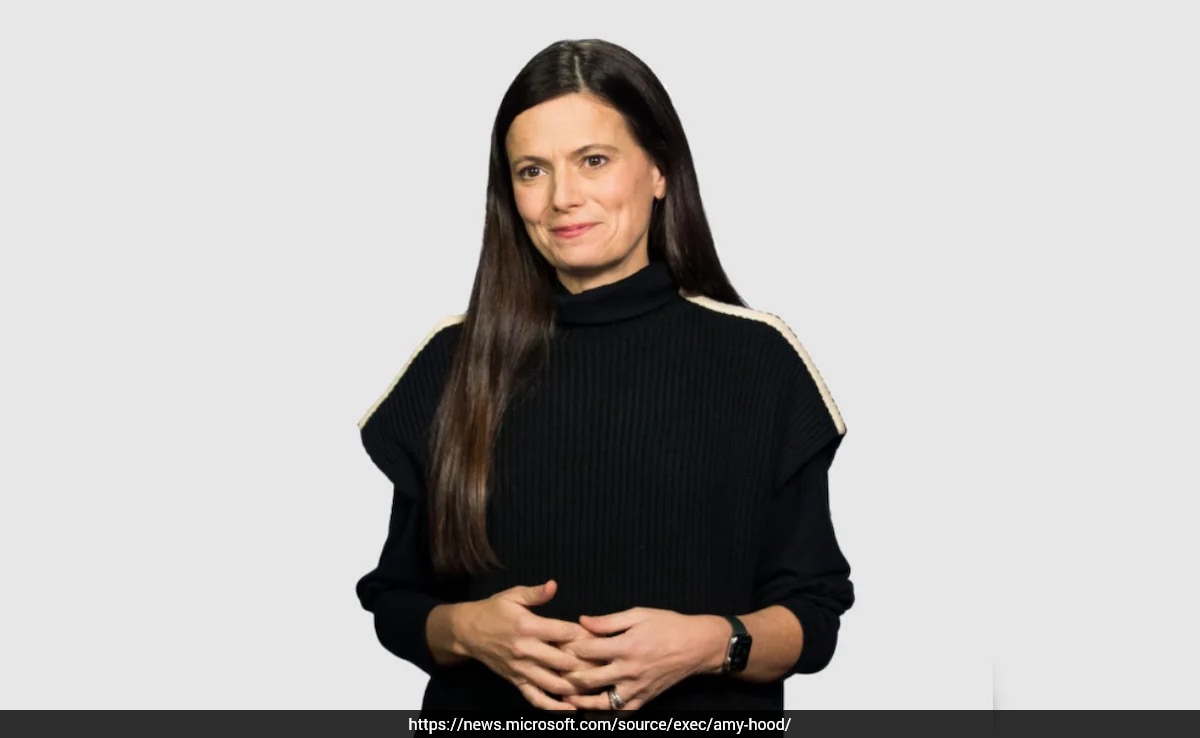
Microsoft CFO Amy Hood told Duke graduates to stay flexible, emphasizing that career success is rarely linear and that setbacks and uncertainty are part of professional growth. She also noted the current tech hiring slowdown amid rising AI investment, but the piece contains no new financial results, guidance, or company-specific operational update. The article is mainly a profile/commencement speech with minimal direct market relevance.
The key market read-through is not about the executive anecdote itself; it is that Microsoft is implicitly signaling a more elastic talent model while AI-driven hiring remains selective. In a labor market where product cycles are shortening and headcount growth is under pressure, the winners are firms that can redeploy labor into high-ROI AI initiatives without broad-based hiring expansion. That is structurally supportive for MSFT’s operating margin durability, but it also highlights a second-order risk for the broader software complex: revenue growth can remain healthy while employment and recruiter demand stay soft, dampening the downstream ecosystem around campus recruiting, staffing, and early-career tech hiring.
For Goldman Sachs, the article is essentially noise at the operating level. Any read-through is indirect: elite talent continues to view finance as a flexible option rather than a fixed career endpoint, which supports the franchise value of top-tier brand employers, but does not move the earnings needle. The more relevant implication is competitive: if AI continues to compress the number of junior hires needed per unit of output, the labor-arbitrage advantage shifts toward balance-sheet-rich platforms that can invest in automation faster than smaller peers.
The contrarian point is that this kind of message often appears when management wants to normalize a tighter labor market and preempt concerns about slower hiring. That makes the tone mildly positive for margin expectations but potentially underwhelming for investors hoping for a near-term acceleration in top-line growth from AI monetization. Over the next 3-12 months, the catalyst to watch is whether AI capex translates into faster revenue per employee; if not, the market may start rewarding companies that show explicit headcount discipline over those that merely narrate it well.
AI-powered research, real-time alerts, and portfolio analytics for institutional investors.
Request DemoOverall Sentiment
neutral
Sentiment Score
0.05
Ticker Sentiment
