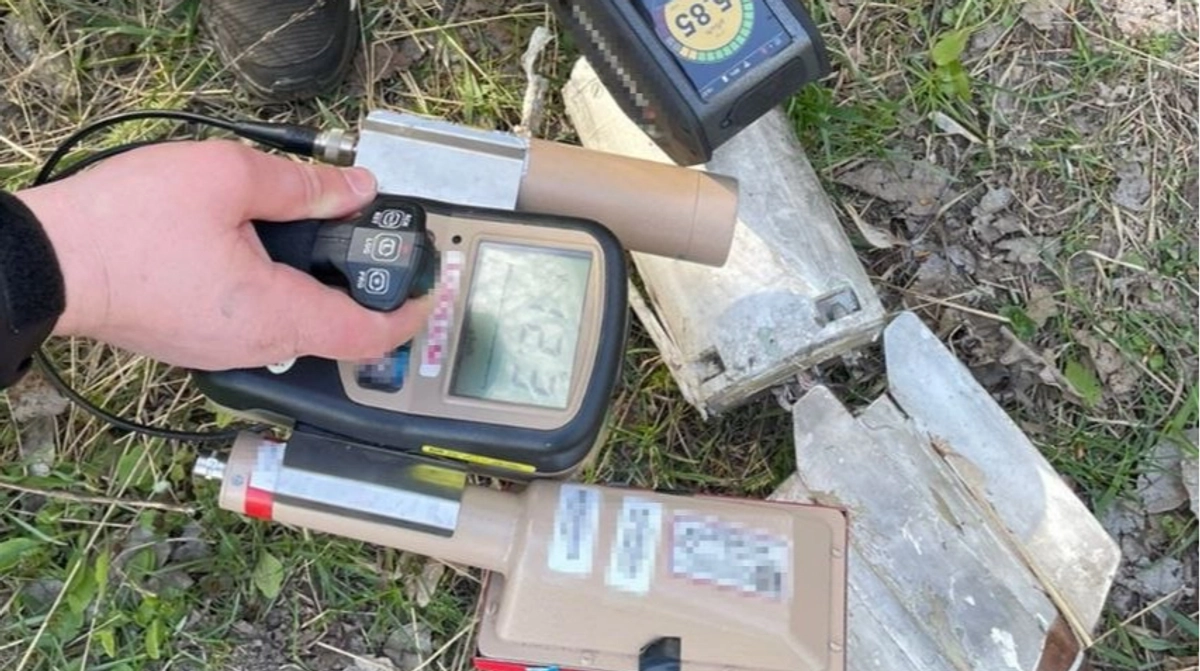
Ukraine’s Security Service reported elevated gamma radiation of 12 microsieverts per hour on debris from a modified Russian Geran-2 attack drone used in the April 6-7 strike on Chernihiv Oblast. Tests found depleted-uranium striking elements in the warhead, prompting a pre-trial war-crimes investigation under Article 438 and transfer of the ordnance to radioactive waste storage. The event underscores heightened wartime hazard and contamination risk, but is unlikely to have direct broad market impact.
This is less a one-off battlefield headline than a signal of capability escalation: if radioactive/DU components are now being embedded in attack systems, the marginal cost of cleanup, interdiction, and any post-strike activity rises materially. The immediate marketable effect is not on a listed asset directly, but on the probability distribution for defense spending, radiation monitoring, and CBRN-adjacent procurement in Europe over the next 6-24 months.
The second-order winner set is broader than classic missile defense. Firms selling contamination detection, decontamination, protective gear, remote inspection, and infrastructure hardening should see a faster tender cycle because governments will overpay to reduce public-health and litigation exposure. The loser set includes municipalities, contractors, and logistics operators near conflict-adjacent corridors: even low-probability contamination events can trigger work stoppages, insurance repricing, and longer dwell times for recovery crews.
Catalyst path matters. In days, the trade is sentiment and procurement urgency; in months, it becomes budget reallocation toward CBRN and counter-UAS systems; over years, it can normalize a higher baseline for radiological screening at borders, airports, and energy infrastructure. The key reversal risk is political: if subsequent forensic work suggests the event is isolated or the radiation risk is overstated, urgency fades and the spending impulse decays quickly.
The consensus is likely to focus on the geopolitical optics and miss the operational consequence: contamination fear can be more economically disruptive than the blast itself. That makes the event asymmetric for companies tied to emergency response and critical-infrastructure security, while the headline risk may be overdone for broad defense primes that already trade on elevated European rearmament expectations.
AI-powered research, real-time alerts, and portfolio analytics for institutional investors.
Request DemoOverall Sentiment
strongly negative
Sentiment Score
-0.60
