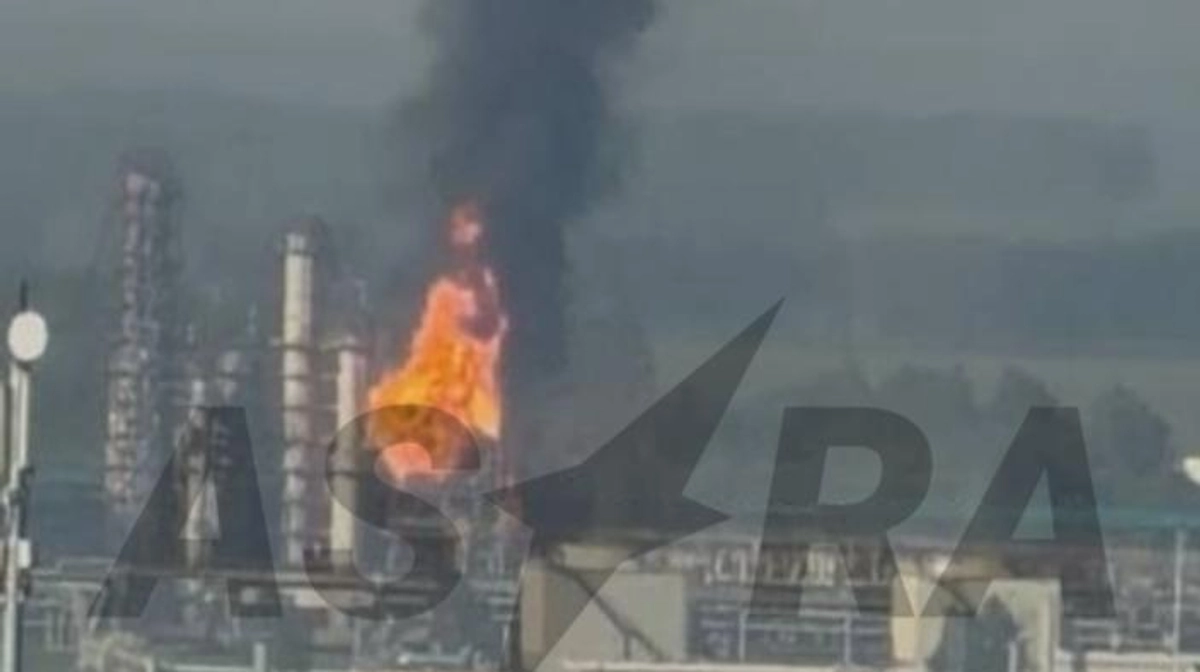
A drone strike hit the Lukoil-Nizhegorodnefteorgsintez refinery in Kstovo, Nizhny Novgorod Oblast, triggering a fire at the facility for the second time in three days. The refinery has an installed primary processing capacity of about 17 million tonnes per year and is an important supplier to the Moscow region, so repeated disruption could affect regional fuel supply. Russia's Defence Ministry said it shot down 273 Ukrainian UAVs overnight across multiple oblasts and occupied Crimea.
The market should treat this less as a one-off disruption and more as evidence that Russia’s refining system now carries a persistent operational risk premium. Repeated hits on the same inland plant raise the odds of unplanned outages compounding through the system, which can tighten domestic product balances even if crude exports remain relatively intact. The second-order effect is not just higher Russian fuel prices; it is a potential shift in product flows as Moscow prioritizes internal logistics over exports, which can tighten regional diesel and naphtha balances in Europe and the Black Sea basin.
The biggest near-term beneficiary is not necessarily crude producers, but refiners with spare capacity outside Russia, especially those exposed to middle distillates. If Russian primary processing is intermittently impaired, product cracks can widen faster than flat crude benchmarks because the constraint is on conversion capacity, not upstream supply. That matters most over the next 2-6 weeks, when inventories and spot arbitrage are the first pressure valves; if attacks continue into month-end maintenance windows, the market could start pricing a more durable reduction in Russian product export availability.
The contrarian view is that the headline risk may be overread if this stays localized and repairable. Russian industrial assets have repeatedly come back online quickly, and if the damage is limited to a primary unit rather than downstream finishing capacity, the market impact can fade after an initial spike. The more important catalyst is whether this becomes part of a broader campaign against refining and energy logistics, because that would force a larger reassessment of diesel availability and transport costs across Eurasia.
For portfolios, the cleanest expression is to own optionality on product spreads rather than outright crude. The asymmetric move is a long distillates / short crude relative-value trade if disruptions persist, while keeping duration short because headline-driven spikes can mean-revert once repairs are announced. Any trade should be sized for event risk over days-to-weeks, not months, unless there is evidence of repeated damage across multiple facilities.
AI-powered research, real-time alerts, and portfolio analytics for institutional investors.
Request DemoOverall Sentiment
strongly negative
Sentiment Score
-0.55
