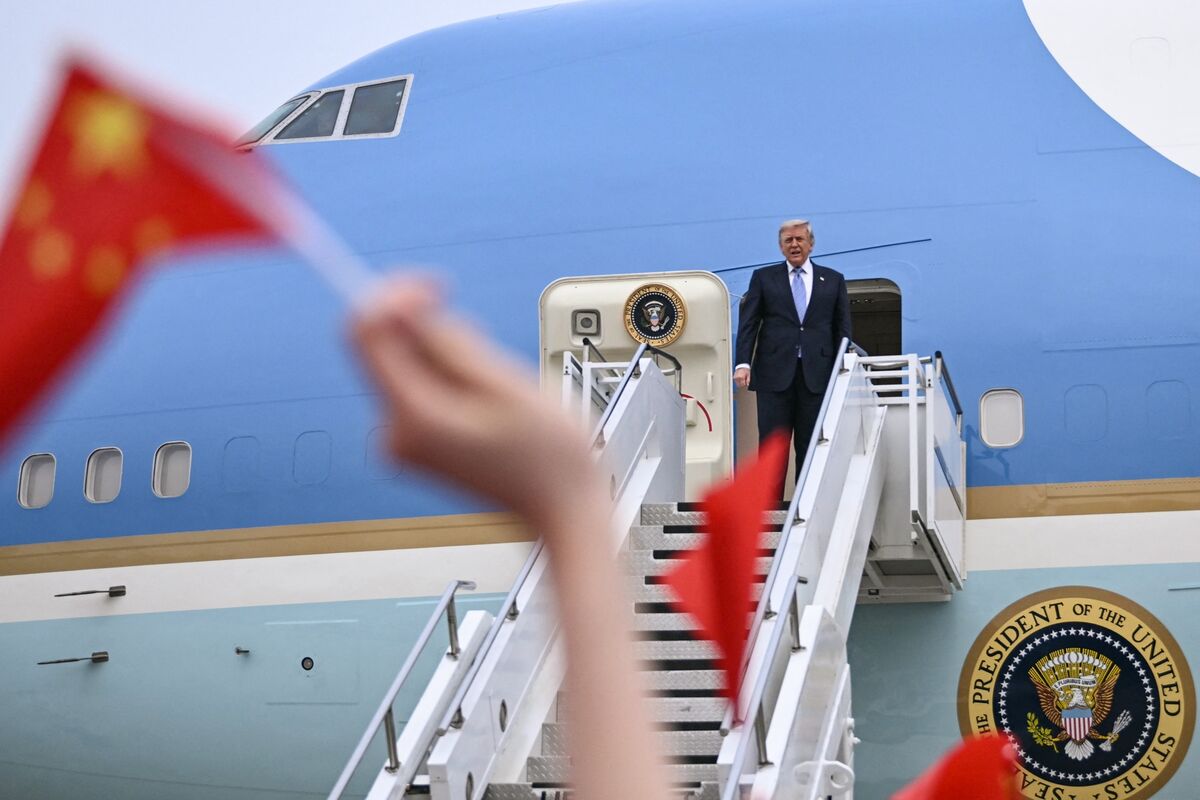
Trump said he made no commitment to Xi Jinping on Taiwan and will decide soon on a $14 billion arms sale to the island. The comments keep Taiwan policy unresolved and underscore ongoing U.S.-China geopolitical tension. The article suggests potential implications for defense contractors and cross-strait risk sentiment, but no final policy decision was announced.
The market is likely underpricing the signaling value more than the headline policy risk. A delayed or diluted Taiwan arms package would read as tactical de-escalation toward Beijing, but it also raises the probability of a later, larger, more visible package if the administration wants to reassert deterrence after the diplomatic window closes. That creates a classic “near-term ambiguity, medium-term overcorrection” setup for defense suppliers with Taiwan exposure and for regional equity beta that trades on perceived U.S. security guarantees.
The second-order effect is on procurement timing rather than aggregate demand. If the decision is pushed out, prime contractors can see order recognition slip by a quarter or two, but the strategic need for munitions, air defense, ISR, and anti-ship systems is not reduced—only repriced around political risk. That is bullish for names with broad Indo-Pacific backlog and less dependent on a single Taiwan tranche, while niche providers tied directly to foreign military sales paperwork are more vulnerable to timing gaps and headline volatility.
The more interesting risk is not the eventual sale itself, but whether Beijing interprets ambiguity as leverage and responds with drills, sanctions, or unofficial pressure on supply chains. That risk window is days to weeks, not years, and would likely hit semis, freight, and Taiwanese industrials before it hits U.S. primes. Conversely, a clean approval would be a relief rally for Taiwan proxies, but it also removes optionality for a bigger deterrence package later, which could cap the upside in defense after an initial pop.
Consensus may be too focused on the bilateral optics and not enough on the domestic political calculus. A cautious decision now lowers immediate confrontation risk but increases the chance this becomes a campaign issue and a bargaining chip in future trade talks, making the policy path more volatile over the next 3-6 months than the market is likely discounting.
AI-powered research, real-time alerts, and portfolio analytics for institutional investors.
Request DemoOverall Sentiment
neutral
Sentiment Score
-0.10
