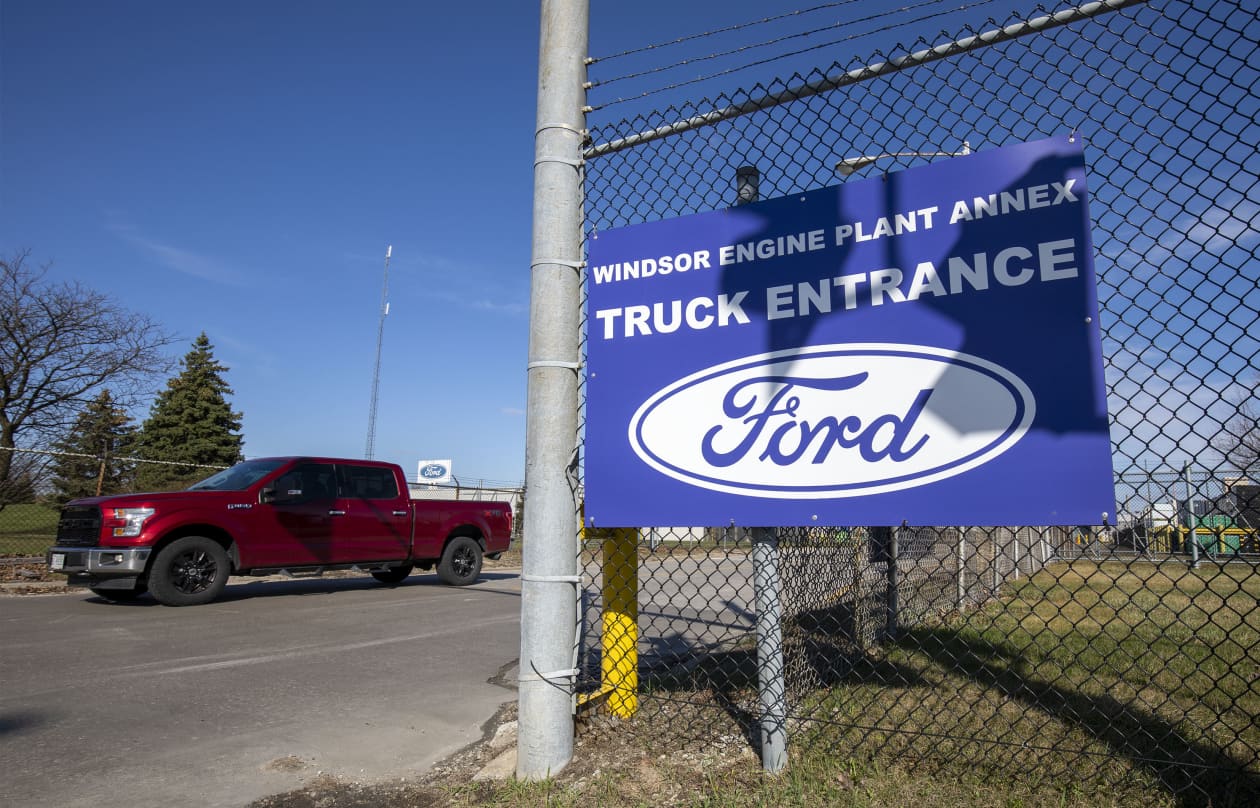
Trump escalated the trade fight with Canada by threatening a 50% tariff on Canadian-built automobiles starting Jan. 1, after imposing separate 50% tariffs over the weekend. Detroit automakers with production in Canada sold off as investors priced higher costs and supply-chain disruption: GM fell 2.2%, Ford dropped 4.0%, and Stellantis slid 4.3% versus a 0.2% decline in the S&P 500.
The immediate damage is to the Detroit OEMs because the pain is not just a tariff line item; it is a working-capital and scheduling problem. Cross-border complexity means they will either absorb the cost in Q1, push incentives harder to protect share, or disrupt plant utilization to re-sequence supply chains — all of which pressure gross margin before any real production fix can land.
The relative winner is the least Canada-exposed North American assembler set, with TSLA the cleanest public-market beneficiary if pricing discipline holds. More interestingly, the second-order losers may be housing-related names like LEN, DHI, and XHB if the trade fight lifts input costs and keeps shelter inflation sticky, because higher goods inflation can slow the Fed easing path and hit affordability faster than any direct tariff effect.
Over 1-3 months, the key catalyst is retaliation or an exemption framework; if Canada targets U.S.-built autos or parts, this turns from a margin story into a North American demand shock. Over 6-18 months, repeated tariff threats raise the probability of re-shoring capex, but that is a slow, expensive fix, so the more durable effect is lower earnings visibility and multiple compression for F/GM/STLA. The contrarian risk is that the market may be over-discounting the first-year earnings hit: legacy OEMs can pass through some cost and reroute inventory, so the bigger issue may be valuation and demand destruction, not immediate insolvency pressure.
AI-powered research, real-time alerts, and portfolio analytics for institutional investors.
Overall Sentiment
moderately negative
Sentiment Score
-0.55
Ticker Sentiment
