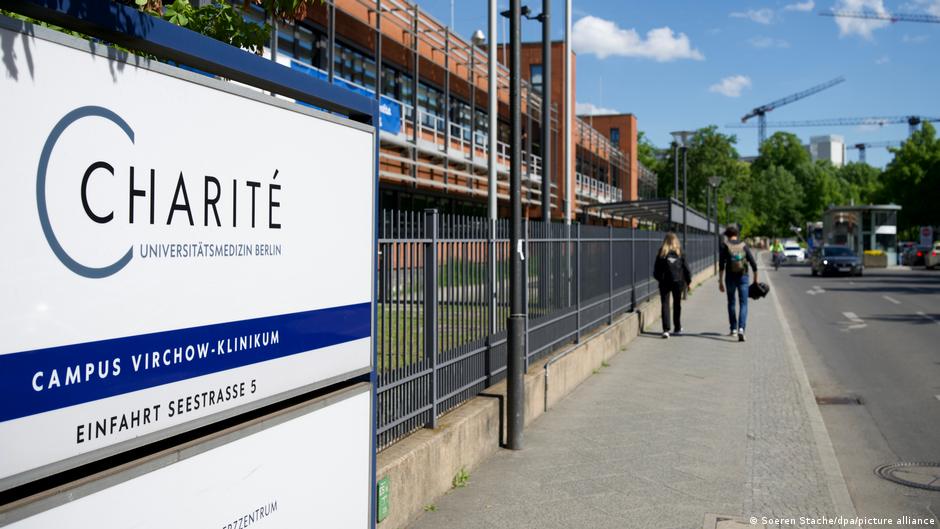
A US doctor infected with Ebola was admitted to Berlin's Charité hospital for isolated treatment after being flown in from Congo via a special medical aircraft. In Görlitz, emergency crews are still searching for three missing people more than 36 hours after a 19th-century house collapse, with police suspecting a possible gas explosion. The article is primarily public-interest news with limited direct market implications.
The immediate market read-through is not the headline itself but the operational reminder that high-consequence biological events still route through a very small set of specialized European facilities. That concentrates reputational and utilization risk in elite academic medical centers, while creating a modest but real tailwind for companies exposed to isolation infrastructure, controlled-access logistics, diagnostics, and infection-control consumables rather than broad-based hospital operators.
The more important second-order effect is policy and preparedness spending. Each imported case tends to pull forward procurement cycles for negative-pressure systems, PPE replenishment, specimen transport, and emergency response training, but the budget impact is usually delayed by 1-2 quarters and then fades unless there is evidence of secondary transmission. In other words, the trade is not “pandemic equities,” it is the narrow beneficiaries of episodic biosafety upgrades and specialty treatment capacity.
For the German economy and local infrastructure names, the damaged-building incident is a small but useful signal that municipal inspections, gas-line integrity, and aging-asset remediation may receive more scrutiny. That is constructive for infrastructure maintenance contractors and utility safety vendors, but only if the event triggers enforcement or funding changes; absent that, the market impact should stay localized. The contrarian point is that the public-health angle may be overestimated: modern containment protocols sharply reduce systemic risk, so any knee-jerk bid in pandemic proxies should fade quickly unless there are follow-on cases or travel restrictions.
Risk is mainly binary and short-dated: a confirmed secondary exposure cluster would extend the trade from days to weeks, while a clean containment outcome compresses the opportunity window to 48-72 hours. The biggest mispricing would be in assuming broad hospital or biotech benefit; the economic value accrues to niche suppliers with validated biosafety franchises, not to generic healthcare names.
AI-powered research, real-time alerts, and portfolio analytics for institutional investors.
Request DemoOverall Sentiment
mildly negative
Sentiment Score
-0.20
