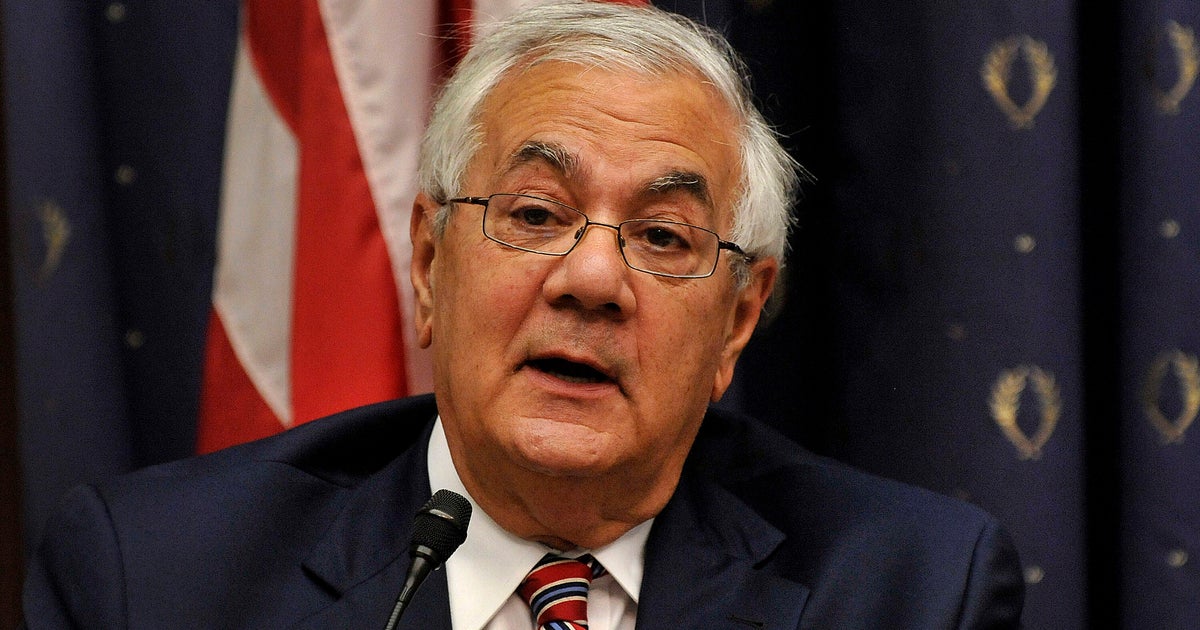
Barney Frank, the former Massachusetts congressman and co-sponsor of the 2010 Dodd-Frank Act, died at 86 after being in hospice care for congestive heart failure. The article highlights his 32-year congressional career, his role as House Financial Services Committee chair from 2007 to 2011, and his influence on financial regulation, including the Consumer Financial Protection Bureau. The piece is primarily an obituary and retrospective, with no direct market-moving policy or company-specific development.
The immediate market read-through is not about Barney Frank’s passing itself; it’s about the durability of the regulatory architecture he helped anchor. In practice, the biggest beneficiaries are incumbents that already absorbed the post-crisis compliance regime, because a commemorative narrative around Dodd-Frank lowers the odds of near-term rollback being politically saleable. That matters most for banks and payments names with sensitive capital, CFPB, and supervisory assumptions, where the base case remains “status quo plus incremental tightening,” not deregulatory relief.
The second-order effect is more interesting for fintech. Frank’s legacy reminds the market that consumer-protection rhetoric can reassert quickly after any credit or payments scandal, so the asymmetry remains against lightly regulated growth platforms that depend on permissive interpretations of underwriting, fees, or partner-bank structures. If anything, the path of least resistance is not broad repeal but enforcement-by-episode, which tends to compress multiples first and only later show up in earnings.
The contrarian angle is that this event may actually be mildly positive for select financials. If the market had been hoping for a more aggressive weakening of post-2008 constraints, this reduces that probability at the margin and may support valuation stability in money centers versus higher-beta lenders. The risk window is months, not days: the catalyst would be a separate political push around CFPB funding, mortgage rules, or bank capital, which would reopen the debate and move the group quickly.
For DOV, there is no direct fundamental read-through; the name only reflects district politics and should remain noise unless local governance commentary broadens into constituent-service/municipal sentiment, which is not a tradable edge. For NYT, the event is additive to the broader political-news cycle but not monetizable absent a longer trend in Democratic internal positioning or regulatory coverage intensity.
AI-powered research, real-time alerts, and portfolio analytics for institutional investors.
Request DemoOverall Sentiment
neutral
Sentiment Score
0.00
Ticker Sentiment
