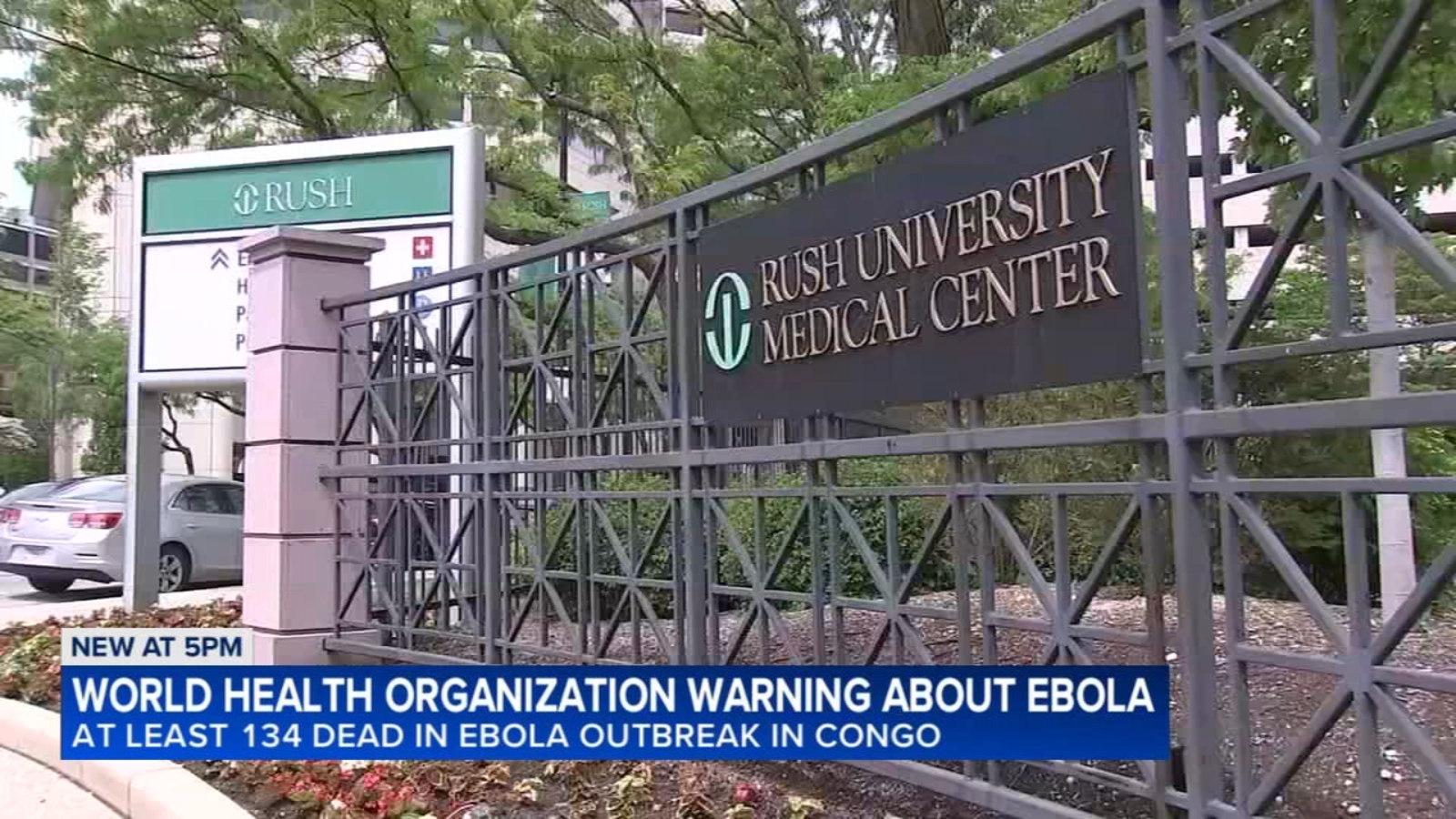
The WHO is warning of a growing Ebola outbreak in the Democratic Republic of Congo and Uganda that has already killed more than 130 people. U.S. health officials say the likelihood of spread to the United States remains low, with Rush and Lurie Children's designated as special pathogen treatment centers and CDC screening guidance in place for travelers from affected areas. The article is primarily a public health update, with limited direct market impact outside healthcare preparedness and travel screening policies.
The direct economic hit is likely negligible, but the market impact shows up through precautionary behavior rather than disease burden. The first-order beneficiaries are specialists in diagnostics, infection control, PPE, and hospital readiness; the second-order beneficiaries are firms with recurring revenue from hospital systems that need to re-stock emergency protocols and training after every public-health scare. In healthcare, the cleaner expression is not a broad sector bid, but a relative trade into names with durable consumable demand versus service-heavy providers that face margin pressure from isolation protocols and lower elective throughput if screening intensifies.
The bigger risk window is not the outbreak itself but the policy response over the next 2-8 weeks: airport screening, travel restrictions, and hospital testing can create short-lived demand spikes in test kits, specimen logistics, and certain lab workflows. That typically does not justify a fundamental rerating for large-cap health systems, but it can pressure margins if they absorb compliance costs faster than reimbursement updates. If the situation stabilizes, these names mean-revert quickly; if cases appear outside the current geographies, expect a fast reprice in names linked to point-of-care diagnostics and laboratory capacity.
The contrarian angle is that the market tends to overestimate contagion probability in developed markets while underestimating procurement inertia. Even if the public narrative turns alarmist, procurement cycles for healthcare supplies are slower than headline velocity, so the tradable move is often in sentiment-sensitive instruments rather than core operating fundamentals. A more durable read-through is that prior pandemic infrastructure has lowered tail risk for U.S. health systems, limiting the upside for broad defensive bids and making any sector-wide rally vulnerable to fade once case counts remain geographically contained.
AI-powered research, real-time alerts, and portfolio analytics for institutional investors.
Request DemoOverall Sentiment
moderately negative
Sentiment Score
-0.35
