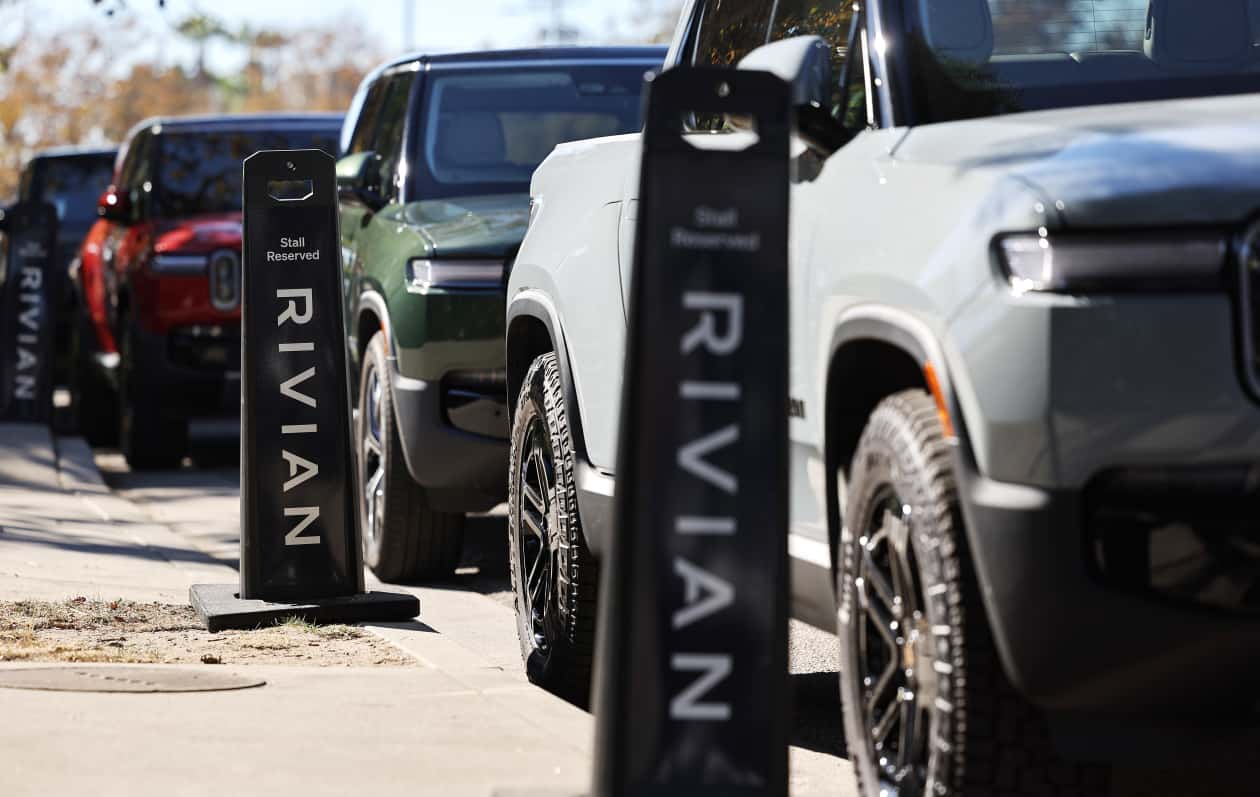
Rivian’s stock fell over 13% after a share offering raised fresh concerns about its ongoing cash troubles, marking the worst one-day drop in roughly 20 months. The selloff has flipped the stock’s 2026 performance to negative, down 11% YTD versus a +2% position through Monday.
This is less a one-day sentiment event than a financing credibility reset. In a name like RIVN, repeated equity issuance does not just dilute; it tells the market the operating model still cannot self-fund capex and working capital, so the stock deserves a persistent capital-overhang discount until there is evidence the burn rate is structurally lower. That dynamic usually pushes the multiple down faster than the fundamental damage, because investors start marking future raises before they happen.
The second-order effect is on the rest of the unprofitable EV complex: LCID and NIO should trade with a wider financing-risk premium, even if their own near-term liquidity is unchanged, because the market tends to generalize one company’s need to sell stock into a sector-wide signal that external capital remains the real growth engine. Suppliers and lenders can also tighten terms after a visible equity raise, which is perverse for cash conversion and can force even more conservative inventory/receivables management over the next 1-3 quarters.
Contrarian view: the move may be too reflexive if the raise meaningfully extends runway and reduces near-term bankruptcy tail risk. The key falsifier over the next 1-2 quarters is not the stock price but cash burn per quarter and whether management can show gross-margin progression without another funding event; if burn improves and no follow-on capital is needed, the current drawdown can reverse sharply. If instead the company keeps leaning on equity despite flat operating metrics, this becomes a years-long valuation trap rather than a tradable dip.
AI-powered research, real-time alerts, and portfolio analytics for institutional investors.
Overall Sentiment
moderately negative
Sentiment Score
-0.55
Ticker Sentiment
