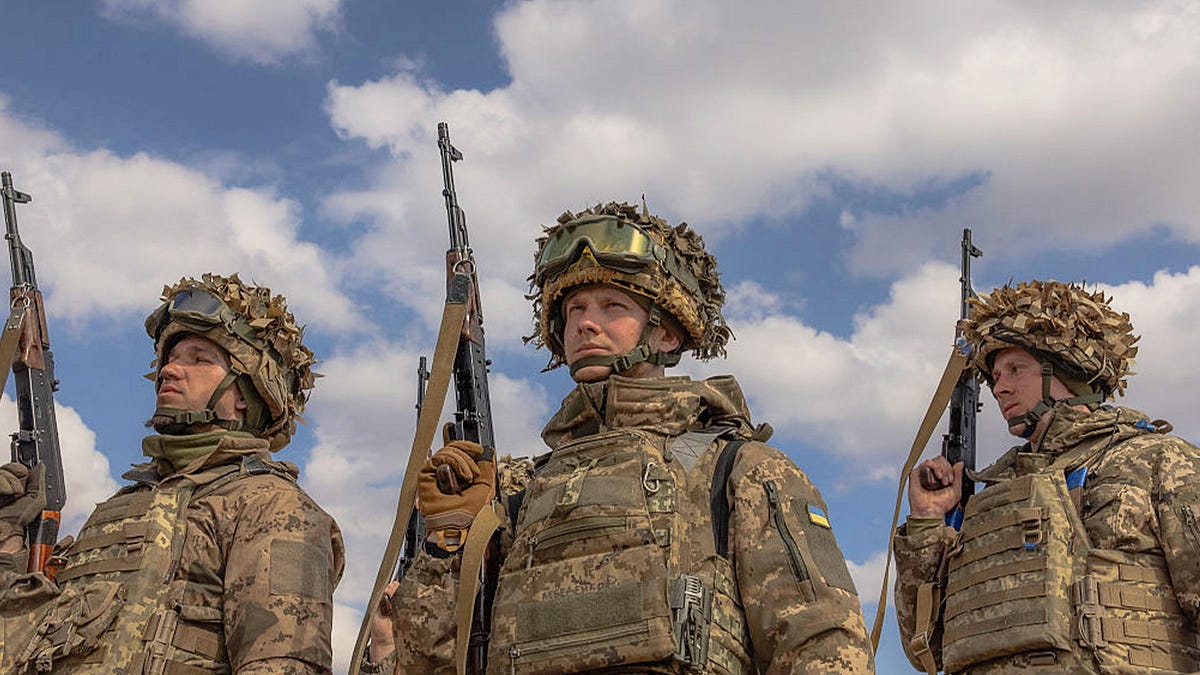
Trump объявлял a three-day ceasefire ahead of Russia’s Victory Day parade, while Ukraine responded with a symbolic decree allowing a Moscow parade on May 9, 2026. The article highlights Kyiv’s growing confidence and its ability to project force deep into Russia via long-range drones. The tone is neutral to uncertain, with geopolitical implications but no direct market-specific data.
The market implication is less about the symbolic ceasefire itself and more about the signaling battle over who controls escalation optics. Kyiv is demonstrating that its drone capability has become a strategic communications weapon: even without changing the front line materially, it can raise the cost of Russian domestic narrative management, which is a different kind of leverage than battlefield attrition. That matters because coercive pressure on elite sentiment, air-defense allocation, and parade/security spending can create disproportionate operational drag relative to the low unit cost of drones.
The second-order beneficiary is the Western defense stack, especially counter-UAS, ISR, electronic warfare, and short-range air defense suppliers. If Ukraine can repeatedly threaten high-visibility events in Moscow, procurement urgency shifts from traditional artillery replenishment toward cheaper, faster-to-field systems that defend fixed assets and urban nodes; that tends to help firms with software-defined sensors and intercept layers more than legacy heavy platforms. The loser set is broader Russian logistics and domestic infrastructure security, which may force resources away from the front and into rear-area protection, worsening an already constrained force-allocation problem.
The key risk is that this becomes theatrics without operational escalation: if drone pressure fails to inflict visible disruptions over the next few weeks, the market will fade the premium for “deep strike” narratives. But over a 3-6 month horizon, any successful disruption during high-profile Russian events would reinforce the view that Ukraine can impose asymmetric costs on Russian decision-making, which could extend defense multiples and keep a floor under NATO rearmament expectations. A reversal would likely require either tighter Russian air defenses, degraded Ukrainian launch capacity, or a diplomatic channel that credibly constrains long-range strikes.
Contrarian take: the consensus may be overpricing the headline and underpricing the procurement shift. The real trade is not broad war-risk beta; it is a relative-value rotation toward counter-drone and air-defense beneficiaries versus platforms tied to munitions volume alone. If this dynamic persists, the incremental budget dollar likely migrates to layered defense architectures, not just more shells.
AI-powered research, real-time alerts, and portfolio analytics for institutional investors.
Request DemoOverall Sentiment
neutral
Sentiment Score
0.00
Ticker Sentiment
