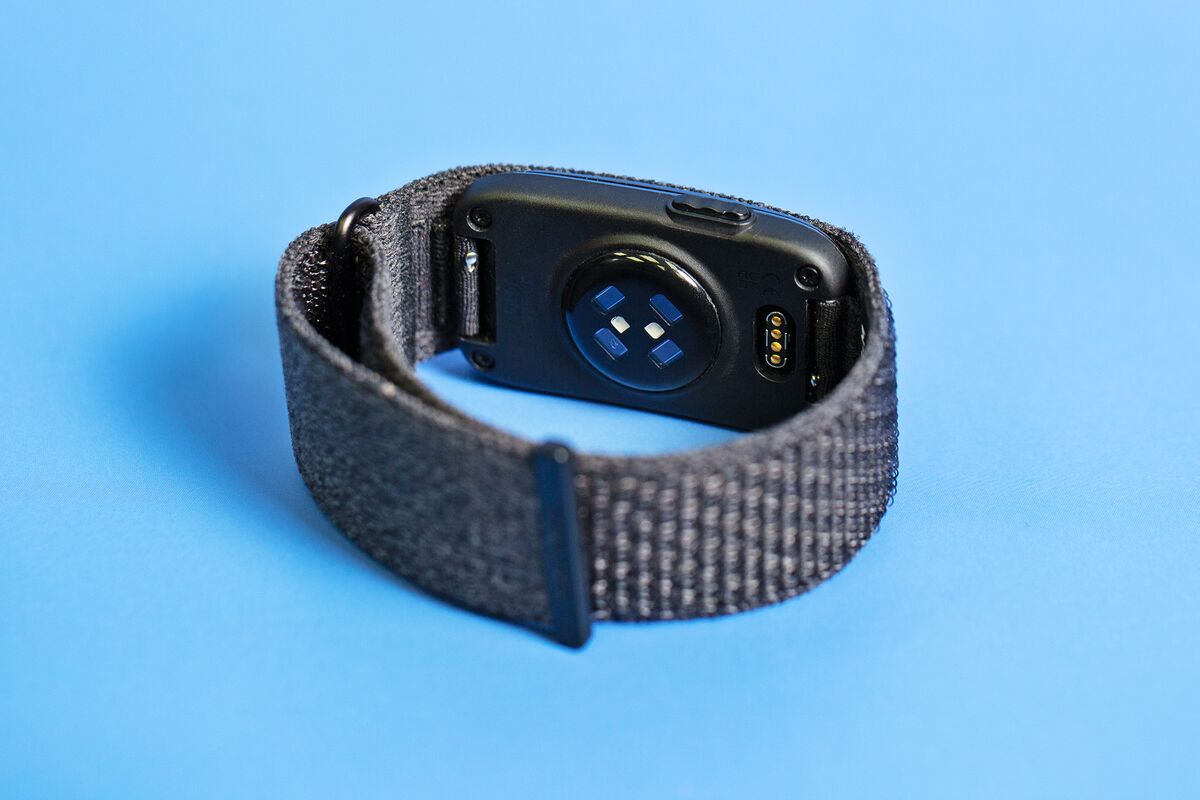
Garmin’s new $200 Cirqa Smart Band (announced last month) is positioned as a screenless Whoop rival, offering sleep/stress and vitals monitoring (including HRV, skin temperature, SpO2 and VO2 max) plus automatic exercise detection and ~1.5-week battery life. After two weeks of testing, the piece suggests the product may not replicate the deeper health-insights appeal that drove the category’s consumer popularity. Overall, expectations appear cautious as the review indicates potential gap versus Whoop’s value proposition.
Garmin’s move into screenless wellness is strategically more important than financially material in the next 1-2 quarters. The core issue is that the winning products in this category monetize behavior change through software, coaching, and recurring engagement; a one-off hardware sale with light analytics has a much lower lifetime value and weaker retention economics. That makes this launch look more like brand defense than a scalable new profit pool, and it raises the risk that GRMN is spending R&D and channel attention to chase a category where its differentiation is thin.
The second-order read-through is that the market may be overestimating how easily a hardware leader can pivot into subscription-style health tracking. If consumers want deep insights, the competitive set is really Whoop, Oura, and Apple’s ecosystem, not other watchmakers; if they want convenience and passive tracking, price elasticity is high and feature parity compresses margins quickly. In that framework, Garmin’s entry is more likely to validate demand for the segment than to capture meaningful share, which is negative for GRMN’s margin mix and probably positive for the larger platforms with stronger software and app lock-in.
Over 1-3 months, this is mainly a sentiment catalyst around whether the product gets traction in reviews and early adoption data. If attachment rates, subscription conversion, or app engagement are weak, the launch will fade into a distraction; if Garmin starts bundling services aggressively, watch for gross margin dilution before any revenue contribution shows up. The contrarian risk is that investors underestimate Garmin’s loyal endurance user base and distribution strength, so a sharper-than-expected reception could support a modest multiple expansion, but only if the company can prove it is not just shipping another commodity tracker.
AI-powered research, real-time alerts, and portfolio analytics for institutional investors.
Request DemoOverall Sentiment
mildly negative
Sentiment Score
-0.15
Ticker Sentiment
