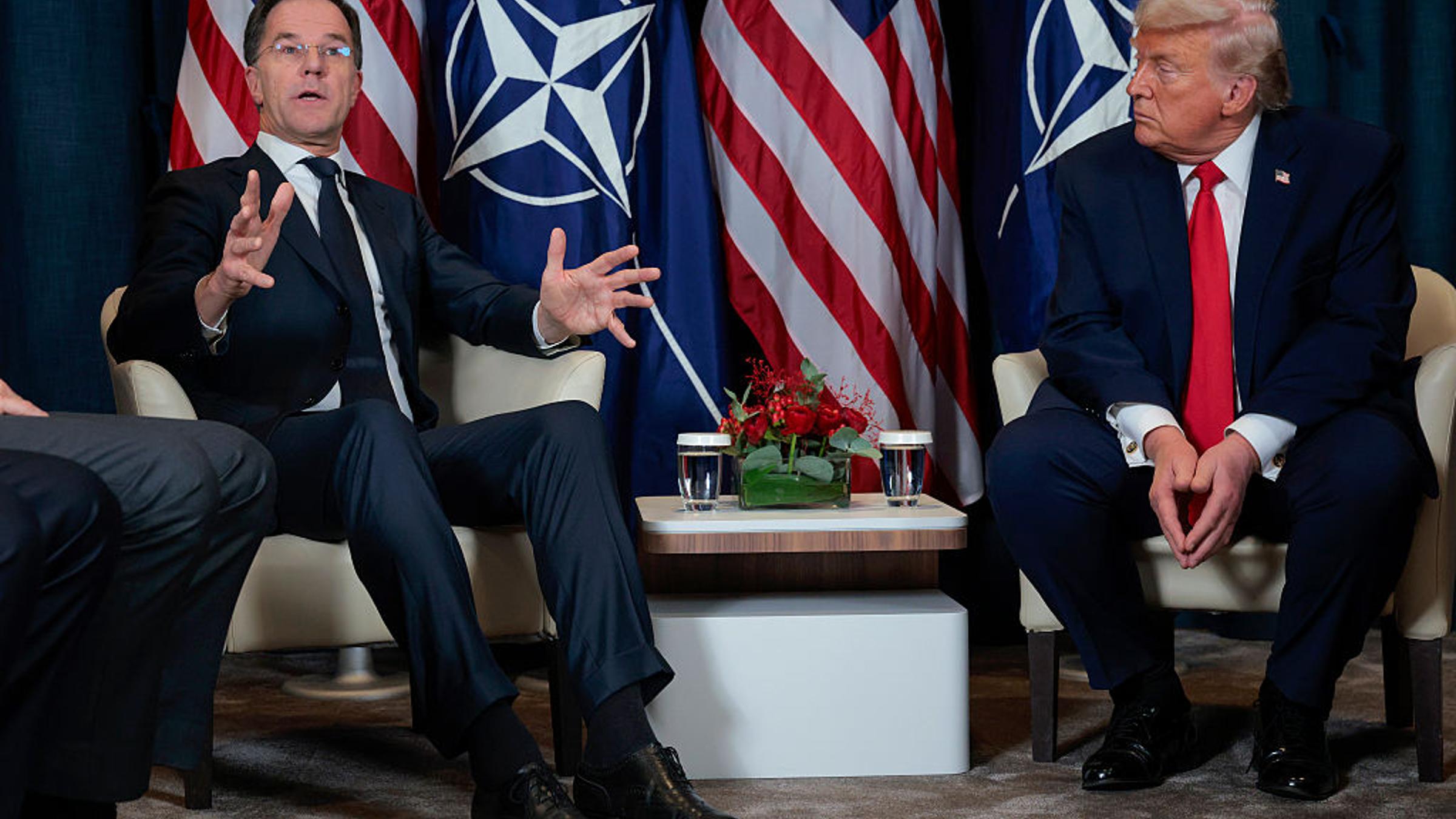
NATO said the U.S. troop drawdown in Europe will not alter defense plans, but the Pentagon has reduced Brigade Combat Teams in Europe from four to three, delayed 4,000 troops to Poland, and withdrawn 5,000 troops from Germany. The article highlights widening U.S.-Europe tensions over NATO burden-sharing, Iran policy, Greenland, and possible future troop cuts to Italy and Spain. The immediate market impact is primarily geopolitical, with elevated implications for European defense spending and regional security risk.
The market implication is not a clean “Europe defense up, U.S. defense down” trade; it is a re-pricing of procurement timing. A gradual U.S. force drawdown shifts the bottleneck from headline troop counts to European logistics, ISR, air defense, and munitions stockpiles, which means the first beneficiaries are not the prime troop carriers but the enablers with long lead-time production capacity. Expect European governments to front-load spending into systems that can be fielded quickly and politically justified domestically, especially air defense, drones, counter-UAS, ammunition, and base hardening.
Second-order, this is bullish for European industrial policy and mildly negative for U.S. defense contractors that depend on rotational presence and sustainment spending in Europe, but the damage should be uneven. Traditional U.S. primes with strong missile and air-defense franchises are less exposed than firms tied to manpower-heavy deployments, while European defense names with backlog visibility can get a multiple re-rate if budgets become less discretionary and more urgent. The bigger risk is not a collapse in NATO demand; it is margin pressure from accelerated procurement that favors domestic European content and short-cycle, lower-margin replenishment over large-ticket U.S. platform sales.
The key catalyst is whether this becomes a multi-year redeployment or a one-time political signaling event. If European allies actually convert rhetoric into near-term procurement, the trade lasts 6-18 months; if the U.S. softens after negotiations or a geopolitical shock, the drawdown premium fades quickly. A tail risk is that perceived weakening of the deterrence umbrella raises the odds of a Russia probe or Baltic/Arctic pressure test, which would abruptly accelerate spending and favor air-defense and munitions names over broader defense baskets.
AI-powered research, real-time alerts, and portfolio analytics for institutional investors.
Request DemoOverall Sentiment
neutral
Sentiment Score
-0.05
