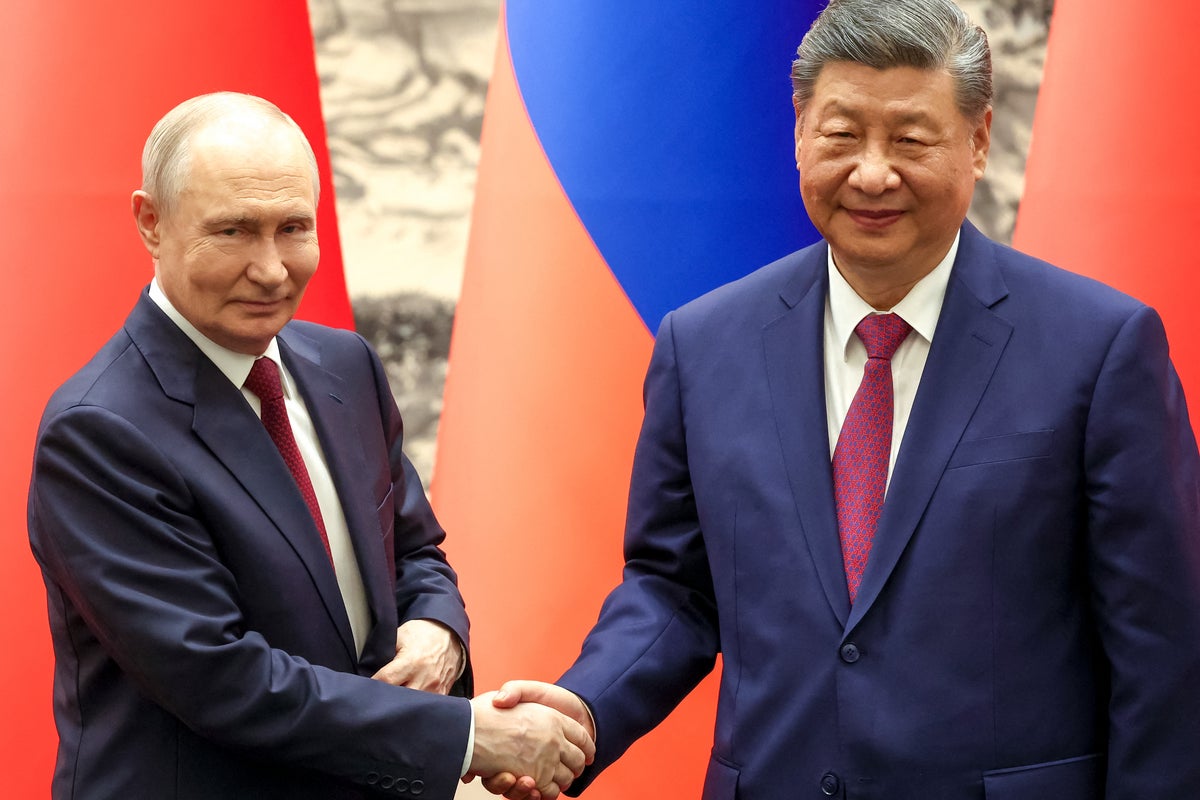
The article highlights escalating geopolitical risk, with Iran threatening to expand the conflict and the U.S. indicating it is in 'no hurry' to end the war. Xi and Putin also issued warnings about a more fractured global order, reinforcing a risk-off tone across markets. The backdrop points to elevated uncertainty for energy, defense, and broader emerging-market assets.
The market implication is less about the headline risk premium itself and more about the regime shift toward persistent tail-risk pricing across energy, shipping, defense, and EM risk assets. When geopolitical rhetoric moves from contained escalation to “expand conflict,” the first-order move is usually in crude and FX, but the second-order effect is a widening of financing spreads for import-dependent economies and a de-rating of cyclical assets with long supply chains. That creates a relative value opportunity: energy security beneficiaries can outperform even if the broader market only sells off modestly.
The most underappreciated channel is logistics disruption. Even without direct strikes on major export infrastructure, insurers and charterers typically reprice routes quickly, which can squeeze refiners, airlines, chemicals, and industrials within days to weeks. That risk is asymmetric because the downside can arrive before physical supply is actually impaired, while normalization usually requires credible de-escalation plus several sessions of reduced headline intensity.
For EM, the differentiation matters more than the region-level beta. Net energy importers with weak external balances, high local inflation, or heavy dollar funding needs are vulnerable to a two-stage hit: higher import bills and weaker capital inflows. Conversely, resource exporters and defense-adjacent markets can absorb the shock better; the trade is not “avoid EM” but “avoid the wrong EM.”
Consensus may be overpricing immediate kinetic escalation but underpricing the duration of elevated uncertainty. If the conflict does not broaden physically, the risk premium can mean-revert fast; if it persists as a rolling threat, the bigger damage comes from capital allocation paralysis, not the initial commodity spike. That argues for positioning that monetizes volatility and relative dispersion rather than a simple directional macro short.
AI-powered research, real-time alerts, and portfolio analytics for institutional investors.
Request DemoOverall Sentiment
moderately negative
Sentiment Score
-0.45
