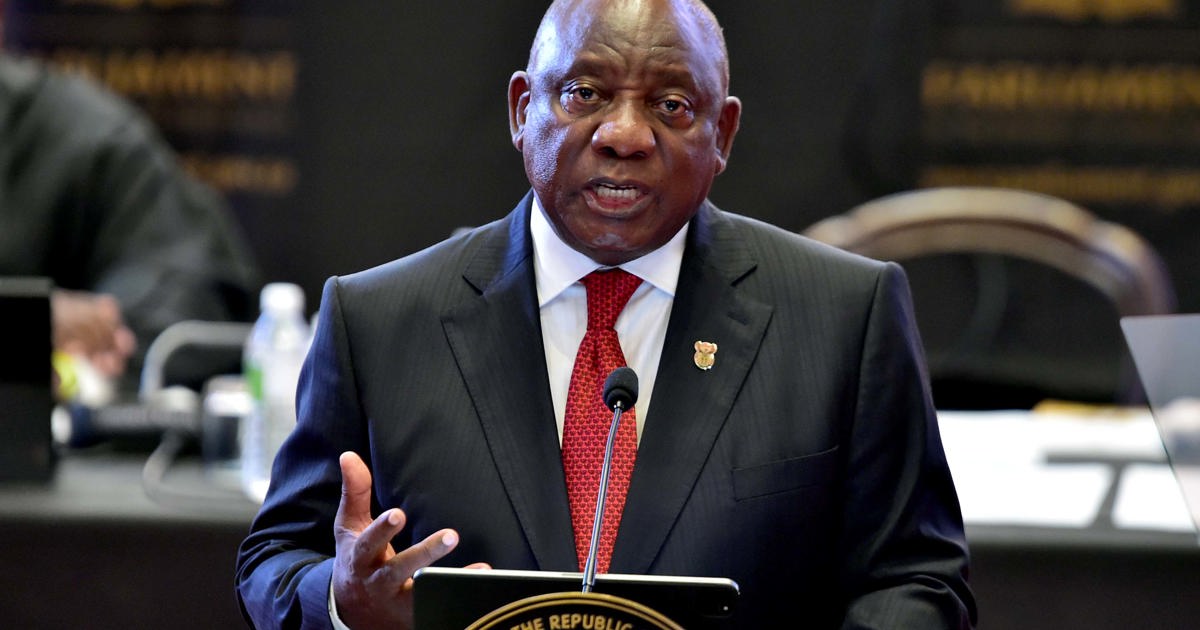
South African President Cyril Ramaphosa is facing renewed legal and political pressure after the Constitutional Court ruled Parliament’s 2022 handling of the Phala Phala Section 89 report was unconstitutional and invalid. The case centers on the alleged theft of US$580,000 from his farm in 2020, with analysts saying the ruling creates a path for impeachment proceedings while Ramaphosa may still seek judicial review or resign. The news is politically significant but has limited direct market impact beyond potential pressure on the ANC and broader South African governance risk.
The immediate market read is not about a binary impeachment outcome; it is about a prolonged governance overhang that raises the discount rate on South African policy assets. Once a constitutional process is re-opened, the problem becomes duration: every hearing, procedural challenge, and parliamentary reset extends uncertainty for months, which matters more to local risk premia than the legal merits themselves. In practice, that tends to weaken the currency, pressure domestically oriented equities, and keep foreign allocators underweight South Africa even if the president ultimately survives.
Second-order, this is a credibility event for the ANC rather than just a presidential event. Coalition arithmetic becomes more valuable, opposition leverage rises, and the market starts pricing a higher probability of policy drift, slower reform execution, and less fiscal discipline. That is negative for banks, retailers, and infrastructure names that depend on stable domestic demand and clean institutional signaling, while relative beneficiaries are exporters and firms with hard-currency revenues.
The key catalyst window is the next 1-3 months, when procedural steps can either convert the story into a formal impeachment track or be neutralized by legal delay. Tail risk is not immediate removal; it is a cascade into leadership contestation inside the governing party, which would be more damaging to assets because it prolongs uncertainty without resolving it. A credible off-ramp would be a clean resignation or a settlement that ends the public drip of evidence, but absent that the headline risk stays sticky into quarter-end.
The contrarian angle is that consensus may be overstating the probability of a near-term forced exit. South African institutions have a long history of stretching politically explosive cases over time, and markets often overprice imminent regime change while underpricing procedural exhaustion. That argues for trading volatility and relative value, not outright collapse scenarios.
AI-powered research, real-time alerts, and portfolio analytics for institutional investors.
Request DemoOverall Sentiment
moderately negative
Sentiment Score
-0.45
