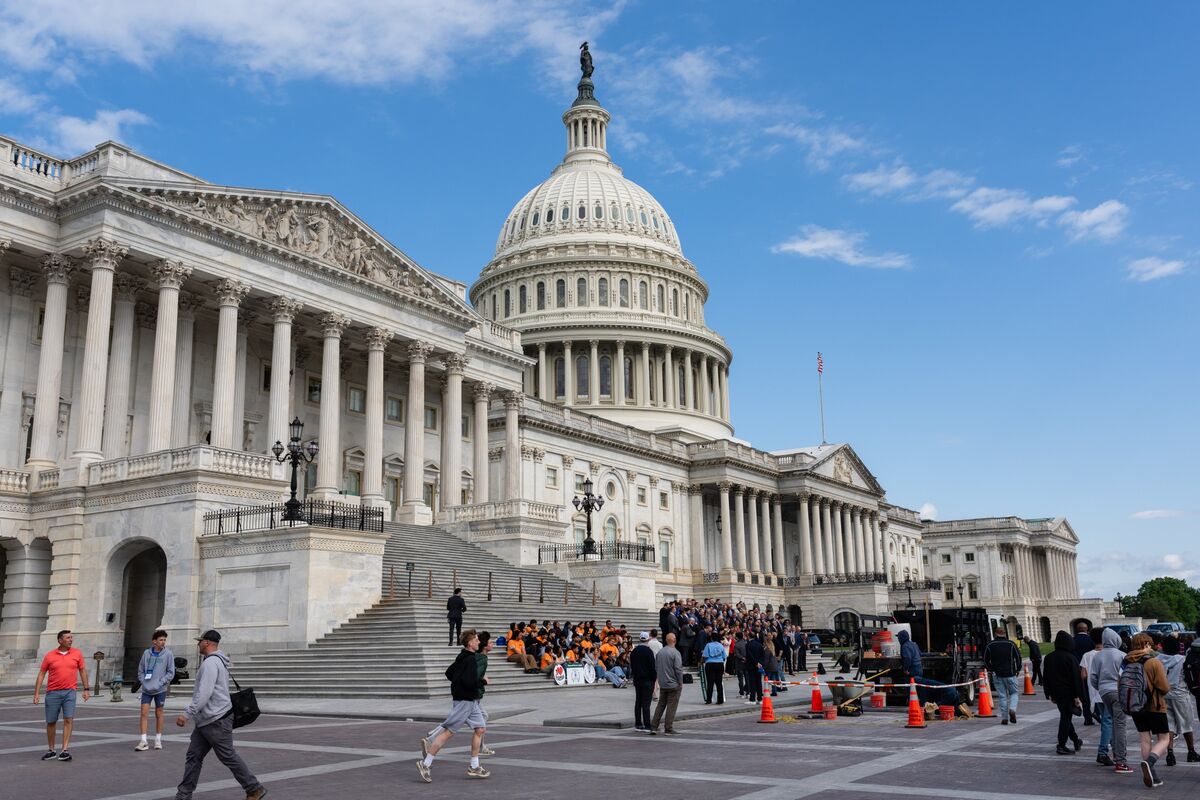
Democrats plan to force a budget vote on the Trump administration’s new $1.8 billion DOJ "anti-weaponization fund," putting Republicans on record over the spending item. The move is politically charged and highlights partisan conflict around fiscal priorities, but it does not yet imply a direct market-moving policy change.
This is less a direct market event than a signal that budget politics are shifting from messaging to appropriation risk. The main second-order effect is on agencies and contractors exposed to discretionary funding uncertainty: when a high-visibility line item becomes a partisan object, it raises the odds of broader continuing-resolution brinkmanship, delayed awards, and slower procurement timelines. That tends to matter more for smaller government services vendors and compliance-heavy contractors than for prime defense names, which can usually absorb short delays.
The more interesting market implication is not the fund itself but the precedent: once both sides start using specific appropriations as vote-trading leverage, the budget process becomes a higher-frequency source of headline volatility. That favors volatility sellers in the near term only if the issue remains contained; otherwise it increases term premium across policy-sensitive sectors because the market must price a larger probability of stop-start federal spending over the next 1-2 quarters. Regulatory consultants, lobbying shops, and government IT/services should see elevated demand for scenario planning, which can be a modest tailwind even if the underlying policy remains unchanged.
Contrarian view: the consensus may overestimate the substantive fiscal impact and underestimate the political theater discount. A $1.8B fund is immaterial relative to total federal outlays, so unless it becomes a proxy fight for broader budget concessions, the earnings impact is likely to stay second-order. The real tradeable variable is whether the fight bleeds into shutdown risk or into agency operating authority; if not, the market will likely fade it within days rather than months.
AI-powered research, real-time alerts, and portfolio analytics for institutional investors.
Request DemoOverall Sentiment
neutral
Sentiment Score
-0.10
