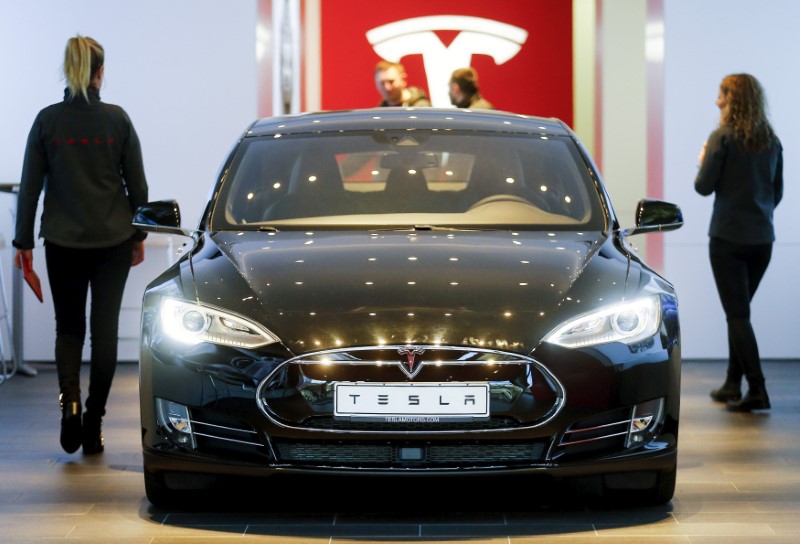
Tesla's Full Self-Driving (Supervised) software has been approved for rollout in Lithuania, making it the second European country to recognize the system after the Netherlands. The Lithuanian Transport Safety Administration accepted the Dutch certification, and Tesla is pushing for broader EU-wide recognition. The development is a modest positive for Tesla's European autonomous-driving strategy, though regulatory adoption across the region remains uneven.
The incremental signal is not the launch itself; it is the regulatory precedent. By piggybacking on an EU member’s recognition framework, Tesla is effectively converting a country-by-country approval grind into a repeatable template, which lowers the marginal cost of rollout and compresses the time between headlines and revenue impact. That matters more for sentiment and multiple expansion than for near-term unit economics, because the real option value is in proving a scalable compliance pathway for future software-enabled features.
Second-order, this is a competitive wedge against legacy OEMs that are still forced to localize autonomy stacks market by market. If Tesla can keep shortening the approval cycle, it increases the likelihood that European buyers perceive its software as “available now” versus aspirational, which can support higher take rates on premium trims and software attach without needing a step-function in vehicle deliveries. It also raises pressure on peers to spend more on regulatory and testing overhead, widening the gap between OEMs with strong software cash generation and those that are capital constrained.
The risk is that this becomes a headline-driven rerating without meaningful adoption, especially in regions where regulators tolerate a pilot but later restrict scale, monitoring, or feature breadth. The key timeframe is months, not days: the stock can trade on the narrative now, but the durability of the move depends on whether additional European jurisdictions follow and whether Tesla can show incident-free operation across varied road conditions. A negative safety event or a fragmented approval regime would quickly reprice the optionality embedded in the story.
Consensus may be underestimating how much of TSLA’s near-term upside comes from software monetization credibility rather than cars. The market often treats autonomy approvals as binary, but the more important variable is the pace of regulatory replication; each additional jurisdiction reduces perceived execution risk and should support a higher forward multiple. That said, the move is likely overdone if investors are assuming a material 2025 revenue contribution before utilization data exists.
AI-powered research, real-time alerts, and portfolio analytics for institutional investors.
Request DemoOverall Sentiment
mildly positive
Sentiment Score
0.25
Ticker Sentiment
