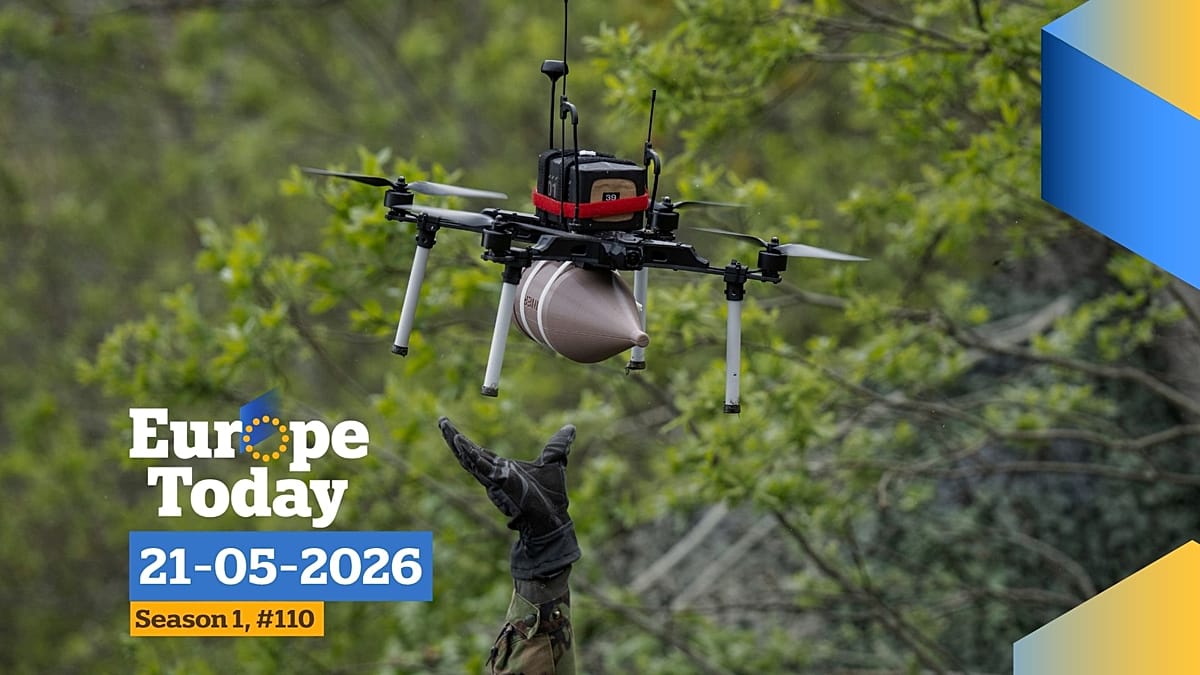
A drone incursion into Lithuania forced the capital to a standstill and sent the country’s leaders into a bunker, prompting Ursula von der Leyen to signal an EU response with 'unity and strength.' The piece also highlights broader political and security reactions across Europe, NATO ministerial talks in Sweden, and tensions surrounding the Gaza aid flotilla. The main market relevance is the escalation in regional security risk across Europe, particularly for defense and geopolitical sentiment.
This is a tactical escalation signal more than a one-day headline: a drone reaching a capital’s airspace and triggering bunker protocols changes the perceived cost of doing business on Europe’s eastern flank. The immediate market effect is not just defense outperformance; it is a repricing of underinsured tail risk across Baltic logistics, airspace-dependent infrastructure, and any enterprise with exposure to a prolonged “grey zone” security regime. In practice, this raises the probability of fast-tracked procurement, higher readiness spend, and emergency legislative action that can accelerate contract awards over the next 1-3 quarters.
The second-order winner set is broader than the obvious prime contractors. Electronic warfare, counter-UAS, border surveillance, secure communications, and hardened infrastructure vendors should gain share because states will prioritize deployability and speed over multi-year platform purity. That favors smaller, niche suppliers and systems integrators with existing NATO frameworks, while punishing discretionary capex in regional transport, telecom, and utilities if insurers demand higher premiums or if governments impose new compliance and security burdens.
The key risk is that markets underprice the persistence of low-cost provocation. Drones are cheap, deniable, and scalable, so the relevant catalyst is not a single event but a repeat pattern over days to months that forces a budget shift from long-cycle procurement into rapid replenishment. If incidents cluster around NATO meetings or EU summits, the political response could quickly move from rhetoric to emergency funding, which would steepen the near-term demand curve for defense software, sensors, and counter-drone systems.
Consensus may be overfocusing on “defense up, everything else down” and missing that the real alpha is in enablers and adjacent infrastructure hardening. The move is likely underdone in names tied to border security, command-and-control, and resilient connectivity, because these beneficiaries typically get less attention than munitions or fighter jets. That creates a cleaner risk/reward in thematic baskets than in headline prime contractors that are already crowded trades.
AI-powered research, real-time alerts, and portfolio analytics for institutional investors.
Request DemoOverall Sentiment
moderately negative
Sentiment Score
-0.35
