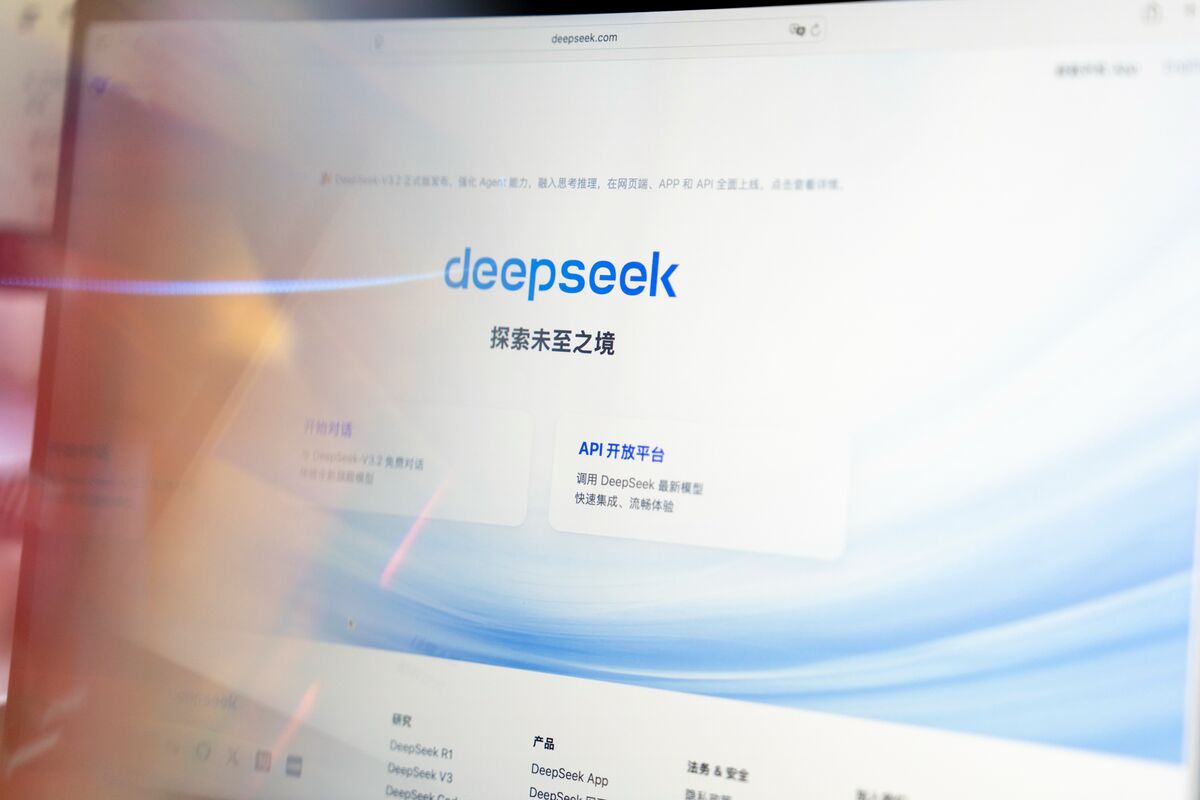
Reuters reports that China’s DeepSeek is developing its own AI chip to support inference (generating responses) rather than training new models. While details are limited and the firm did not comment, the move suggests a potential path to reduce reliance on third-party compute and improve deployment economics for inference workloads.
This matters less as a “new product” story and more as a vertical-integration signal. If a frontier Chinese model operator internalizes inference silicon, it attacks the most persistent unit-cost in AI: serving tokens at scale. That is structurally bullish for Chinese AI margins and pricing power, but it is also deflationary for the broader inference stack, where GPU scarcity has supported premium multiples.
The first-order losers would be the vendors selling expensive general-purpose inference compute into China, but the bigger second-order loser could be any Chinese software/business model priced on scarcity economics rather than usage growth. Lower inference cost can also trigger a volume response: cheaper tokens usually expand demand faster than they compress revenue per token, so the net effect may be faster adoption rather than lower industry spend. That argues for caution on extrapolating direct revenue loss to semiconductor suppliers.
The key gating factor is execution, not intent. A meaningful move requires foundry access, yield, software compatibility, and power efficiency; without those, this is a research program, not a commercial substitution threat. Over the next 1-3 months, the market will likely overreact to headline risk; over 6-18 months, the real question is whether China can build a viable domestic inference ecosystem that reduces dependence on imported accelerators and shifts AI economics toward commoditized compute.
AI-powered research, real-time alerts, and portfolio analytics for institutional investors.
Request DemoOverall Sentiment
mildly positive
Sentiment Score
0.15
Ticker Sentiment
