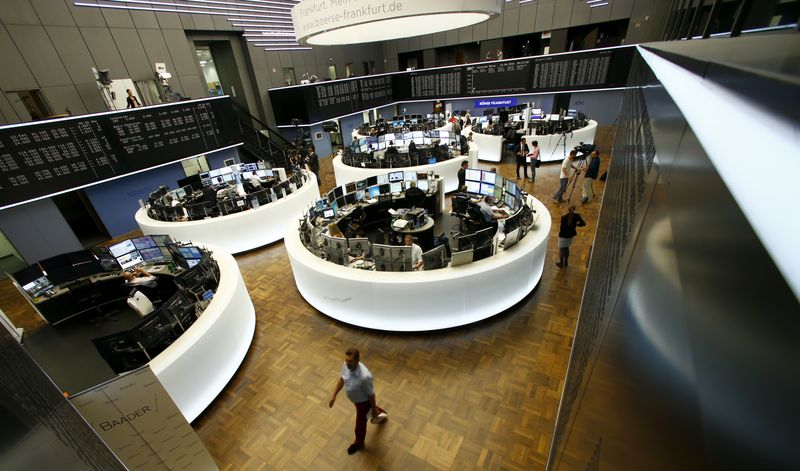
BofA highlighted top chip stocks on expectations that the server CPU TAM could reach $125bn by 2030, a constructive long-term signal for semiconductor names. The article also notes strong moves in German tech-related stocks, with Infineon up 5.11%, Aixtron up 5.04%, Siltronic up 5.26% and Elmos Semiconductor up 5.26%. Broader markets were mixed-to-firm, while crude oil fell 5.44% and Brent dropped 6.13%, adding a risk-on tone for industrial and technology equities.
The cleanest takeaway is not the headline CPU TAM itself, but the implied redistribution of value across the stack. If server CPUs can scale to $125bn by 2030, the market is implicitly assigning more duration to compute demand than to any single vendor’s current share, which tends to favor the picks-and-shovels names with leverage to every server refresh cycle rather than the platform names exposed to ASP compression. That is why the move in German semi names matters: the first-order flow is into semis, but the second-order winners are the analog/power, wafer, and specialty materials suppliers that benefit from higher content per rack even if unit growth slows.
The more interesting setup is around enterprise software and cloud incumbents. A bigger CPU TAM usually signals more AI/server capex, but that can also mean margin pressure for workloads that are not monetizing AI fast enough, because compute becomes a larger share of COGS and vendors face pricing scrutiny on legacy software stacks. In that frame, SAP looks less like a clean AI beneficiary and more like a quality compounder at risk of multiple compression if the market rotates toward hardware beta and away from slower-moving software cash flows.
On the bank side, DB likely benefits more from the regime than the single-day equity move suggests: lower implied volatility and a risk-on tape improve capital markets activity, but the bigger second-order effect is credit spread stabilization if the commodity selloff persists. A sharp oil retracement is a hidden positive for European cyclicals and a negative for energy inflation hedges, which means the trade is really about lower macro uncertainty rather than oil itself. The contrarian risk is that the market is front-running a 2030 narrative while underestimating near-term digestion: if AI server demand moderates over the next 1-2 quarters, high-multiple semi names could give back more than the industry-average gains imply.
The right way to express this is to own the supply chain where end-demand is hardest to substitute, while fading the parts of the tape that have already priced in a perfect AI capex curve. For the names cited, DB is the cleaner tactical beneficiary of better risk appetite; SAP is the one most vulnerable to a rotation away from defensives; and the U.S. mega-cap AI beneficiaries (SMCI/APP) remain viable only if compute spend reaccelerates into the next earnings window.
AI-powered research, real-time alerts, and portfolio analytics for institutional investors.
Request DemoOverall Sentiment
mildly positive
Sentiment Score
0.15
Ticker Sentiment
