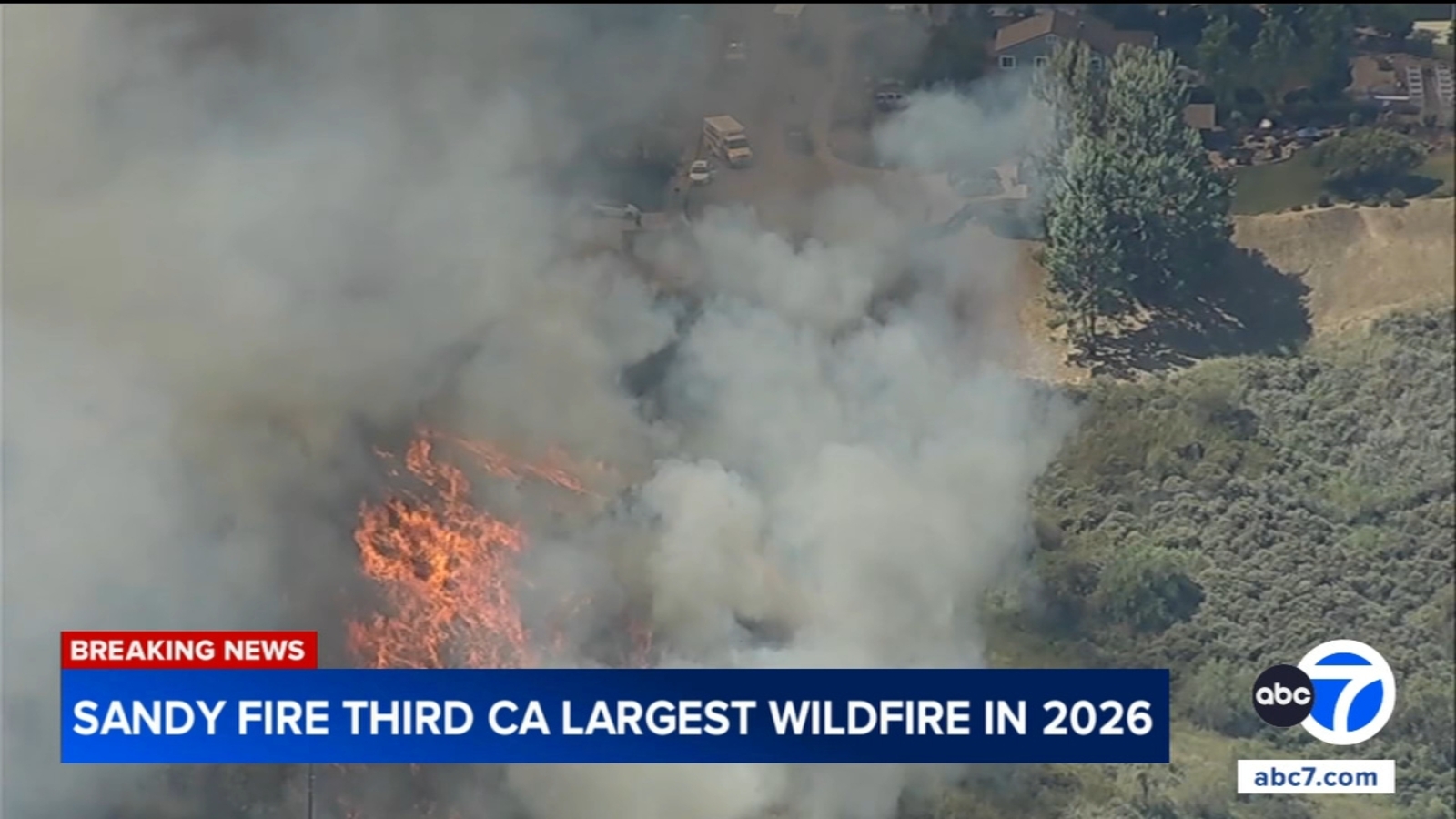
The Sandy Fire in Simi Valley has burned more than 2,100 acres, is 22% contained, and has forced evacuation orders for over 17,000 people, with at least one home destroyed. Ventura County has opened evacuation points and animal shelters, while Simi Valley Unified schools are closed due to the blaze. The fire remains under investigation and is producing smoke impacts across the San Fernando Valley.
The immediate equity implication is not the fire itself but the probability of a short, local disruption turning into a broader operational drag for utilities, insurers, schools, and retail traffic across Ventura/LA exurbs. The first-order market response is usually underpricing the second-order effect: when evacuation zones expand, multi-day closures hit wage-hours, same-store sales, and service restoration spending faster than headline acreage changes. That favors defensive infrastructure names with embedded wildfire recovery capex, while pressuring property/casualty carriers with California concentration and anyone exposed to claims inflation from total-loss homes, temporary housing, and utility liability.
The bigger issue is persistence: a fire that remains wind-driven and only partially contained can keep repricing risk for days, but the economic damage compounds over weeks through return-to-school delays, commuter disruption, and utility hardening costs. If smoke reaches more of the Los Angeles basin, air-quality sensitivity can reduce discretionary footfall without a formal evacuation, creating a stealth hit to restaurants, malls, and regional transportation volumes. That effect is often more material than the burned acreage because it spreads outside the perimeter and lasts until visibility and air quality normalize.
Consensus may be too focused on a one-off weather event and not enough on the policy/insurance feedback loop. California wildfire severity tends to drive upward revisions to homeowner premiums, non-renewals, and reinsurance terms with a lag of one to three renewal cycles, which is where the real earnings impact emerges. The contrarian risk is that if containment accelerates and wind subsides, the market will quickly fade the trade; the highest-conviction opportunity is therefore in names with structural exposure to premium resets and mitigation spending rather than pure headline catastrophe beta.
AI-powered research, real-time alerts, and portfolio analytics for institutional investors.
Request DemoOverall Sentiment
strongly negative
Sentiment Score
-0.78
