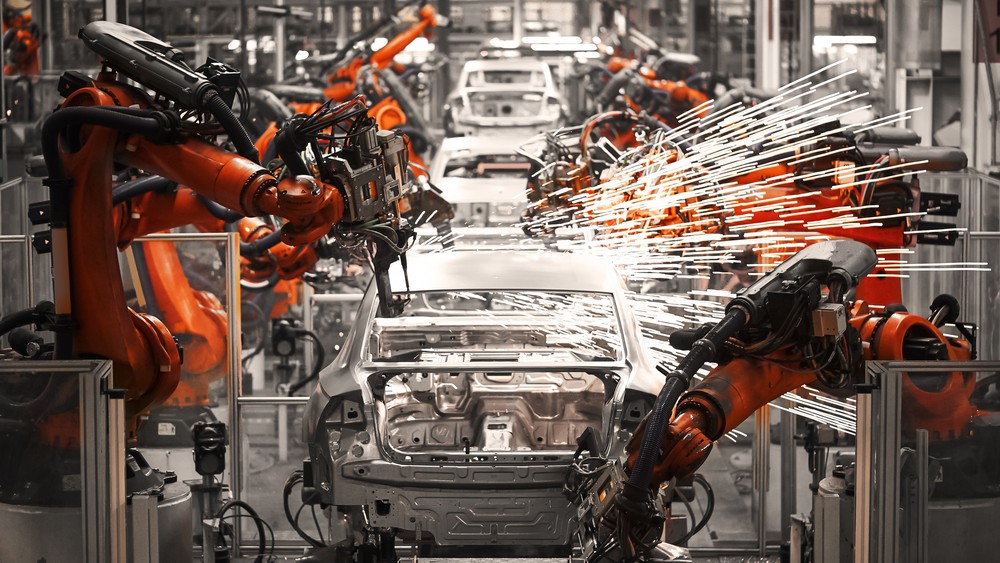
China car sales fell 21.5% in April to 1.4 million units, the weakest level since 2022, as higher fuel prices and weaker purchasing power hit demand for gasoline-powered vehicles. Internal combustion engine sales dropped more than 30%, while EV and hybrid sales declined 6.8% despite EVs and hybrids rising to 60% of new car sales. The slump reflects broader consumer weakness tied to the Middle East energy shock, subsidy rollbacks, and renewed taxes on new energy vehicles.
The near-term read-through is not just weaker auto demand, but a composition shift that redistributes margin power inside the sector. Gasoline-vehicle OEMs and legacy powertrain suppliers are the most exposed because they lose both unit volume and pricing leverage at the same time, while EV penetration rising on a weak total market is a sign of distress, not pure strength. That matters for suppliers: battery, power electronics, and charging-adjacent names may hold share, but lower absolute volumes can still pressure utilization and delay any operating leverage.
The bigger second-order effect is on upstream energy demand. China’s auto market is a meaningful marginal source of transport fuel demand, so sustained weakness in ICE sales is a negative for refined product cracks and gasoline-linked margin chains over the next 1-3 quarters. The market may be overestimating the offset from higher EV share; if total vehicle sales are falling, the net effect is still lower oil intensity, especially when consumers are simultaneously trading down on discretionary spending.
From a macro perspective, the article is signaling that the energy shock is now mutating into demand destruction rather than just a supply scare. That usually takes time to show up in hard data: first in auto sales, then in freight, then in industrial activity and imported fuel volumes. If Middle East risk premium fades before Chinese purchasing power recovers, the market could quickly pivot from inflation fears to global growth fears, which is typically more bearish for cyclicals than for defensives.
The contrarian point is that China’s strategic crude stockpile and policy response make the country less fragile than headline geopolitics suggests, so the bearish impulse on Asia ex-oil names may be too linear. The more durable trade is not a crash in demand, but slower growth and lower legacy auto profits. That favors relative shorts over outright commodity bearishness.
AI-powered research, real-time alerts, and portfolio analytics for institutional investors.
Request DemoOverall Sentiment
moderately negative
Sentiment Score
-0.35
