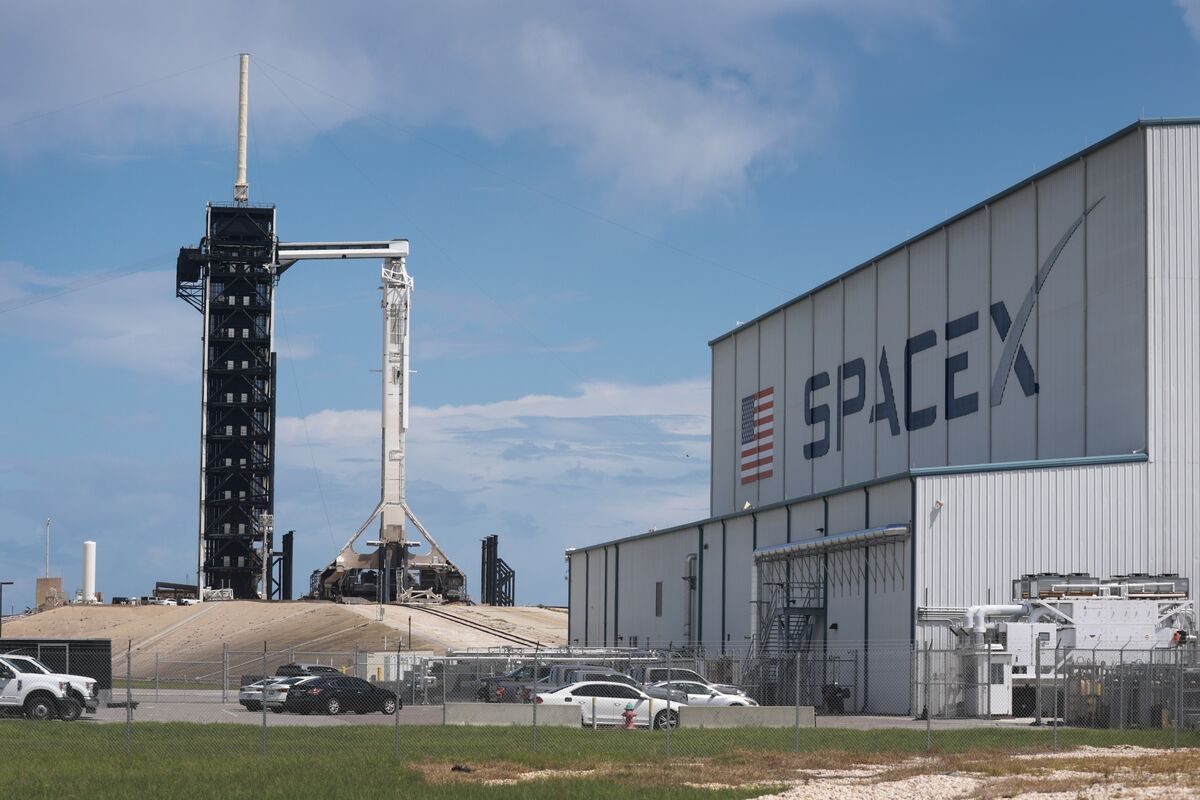
Raymond James’ Brian Gesuale initiated coverage on SpaceX with a Strong Buy and an $800 price target, the highest on Wall Street and about +430% versus the stock’s level in Tuesday’s selloff. If achieved, SpaceX’s valuation could jump to roughly $10.5T, more than double Nvidia’s ~$4.7T market cap.
This reads more as a sentiment indicator than a directly monetizable valuation call. When the market is willing to underwrite extreme terminal-value assumptions for a private frontier-technology asset, it typically extends the duration premium for public AI infrastructure with visible cash conversion, especially NVDA, AVGO, and ANET. The key mechanism is not sympathy bid to the private company; it is a higher tolerance for capex-heavy growth stories so long as they sit closest to the monetization layer.
The second-order loser is anything in the same narrative cluster that lacks either scale or near-term funding access. Public names tied to satellite broadband, launch services, or speculative AI applications are more vulnerable to multiple compression if investors rotate toward proven earners; the headline effectively raises the bar for every adjacent stock to show quarterly proof, not just TAM slides. That makes this more relevant over 1-3 months through factor flows than over days through direct fundamentals.
Contrarian view: this is close to a froth signal, but not necessarily a sell signal for the profitable AI complex. The consensus mistake is treating a private mark as if it were an operating milestone; without a filed IPO, secondary liquidity event, or disclosed financial step-up, the valuation is just a sentiment marker. Falsifiers for the bearish froth read would be a strong AI capex print from hyperscalers or a real commercialization event that converts the narrative into cash flow within 6-18 months.
AI-powered research, real-time alerts, and portfolio analytics for institutional investors.
Overall Sentiment
strongly positive
Sentiment Score
0.55
Ticker Sentiment
