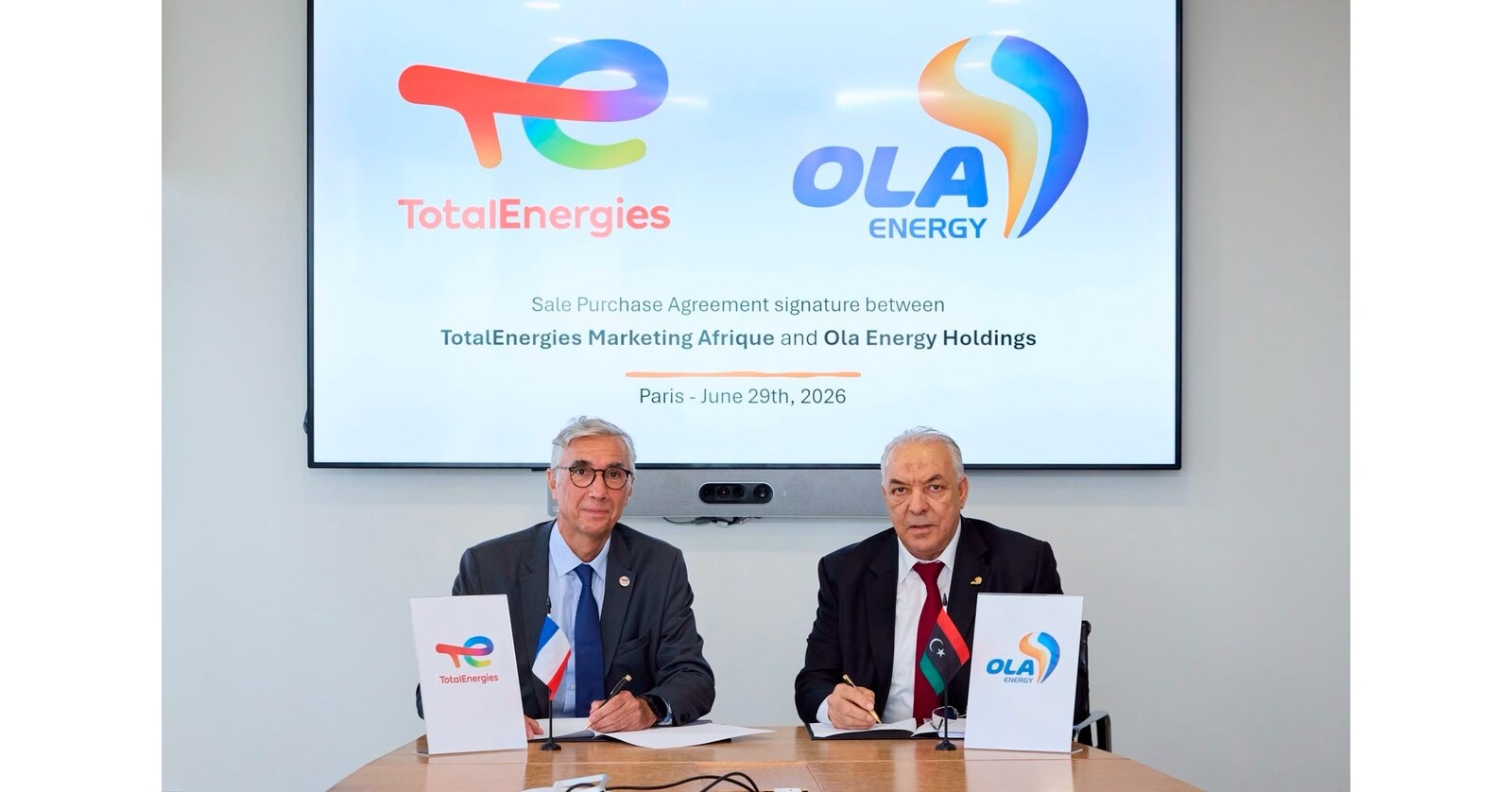
OLA Energy signed a share purchase agreement to acquire TotalEnergies’ downstream operations in Ethiopia, adding 120+ service stations plus 10 storage assets and existing digital payment solutions. The deal expands OLA’s fuel and non-fuel offerings (including convenience stores, car wash, lubricant bays, and aviation fuel supply at Addis Ababa’s Bole International Airport) and is subject to regulatory approvals and other customary conditions precedent. Overall, the transaction strengthens OLA Energy’s Ethiopia footprint and supports its broader pan-African growth strategy.
For TTE, this reads less like a growth catalyst and more like incremental portfolio pruning: exiting a small, operationally messy frontier downstream position should marginally improve ROIC optics and reduce country-risk drag, but it is unlikely to move group EBITDA or FCF in a measurable way. The market’s first reaction may be to ascribe “capital discipline” credit, yet the real value depends on whether proceeds are freely repatriable and whether the sale clears at a premium to book in a market with FX and regulatory frictions.
The more interesting second-order effect is for OLA, which can use the acquired station network, storage, and aviation links to deepen route density and procurement leverage in Ethiopia. That can squeeze smaller local distributors and independent station operators over the next 6-18 months, especially if OLA cross-subsidizes retail, lubricants, and aviation margins to win share. For TTE, the strategic benefit is simplification; for the local competitive set, this is a scale game, not a headline M&A trophy.
Contrarian view: consensus may overrate the transaction as a bullish signal for TTE simply because it is a divestiture. In reality, the key risk is execution—approvals, employee transition, and repatriation can turn into a months-long process, and any indication of a discounted price or delayed closing would quickly unwind the positive read-through. If the deal is still pending after 1-2 quarters or terms are revised, the thesis becomes ‘non-event,’ not ‘value creation.’
AI-powered research, real-time alerts, and portfolio analytics for institutional investors.
Overall Sentiment
mildly positive
Sentiment Score
0.35
Ticker Sentiment
