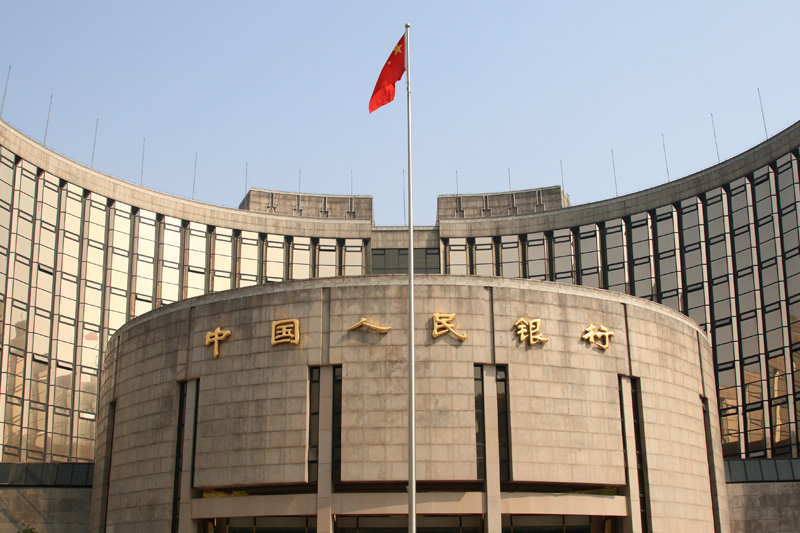
China left its one-year loan prime rate at 3.00% and the five-year LPR at 3.50% for a 12th straight month, matching expectations. Policymakers are weighing weaker domestic demand—April factory output and retail sales both missed estimates—against rising inflation pressures from higher oil prices tied to the Iran conflict. The stance remains moderately loose, but markets now expect more targeted support rather than near-term broad rate cuts.
The key signal is not the unchanged policy rate itself, but the regime shift toward selective stimulus. That favors asset classes tied to policy transmission efficiency: state-directed credit channels, policy banks, infrastructure-linked suppliers, and brokers with higher loan growth elasticity, while leaving rate-sensitive consumer credit and private property developers in a tougher limbo. With broad easing constrained by inflation and energy, the market should expect a narrower, more uneven liquidity impulse rather than a cyclical reflation trade.
The second-order effect is that commodity inflation now acts like a tax on China’s policy flexibility. If oil remains elevated, Beijing is forced to defend margins in manufacturing and housing without meaningfully lowering borrowing costs, which usually means weaker breadth in domestic equities and persistent pressure on leveraged property balance sheets. That also increases the odds of “good data, bad stocks” behavior: nominal activity can hold up while profit margins compress, especially in upstream-input-heavy industrials.
The shorter-term catalyst path is about whether April’s weak consumption is a one-off or the start of a demand downdraft. Over the next 4-8 weeks, any follow-through weakness in credit impulse, retail sales, or property transaction volumes would likely push markets toward expecting reserve-requirement cuts or targeted relending instead of benchmark rate moves. Over 3-6 months, the main reversal would be a stabilization in energy prices plus clearer export demand, which would reopen the door to broader easing and relieve pressure on domestic cyclicals.
Contrarian take: the market may be underestimating how supportive this is for policy-sensitive quality names versus the usual “China easing” basket. If broad cuts are off the table, capital should concentrate in firms that can actually capture directed credit and survive margin compression; indiscriminate exposure to developers and low-end cyclicals looks like a value trap unless policy transmission widens materially.
AI-powered research, real-time alerts, and portfolio analytics for institutional investors.
Request DemoOverall Sentiment
neutral
Sentiment Score
-0.05
