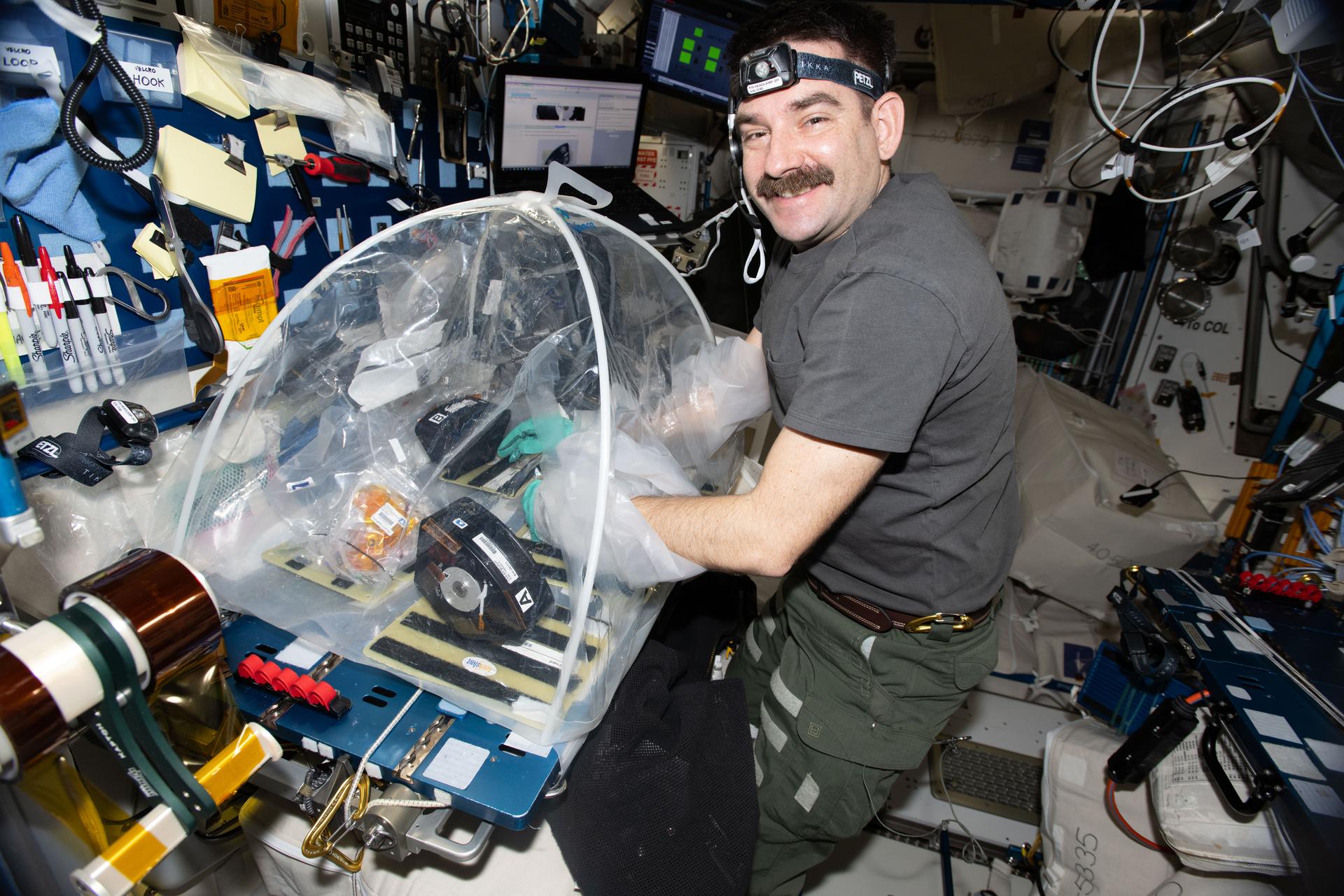
Nearly 6,500 pounds of scientific investigations and cargo launched aboard SpaceX Dragon on NASA’s 34th commercial resupply mission, lifted by a Falcon 9 from Cape Canaveral at 6:05 p.m. EDT. Dragon is scheduled to arrive at the International Space Station at about 7 a.m. Sunday, May 17, and dock autonomously to the Harmony module. The article is a routine mission update with limited direct market impact.
This is a small but useful read-through on the reliability/throughput layer of the space economy rather than a headline revenue event. The second-order winner is the launch-services stack: every additional successful cargo cycle reinforces the market’s willingness to pay for high-cadence, autonomous orbital logistics, which over time expands the addressable market beyond government payloads into on-orbit servicing, station support, and eventually manufacturing. The less obvious beneficiary is any supplier with exposure to cryogenic valves, avionics, reaction-control hardware, and flight software validation, because the marginal value in this business sits in repeatability, not just lift capacity.
Competitive dynamics are favorable for SpaceX but challenging for legacy launch and station-adjacent incumbents. Each successful mission raises the switching cost for NASA and downstream commercial customers, compressing the bidding window for rivals that cannot match schedule certainty or per-flight economics. The more important implication is not one mission, but the compounding effect of “boring” success: if cadence remains high with few anomalies, price discovery in launch services stays anchored near the low end, which is structurally disinflationary for space access and forces competitors to compete on niche payloads or national-security specialization.
The main risk is operational, not demand-related: a single on-orbit or rendezvous failure would likely have an outsized reputational impact and could delay follow-on contracts for months, even if the underlying hardware is statistically robust. Near term, the catalyst window is days to weeks around docking and mission completion; medium term, the relevant catalyst is whether this cadence translates into visible order-flow acceleration for adjacent space infrastructure names. Contrarian take: the market often overprices headline launch successes and underprices the durability of the procurement relationship; the better trade is usually not the obvious launch winner but the enabling picks-and-shovels names with recurring content across multiple missions.
AI-powered research, real-time alerts, and portfolio analytics for institutional investors.
Request DemoOverall Sentiment
neutral
Sentiment Score
0.10
